Posted on

AucArt Pride

Pride Month 2023

We spoke with some of our artists to learn how they celebrate pride month, their LGBTQ+ role models, and some favourite traditions.

Every June, Pride events worldwide commemorate the Stonewall riots–protests held by the LGBTQ+ patrons of a small, downtown Manhattan bar of the same name after an unprompted police raid on June 1969. With queer violence still on the rise, art has the ability to serve as a medium to support, protest and uncover problematics and expose the works from queer artists whose lives are often excluded as part of the canon. With this in heart, we've spoken with a selection of artists from our roster to accompany them on their journey of exploration of identity through their art in celebration of Pride month, how they celebrate pride month, and some of their favourite traditions.
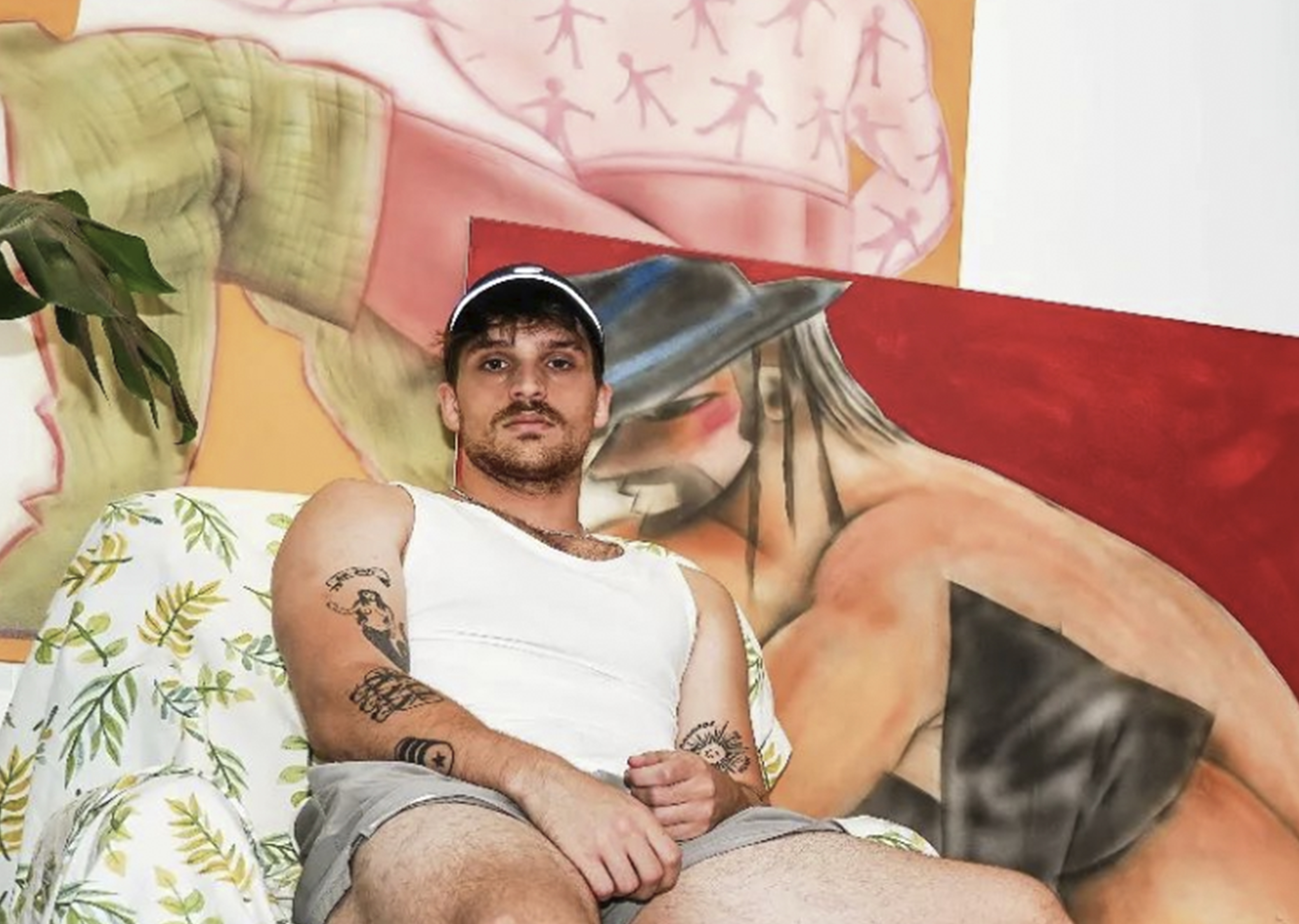
We spoke with some of our artists to learn how they celebrate pride month, their LGBTQ+ role models, and some favourite traditions.

Every June, Pride events worldwide commemorate the Stonewall riots–protests held by the LGBTQ+ patrons of a small, downtown Manhattan bar of the same name after an unprompted police raid on June 1969. With queer violence still on the rise, art has the ability to serve as a medium to support, protest and uncover problematics and expose the works from queer artists whose lives are often excluded as part of the canon. With this in heart, we've spoken with a selection of artists from our roster to accompany them on their journey of exploration of identity through their art in celebration of Pride month, how they celebrate pride month, and some of their favourite traditions.

What are your favorite pride traditions?

Just spending time with the people you choose to call your family and be grateful for them.

What does pride month mean to you?

Pride month has been so commercialized it is easy to lose track of its meaning. I think everybody gets what they want/need out of it. I choose to see it as progress regardless of all the profit corporations aim to make out of it. It means progress, and hope for much needed additional progress. The LGBTQIA+ community is not only the L, the G, and the B.

Who are some of your LGBTQIA+ role models?

The stonewall riot protesters did so much for what we have nowadays. I cannot even imagine what it was like at the time and I am blessed to be able to enjoy the fruit of their struggles today. There are many good role models nowadays, working on normalizing LGBTQIA+ everyday, but I think it’s important especially for young people to know why we are able to live out in the open today. Not that everyone is able to do that, that’s why we still need to continue progress.

How are you planning to celebrate pride month this year?

I am currently living in China, but soon moving away. For the first time in my life I was blessed with an amazing friend group of LGBTQIA+ people here. I am quite sad to leave them soon. I will celebrate this pride month with them, my chosen family.
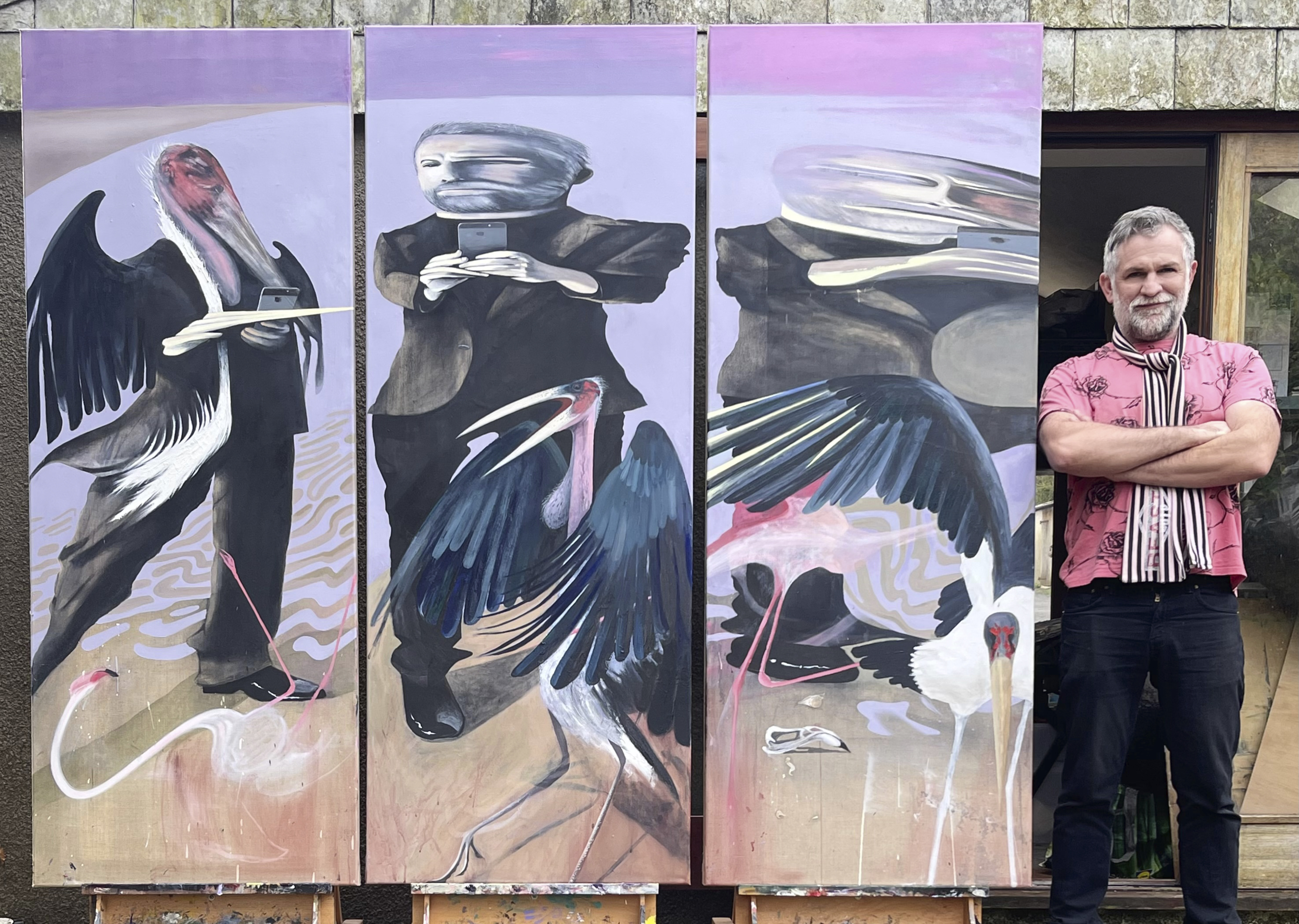
What are your favorite pride traditions?

I love to go on pride marches if possible. The last pride march I went on was in Berlin and it was an amazing experience.

What does pride month mean to you?

Pride month is a moment for me to celebrate my identity as a gay man along with all the unique identities of my LGBTQIA+ siblings. It’s so important that we all come together as a community and celebrate together.

Who are some of your LGBTQIA+ role models?

The British artist, filmmaker and activist Derek Jarman (who I was lucky enough to meet a few times when he was alive) was and still is a huge role model for me. The French writer Jean Genet is also a source of fascination for me currently.

How are you planning to celebrate pride month this year?

I will be in Greece for pride month this year, living with my husband in our caravan in an olive grace in the Peloponnese. He will be volunteering at a local dog sanctuary and I will be painting and I think that will be a perfect way to celebrate pride month.
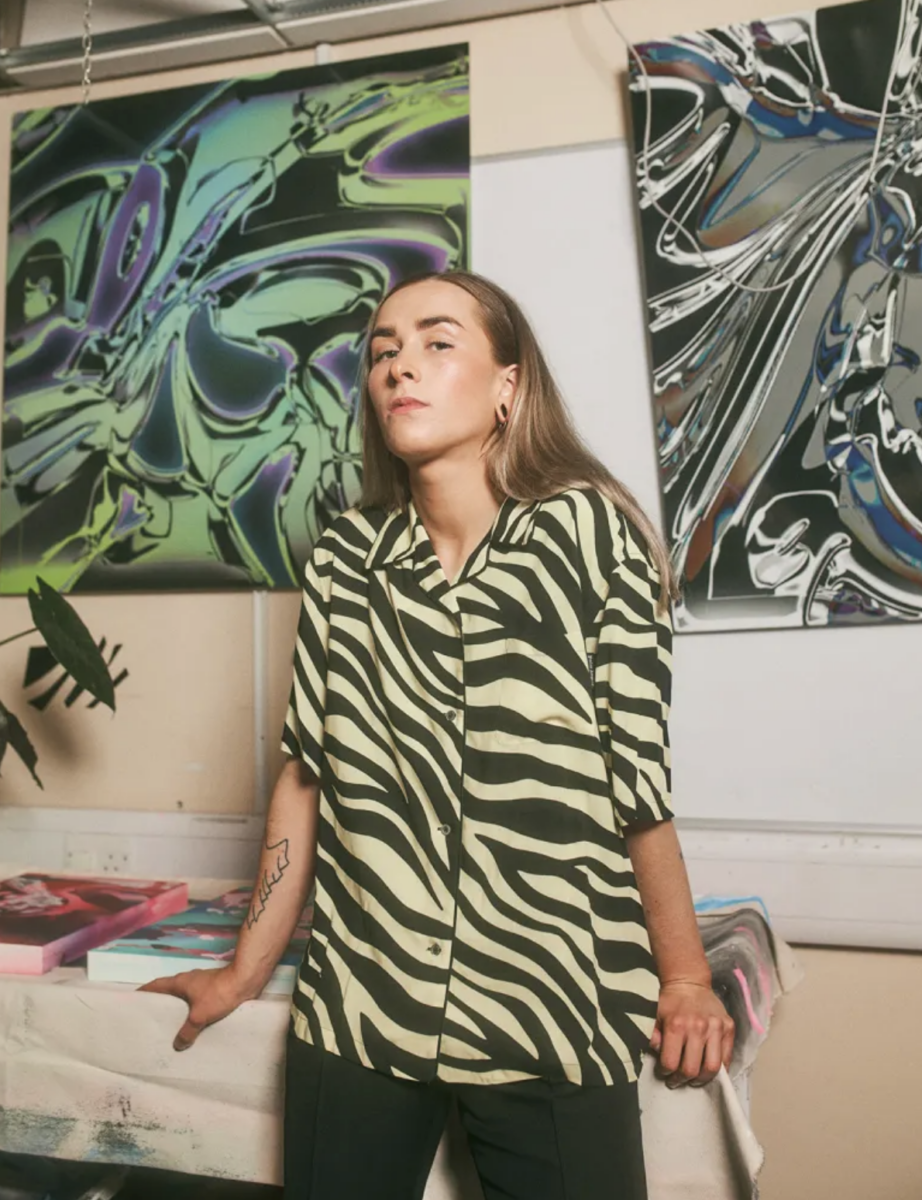
What are your favorite pride traditions?

Nothing beats celebrating with friends.

What does pride month mean to you?

Pride is power. Pride is about honouring the struggle and the sacrifices made by our queer forbearers. It’s about commemorating the achievements and the progress gained. It’s about being cognizant of the contemporary threats our community faces and it’s about resisting those who seek to oppress us.

With the start of summer heralding the beginning of Pride season I feel this renewed sense of joy and resilience, it reminds me that I belong. For those of us who spent a long time feeling like we were on the outside looking in, the visibility is vital; it’s seeing and it’s being seen.

Who are some of your LGBTQIA+ role models?

Amongst many my current favourite is Natalie Wynn. She has a ferocious intellect. Her video essays are immaculately presented and thoroughly researched and her analyses of complex social issues are piercing and nuanced. She is a disarming and perceptive debater, and uses her work to educate, entertain, raise awareness and inspire action. She’s hilarious and beautiful too aghhh.

How are you planning to celebrate pride month this year?

I love film – this year to mark his passing I’m going to have a viewing party of some Kenneth Anger films.
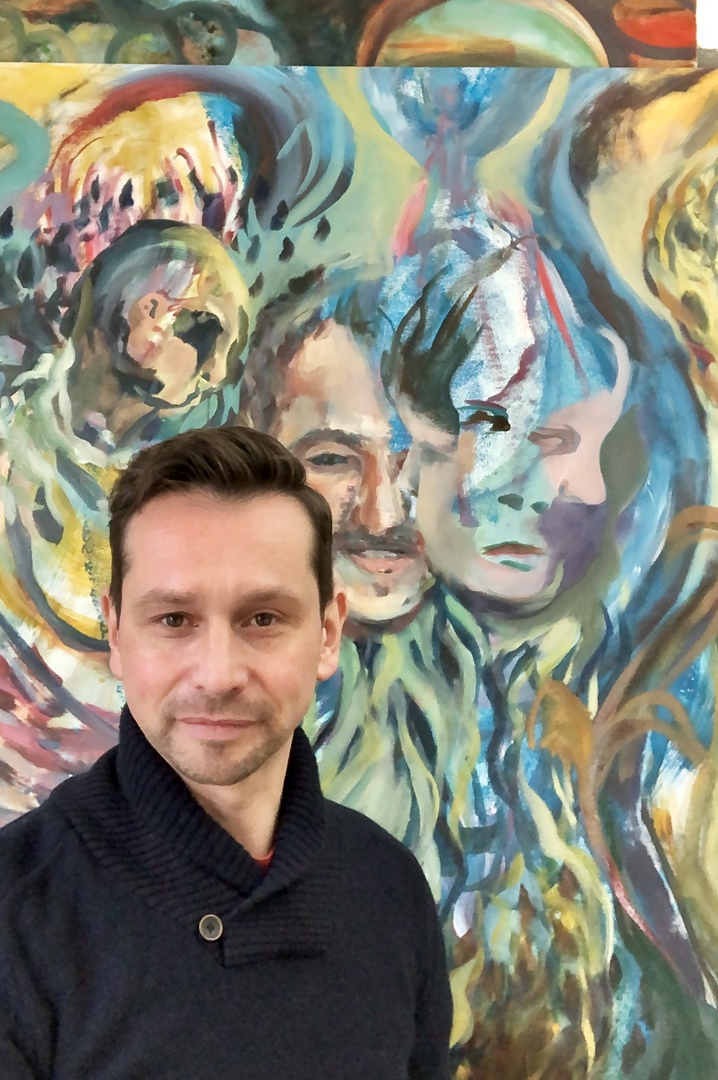
What are your favorite pride traditions?

Pride parade takes place in Hamburg every year. All participants meet in the street “Lange Reihe”. It is a great pleasure for me to experience how the Pride family meets, how a cosmos of its own is created full of exuberance, freedom and joy.

What does pride month mean to you?

Pride month reminds me to celebrate myself and my life.
That it is a gift to express yourself freely. That we all, as different as we are, can achieve a lot together.

Who are some of your LGBTQIA+ role models?

For me, everyone is a role model who has a big heart, who can question themselves and laugh at themselves. Who is open to others and ready to develop further.
It doesn’t matter which community he comes from.

How are you planning to celebrate pride month this year?

I haven’t planned anything now – I’ll let it come to me spontaneously.
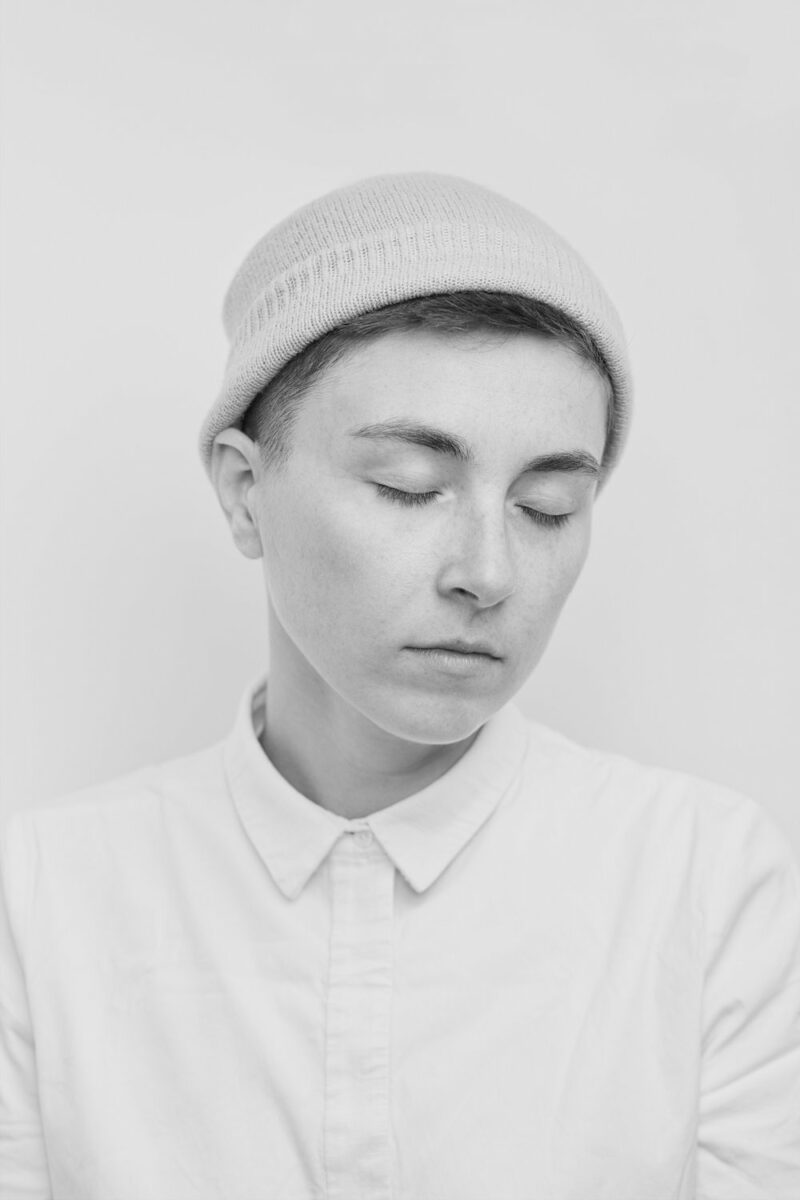
What are your favorite pride traditions?

Simply getting together with friends, and the emphasis on that is one of my favourite Pride traditions. Many people can forget the importance of a “Queer Family” or “Pride Family”, it’s a place to feel safe and accepted as so many queer people feel discomfort in being themselves around their family of origin.

What does pride month mean to you?

Pride month means a lot to me, most importantly it’s about visibility. I find the commercialisation of Pride by various brands and businesses to be distracting and disheartening, there can even be appropriation going on. I love to see community LGBTQI+ organisations making events for young people. Pride month should be a reminder that Pride continues to be a Protest and a fight for human rights worldwide – not just a party in the West. Pride month reminds me to take a moment of gratitude towards the older queer generations who carved this path for me, and fought for my rights …

Who are some of your LGBTQIA+ role models?

My current role model is the visual artist Zanele Muholi. They make exquisite photographs of mainly black and marginalised queer people. Their work is a form of activism and protest. It is incredibly inspiring. I just saw their show in Paris this May.

How are you planning to celebrate pride month this year?

Dublin Pride aligns quite nicely with my birthday every year! So I’m throwing a party!
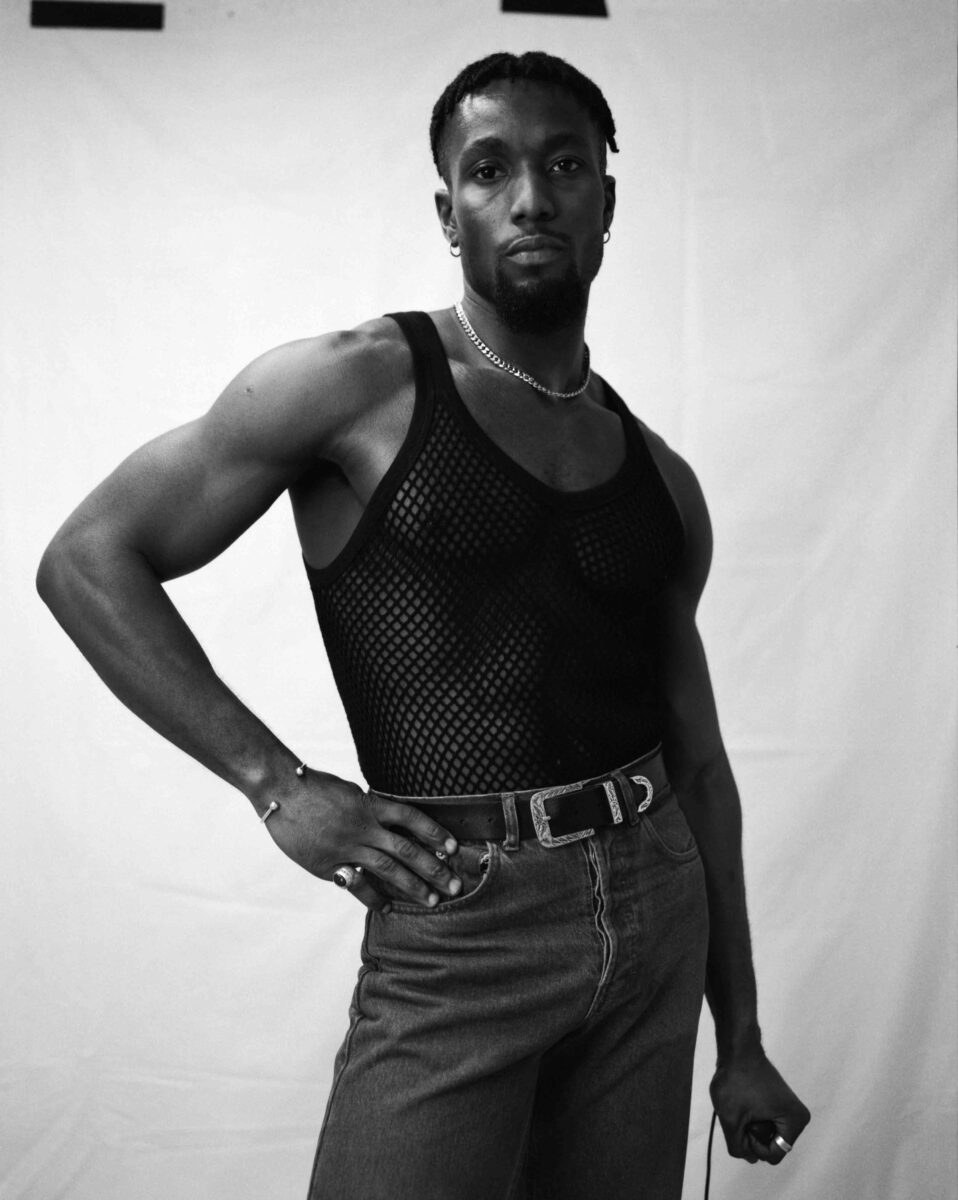
What does pride month mean to you?

Pride represents for me, a time of the year where being queer and different is celebrated and embraced. It’s a time of community as well as a shared sense of resistance to binary norms in our society.

Who are some of your LGBTQIA+ role models?

In the Arts, there’s a few artists that are black and queer I’ve looked to for guidance and inspiration. Artists like Ajamu X, Rotimi Fani Kayode, Lyle Ashton Harris, Marlon Riggs, Essex Hemphill to name a few. I’m constantly learning and drawing from these generational sources that in turn inform my work.

How are you planning to celebrate pride month this year?

By being in community with other black and queer artists and friends in London and beyond.
 

Posted on

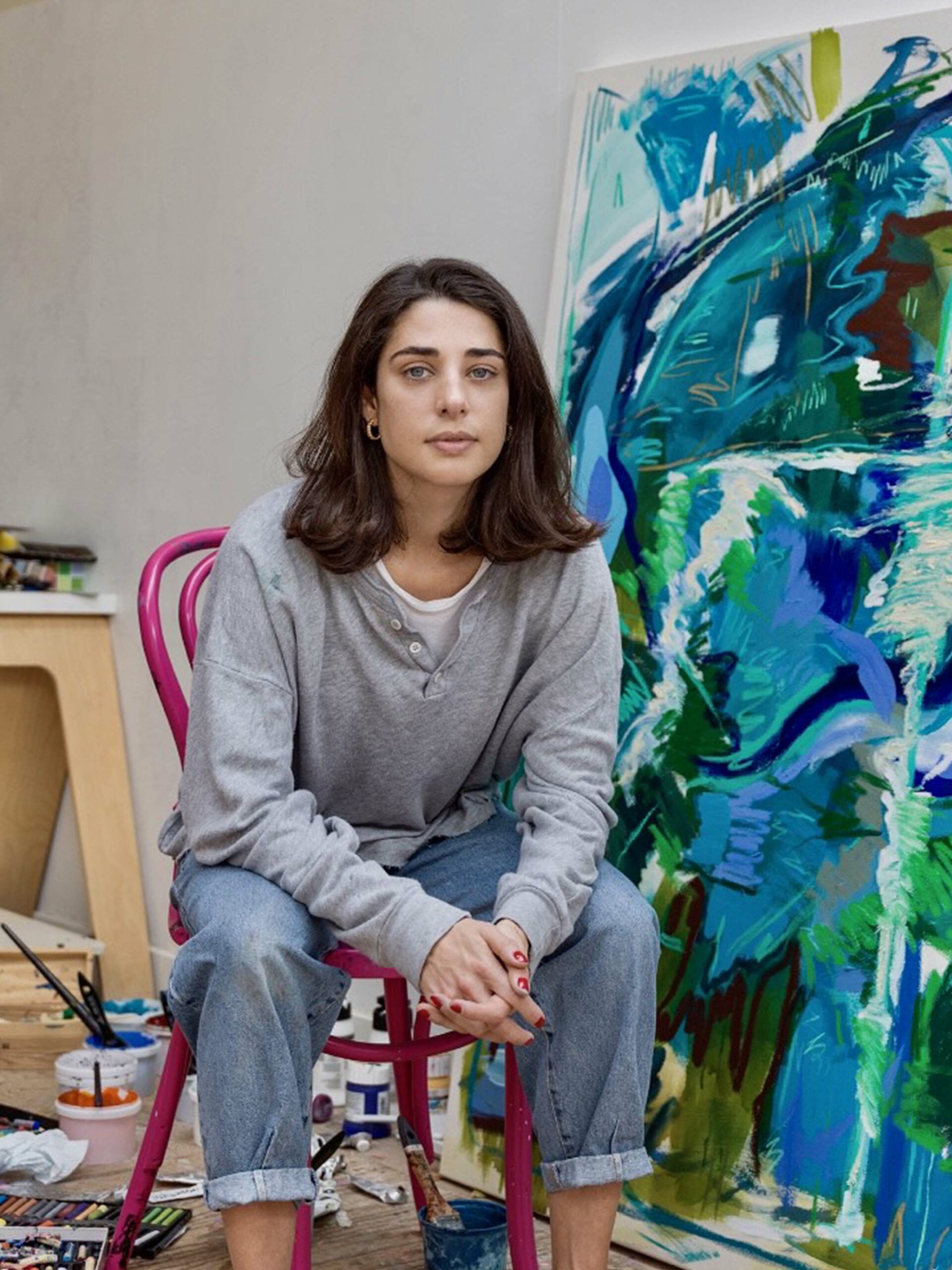
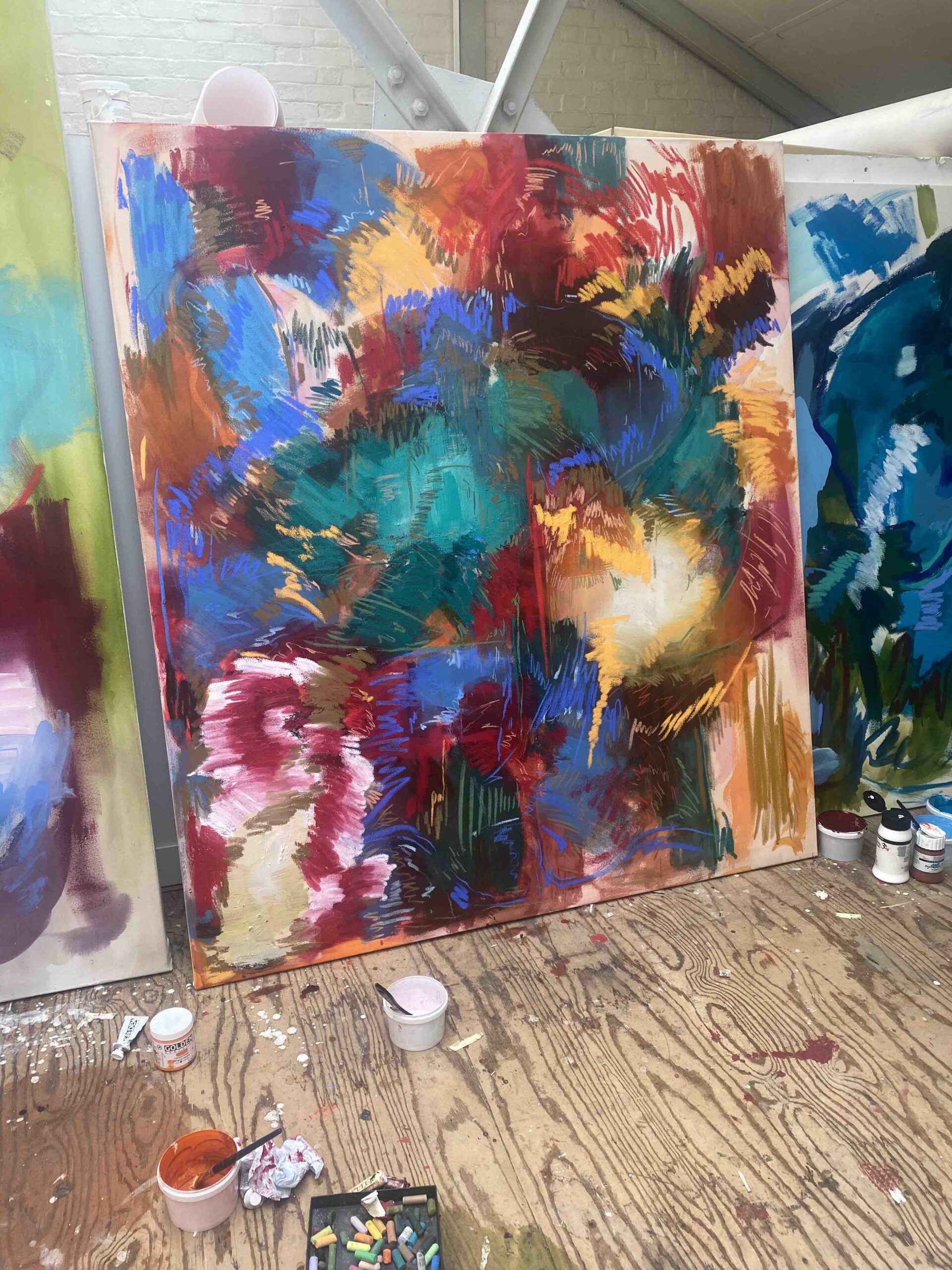
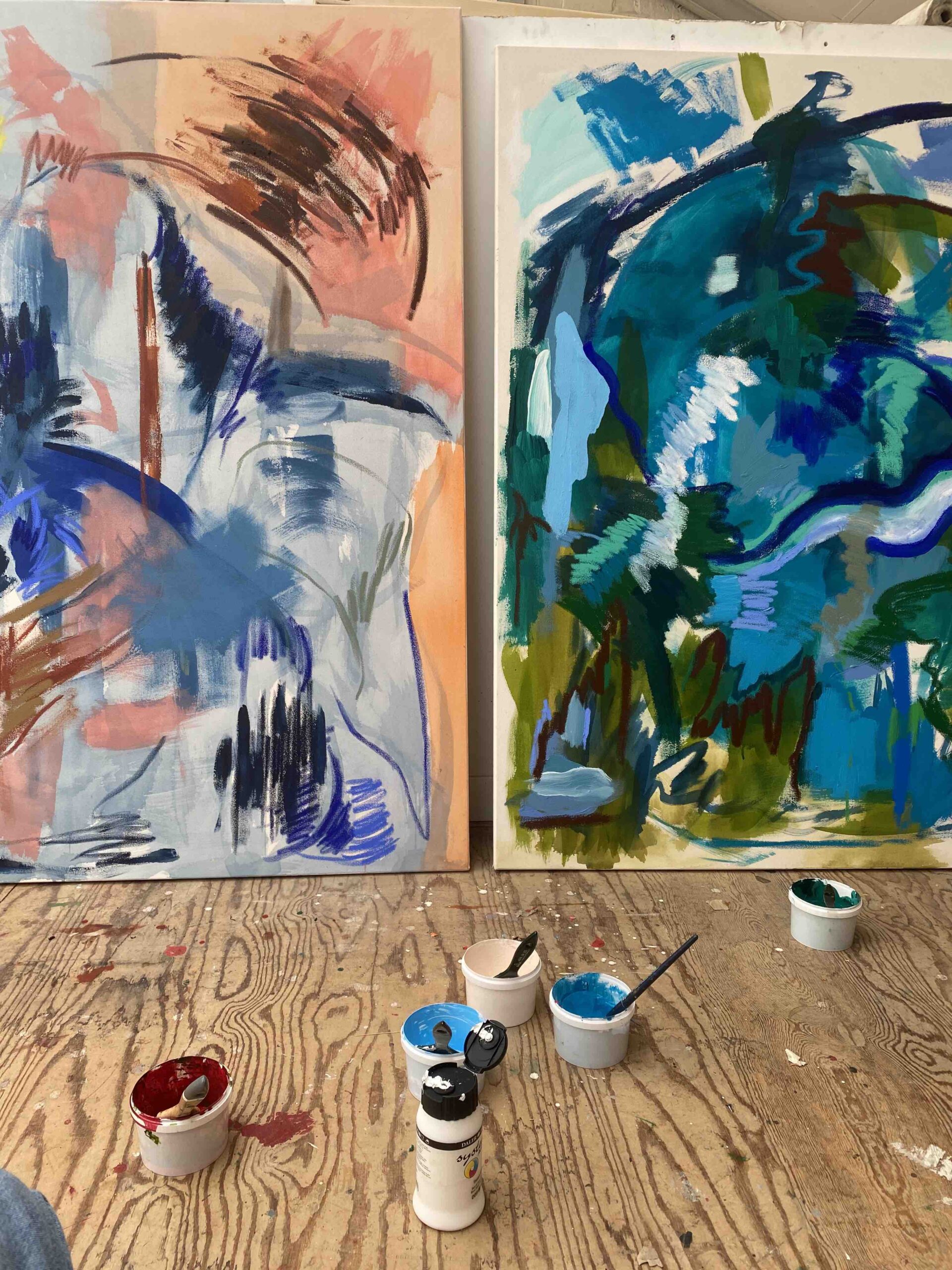
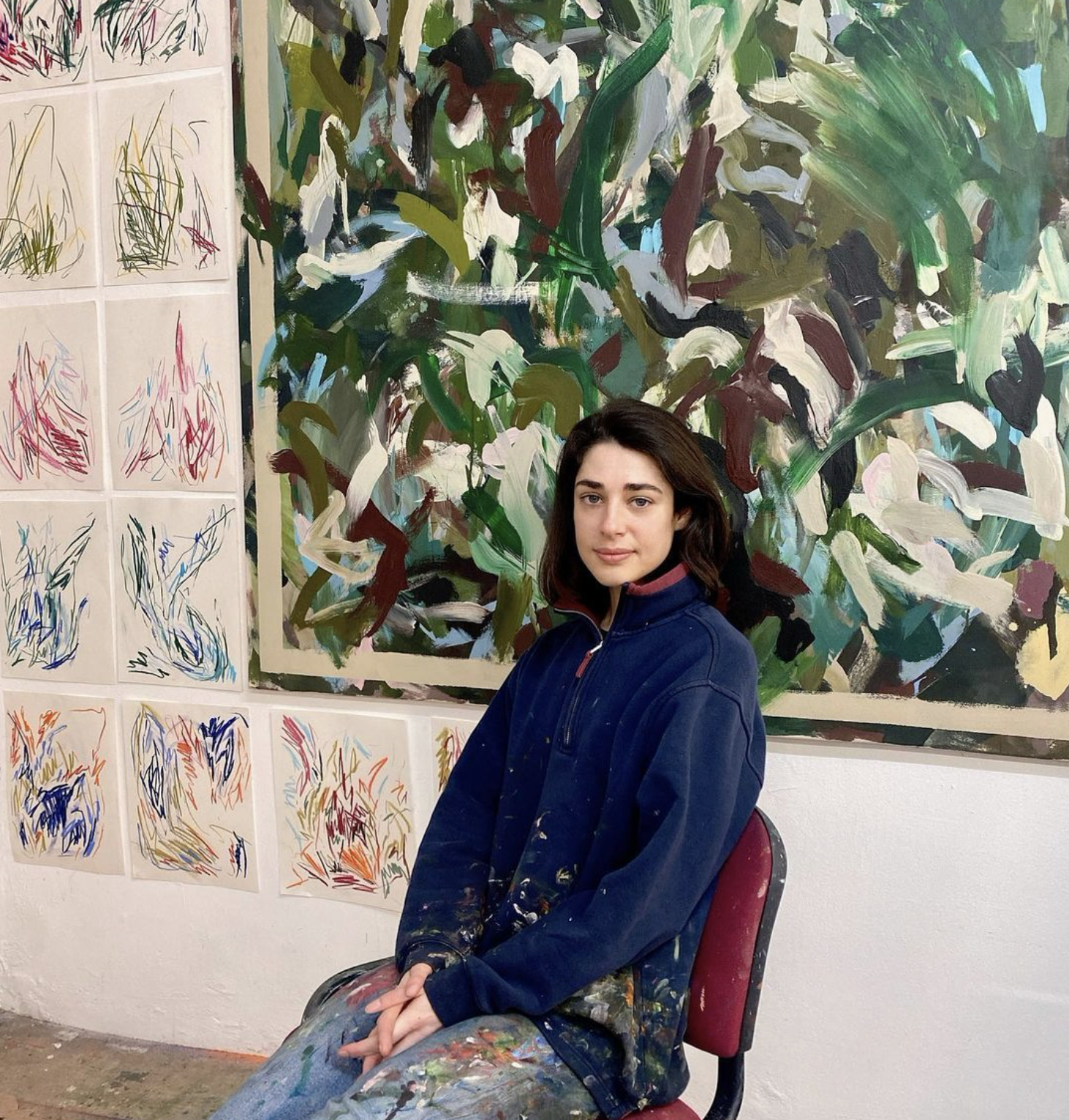
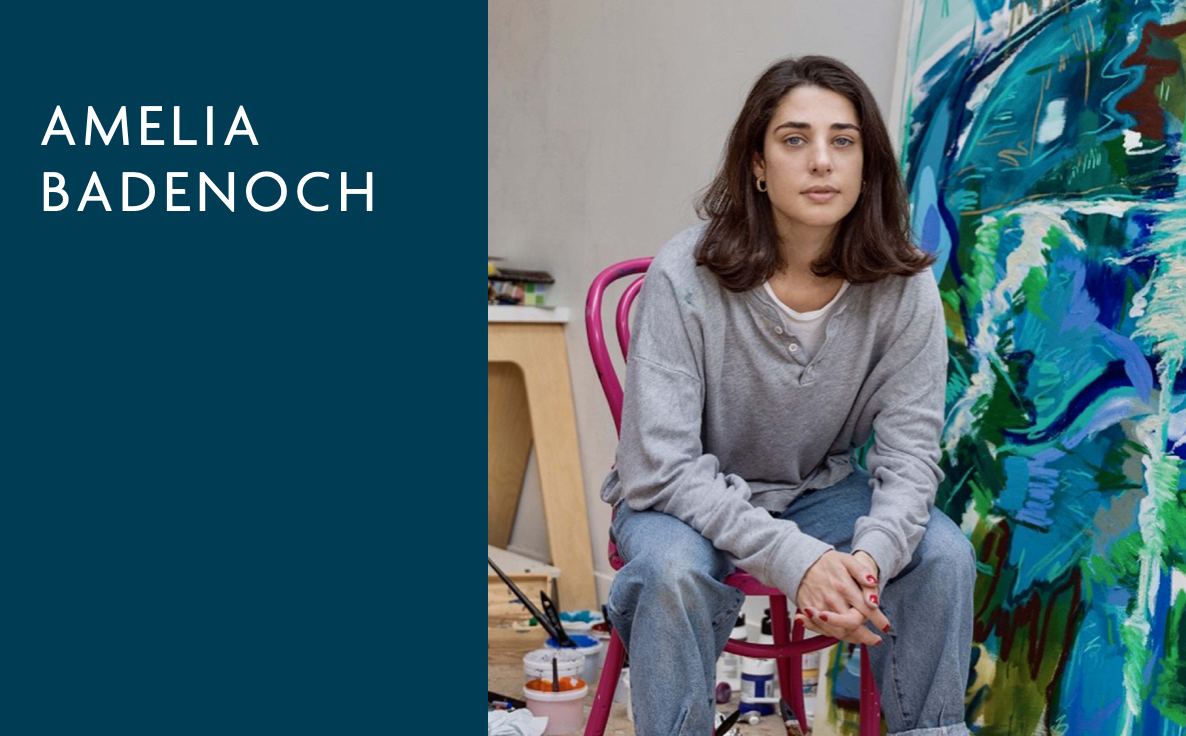
In the studio with Amelia Badenoch

In the studio with Amelia Badenoch, a multidisciplinary artist whose practice explores avenues of past and present moments and familiar surroundings through bringing her subconscious to the forefront. We met with Amelia to tell us more about growing up in London, her intrigue in the human figure, and developing her works from moments of darkness.

When did you first begin to see yourself as an artist?

During my time in Florence where I trained in the academic style of drawing and painting. (At The Florence Academy of Art). Although  it was not the style of painting I wanted to continue, I knew that my desire to keep exploring my potential through painting had been realized. 

Where are you from and what was your upbringing like?

I was born and brought up in London. However my mother is Indian and my father was Scottish. I grew up in a multicultural household and was always  given the support and nourishment to develop my artistic ability.  Coming from mixed race parents who come from opposite ends of the world gave me many avenues to explore and widened my understanding of how two cultures can influence your views, strengths and weaknesses. For example: meditation is a way that I develop my concepts as my work is based specifically on moments when i have been asleep i.e dreams and nightmares.

Paint us a picture of your artistic journey. What inspired you to first pursue, and then continue to practice?

Originally I was intrigued by the human figure, which led me to my time in Italy. However I felt a huge amount of constraint whilst being there. I felt the traditional influence of painting portraits and nudes from life dampened my creative side as I was following a particular method that demanded a specific approach to painting. Once leaving, the world became my oyster and my journey truly began. After spending time in India and working in a school for children that lived in extreme poverty; it was here I experienced the way that young girls and women were treated differently and the inequalities they currently face. This is also something I hope to return to and explore further one day. Moving on from this, Covid had a huge impact on me after losing someone close to me. I found the only place I could work through my grief was through painting. It was on the Turps Banana Studio Programme  I began to develop my particular style and process of painting. 

What’s the message of your work? 

My message is still somewhat developing. It is about the subconscious and how this really comes to life when you are asleep. We never really discuss these quick moments that happen when our eyes are closed. It can be something wonderful, or something even traumatic that sticks with you or recurs. I find this to be fascinating as we as humans are mostly not in sync with this part of our brains. Although it happens to us all, these dreams and nightmares I’ve found can speak volumes to how we process our daily lives and also our past traumas and experiences. 

I also find this to be a huge bodily experience. The moments of initially waking up from a sequence, be it happy or sad can have a big influence on the way your body feels and moves. 

Who or what are your greatest influences? 

The Buddhist monk Thich Naht Hanh’s teachings have given me a great source of comfort and inspiration throughout my meditative practice. 

Artists such as Helen Frankethaler, Louise Bourgeois, Lee Krasner and Monet are all huge influences in my work, aesthetically and conceptually.

An unexpected source of inspiration?

Although my work develops from moments when I am in pure darkness, nature is something I am continually drawn to. The afternoon light on a tree, rose petals that have died on the ground and the ever changing color of the sky.

What do you want people to take from your work when they view it? 

Personally, the most important takeaway is people are asking themselves questions. What is this place? Is it a reality or a fictitious moment? To me it’s not important to depict or label a specific ‘thing’. The viewer can have their own idea on what the painting represents. I want the viewer to move through the canvas with me, be it through a big brushstroke, or long line. If a figure is seen, I might not have seen it, or intentionally drawn/painted it. I thrive on the unexpected and as personal as these moments are for me, I want them to be personal to the viewer.

 What events in your life have mobilised change in your practice?

During the second lockdown I began working in watercolor. I enjoyed the peace and the action of pushing thin paint across paper, giving myself no particular object to paint.

 Wanting to finally work bigger, I found watered down acrylic paint had a beautiful consistency when loosely applied and I had not been able to achieve this with oils due to the surfaces I use. Abstraction became an obsession. 

What are your ideal conditions or catalyst for creating a “good” piece of work?

Conditions may vary during periods of working. Allowing my work to breathe is important to me as the business of the canvas can often become distracting. I find my most pure moments of painting are my initial brushstrokes.

Something in the future you hope to explore?

I have explored minimally with sculpture in the past, however it is something I have always been drawn to and feel I will be able to emphasize the physicalities and push the meaning of my work to a deeper level. 

Tell us about the inspiration behind one of your  works?

Getting high on a blue champagne sea is a representation of being metaphorically ‘frozen’. I often find myself in this state during the initial phases of falling asleep. Otherwise known as sleep paralysis. The experience itself is quite unpleasant, with my clenched fists and ringing in my ears- however the moments of diving in and out of the darkness gives me almost an outer body experience and it is something I am now consciously aware of and can almost control and bring myself back into my physical state of being.  

Posted on

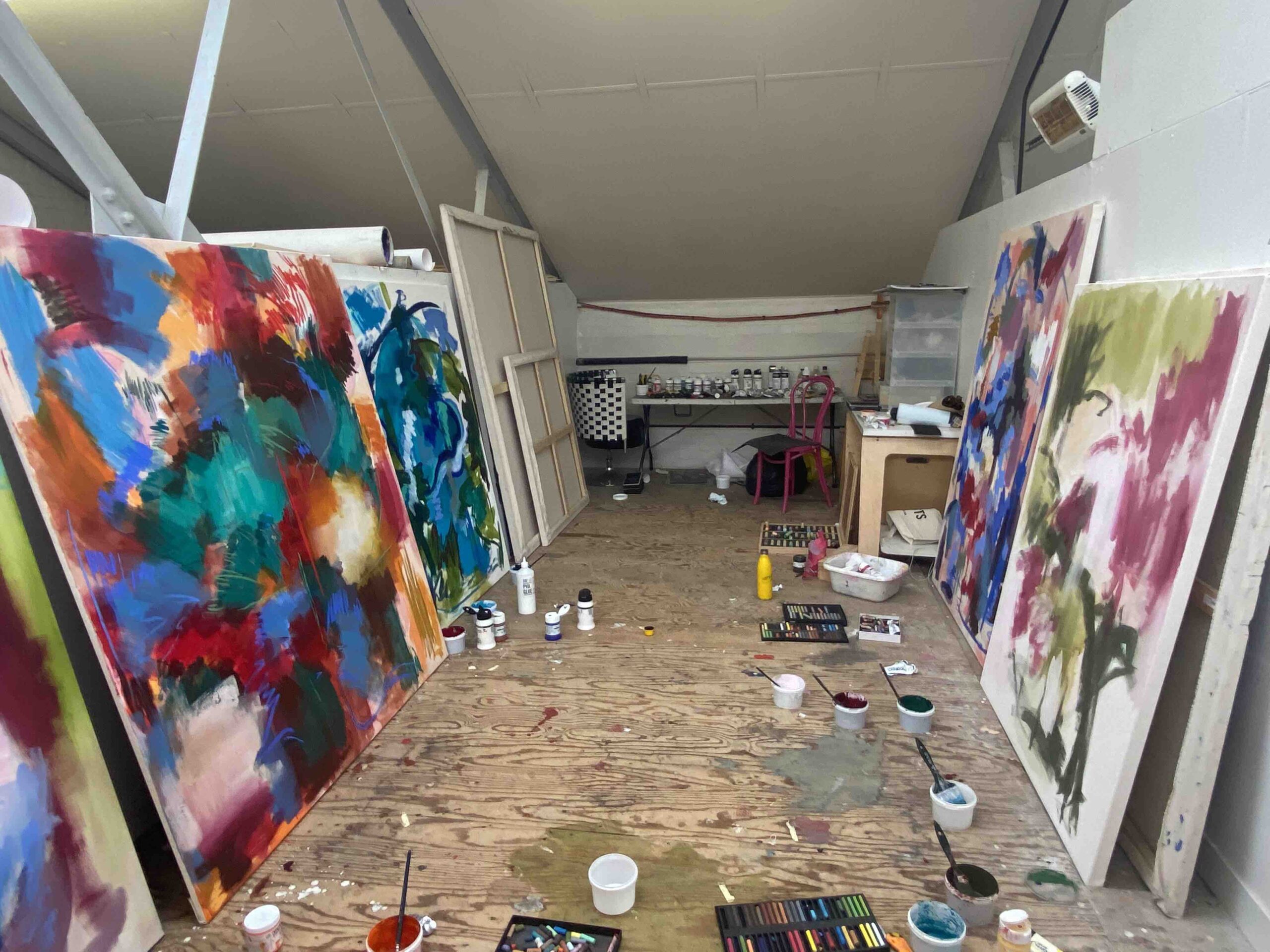
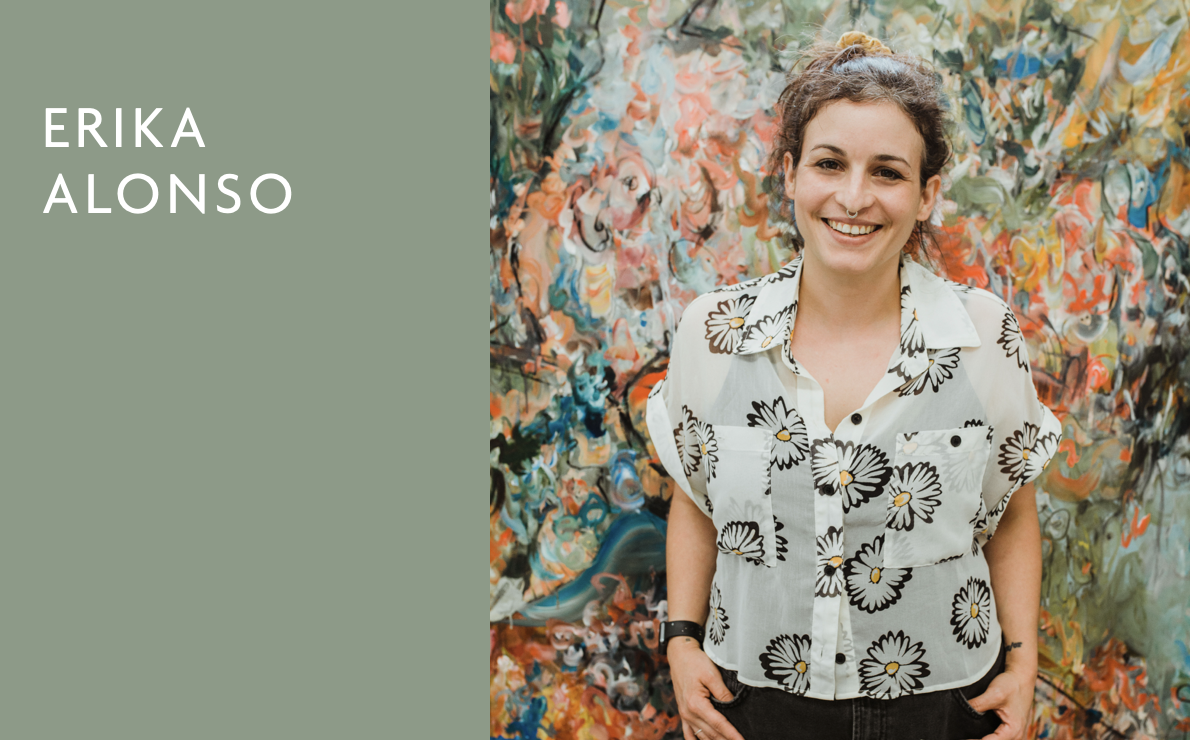
In the studio with Erika Alonso

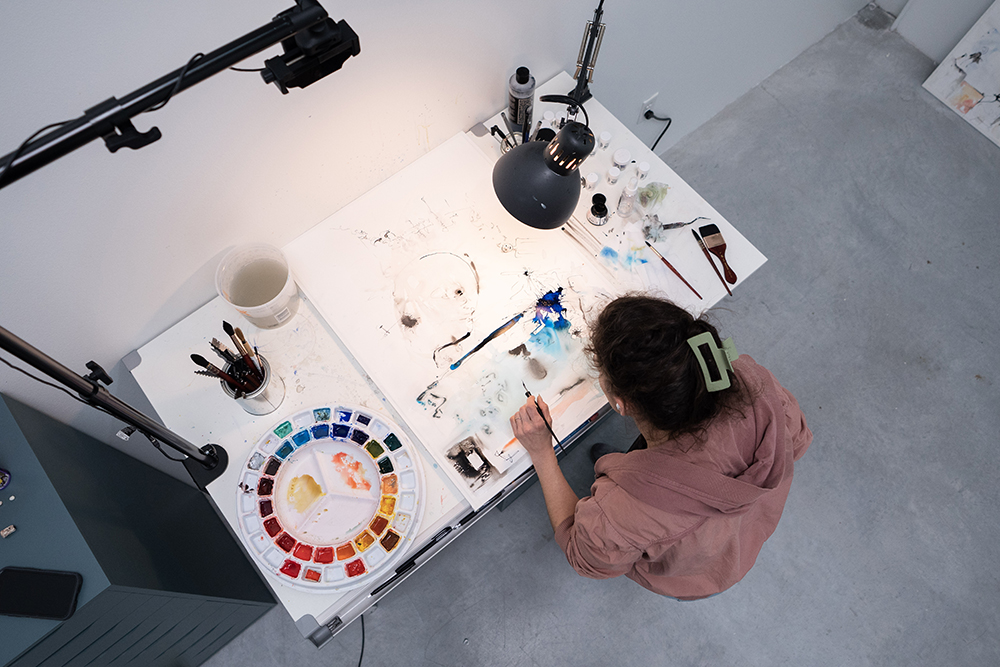
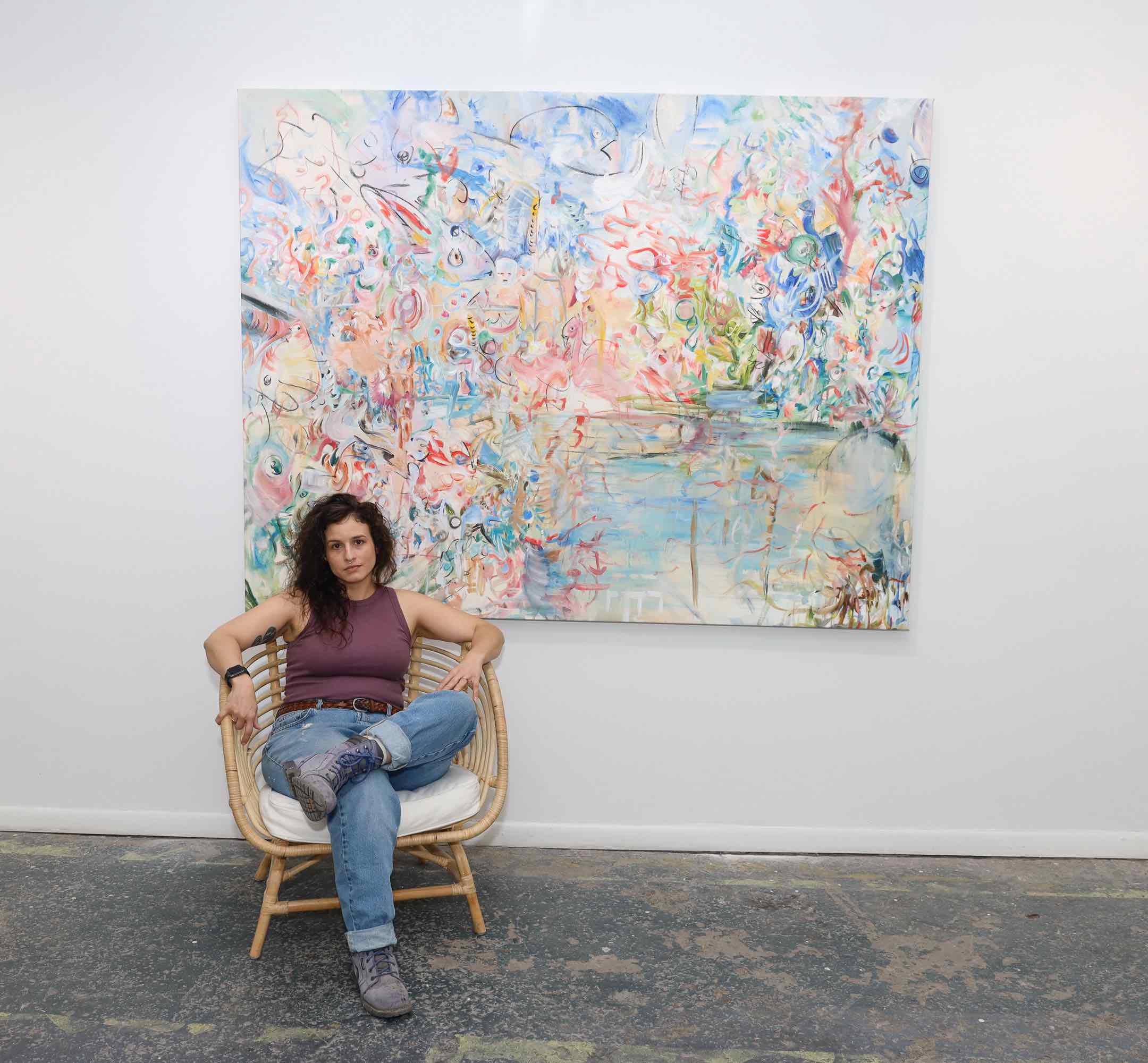
In the studio with Houston-based artist Erika Alonso. We met with Erika to tell us more about growing up in Southern California, finding inspiration through ballet, and her dream-like memories made of paint.

When did you first begin to see yourself as an artist?

I’ve always been artistic and wanted to be an artist since childhood, but it wasn’t until my early thirties that I started seeing myself as an ‘artist.’ Meeting myself as an artist in my early thirties was meant to be; I had already gotten to the point where my self-confidence outweighed the influence of others’ criticisms. Also, my mindset changed: if I’m making art daily, I am an artist. That makes sense to me, so that’s what I do, and now I can call myself an artist without reservation.

Where are you from and what was your upbringing like?

I grew up with my parents and two siblings in southern California, a place that often inspires my landscape-like abstracted paintings. We moved to South Texas when I was 10 and again to Houston when I was 14. My upbringing did not encourage me to pursue artistic endeavors seriously. Art was a hobby. Sure, some artists make a living off of creating their artwork, but those are few and far between—and it’s more likely that I would be a “starving artist,” and they didn’t want that for me!

After high school, I wanted to attend art school, but my parents encouraged me to get a business degree. In retrospect, I’m happy they did—I’ve found that my education and work experiences strengthen me as an artist. Artists have to make their art and run a business. In addition to painting, I can build my own website, install vinyl lettering for exhibitions, plan and manage projects, write successful grant proposals, and more.

Another thing that has impacted my work is how I view work. My father’s family immigrated to the United States and achieved the American Dream through hard work and dedication. I grew up with this mindset that working hard is a virtue in itself and, in time, will bring about success. This mindset is my foundation for making art: work, work!

Paint us a picture of your artistic journey. What inspired you first to pursue art and then continue to practice creative work? 

I’m a contemporary abstract artist working and living in Houston, Texas. While I’ve always made art, I committed to my practice around 2015. This commitment was ignited by late-20s existential dread and continued thanks to my partner’s encouragement and emotional support. As a self-taught artist, I spent quite a few years learning how to make art: the methods, mediums, materials, color theory, etc. Then, in 2018, I focused on what I wanted to paint. By mid-2019, I had found my style—fantastical and curious watercolor paintings—and moved into my first art studio. By 2021, I had taught myself to paint in oils and acrylics and started working large-scale.

What’s the message of your work? Where do they come from?

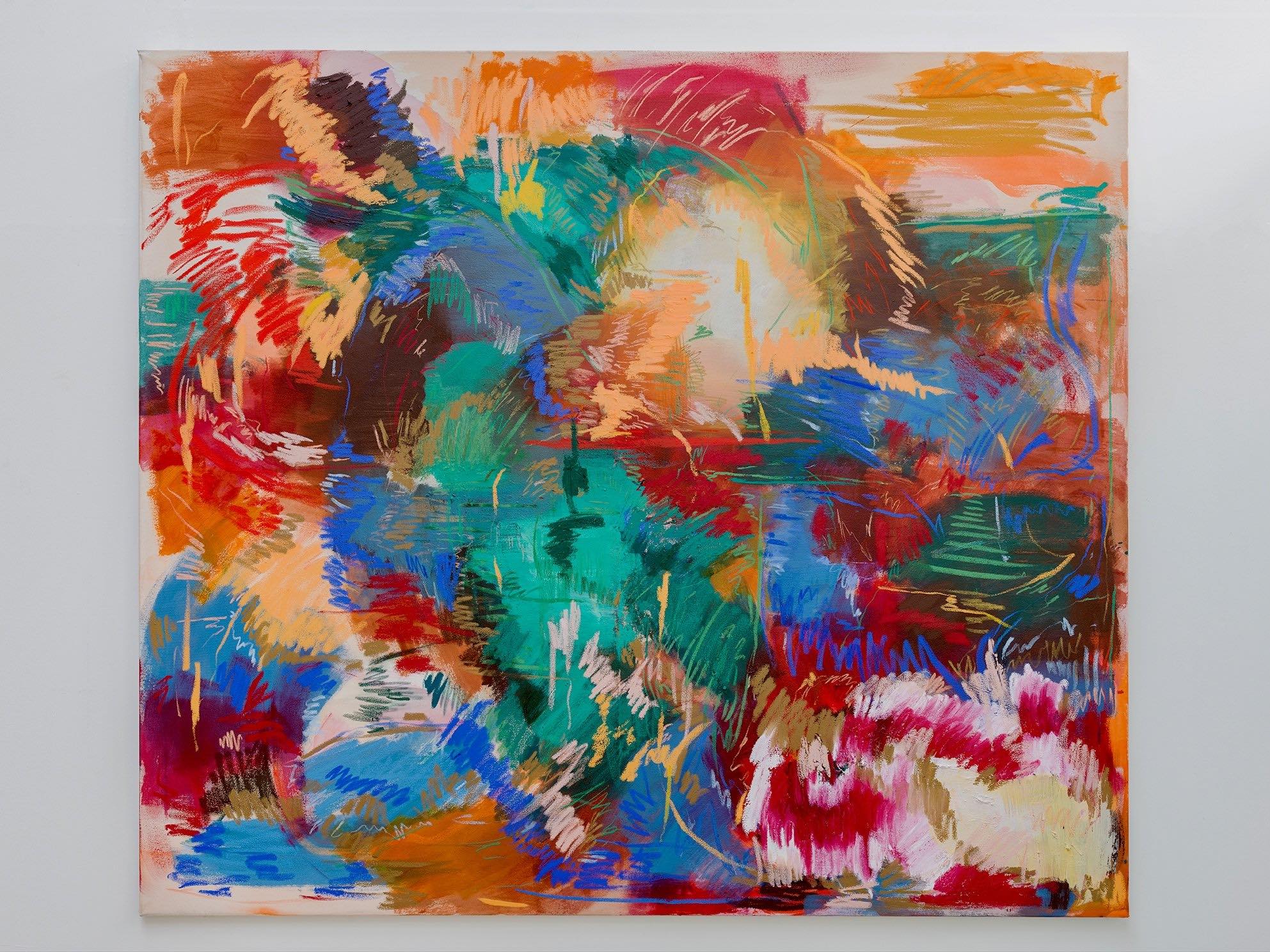
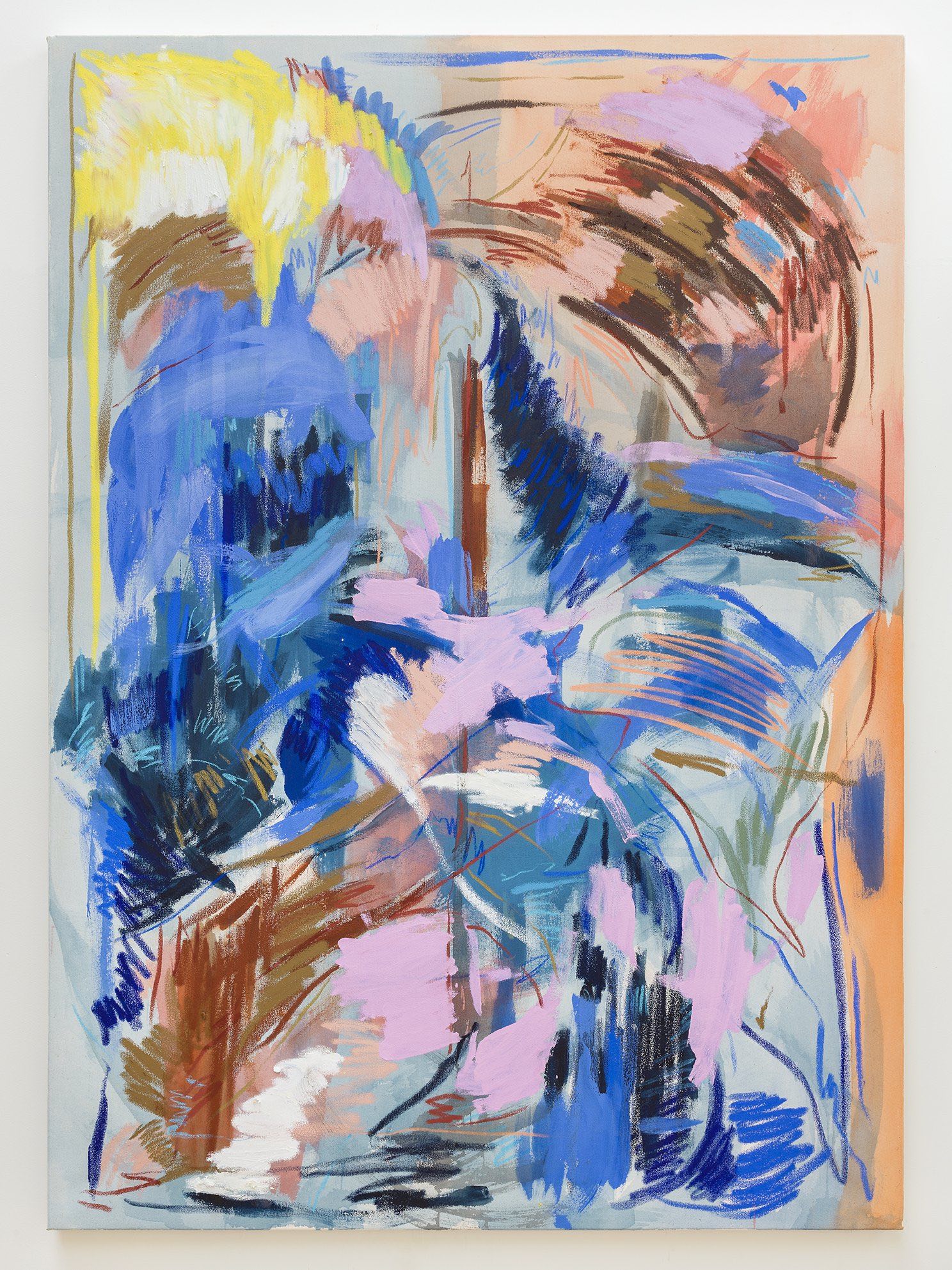
My most recent works are an experiment with abstracting landscapes and figures in a way that conveys a dream-like memory made of paint. These whimsical, abstract-figurative landscape paintings are meant to capture a moment in all of its fleetingness—the movement and rush and whirl of it.
I like to describe my work as an escape from reality: my paintings are places I’d like to spend my time—places that are indeterminate, dynamic, stimulating, enchanting, and complex.

Who are your greatest influences?

My current influences can be seen plainly in my work: I’m inspired by Willem de Kooning and his use of charcoal and blending of unconventional materials, as well as his idea of a “slipping glimpser”; Marc Chagall’s whimsical, dreamlike paintings; Cecily Brown’s fractured and whirring brushstrokes; and Julie Mehtru’s mark-making. Most recently, Ruth Asawa’s tied-wire sculptures influenced me to explore wire sculpture. I’m also influenced by artists from other disciplines, like singer-songwriter Nick Cave and the late musician-poet David Berman.

An unexpected source of inspiration?

I’ve found that ballet is very inspiring! I think it’s something to do with storytelling through movement and rhythm. Over time, I’ve come to believe that everything I see, hear, and experience inspires my art somehow.

What do you want people to take from your work when they view it?

I want my work to inspire viewers to engage their imagination to come to their own conclusions. I actively try not to think about the viewer while painting because I am filled with doubt and hesitation when I do. The process is for me; what results is for the viewer.

What are your ideal conditions or catalyst for creating a ‘good‘ piece of work?

The only difference between a good and bad painting is a feeling. That feeling is what creates the ideal conditions. I have to feel as if I am completely free of responsibilities; I don’t have to be anywhere, meet anyone, or do anything other than make art. I do my best work alone; I cannot be tasked with self-awareness or consideration for others. I have to be free to do whatever I want. If I can feel this way, it brings about an extended daydream, maybe similar to what others call a flow state. The less I think, the better the outcome. Time and again, I’ve found that my best paintings are the ones that paint themselves.

Tell us about the inspiration behind one of your paintings.

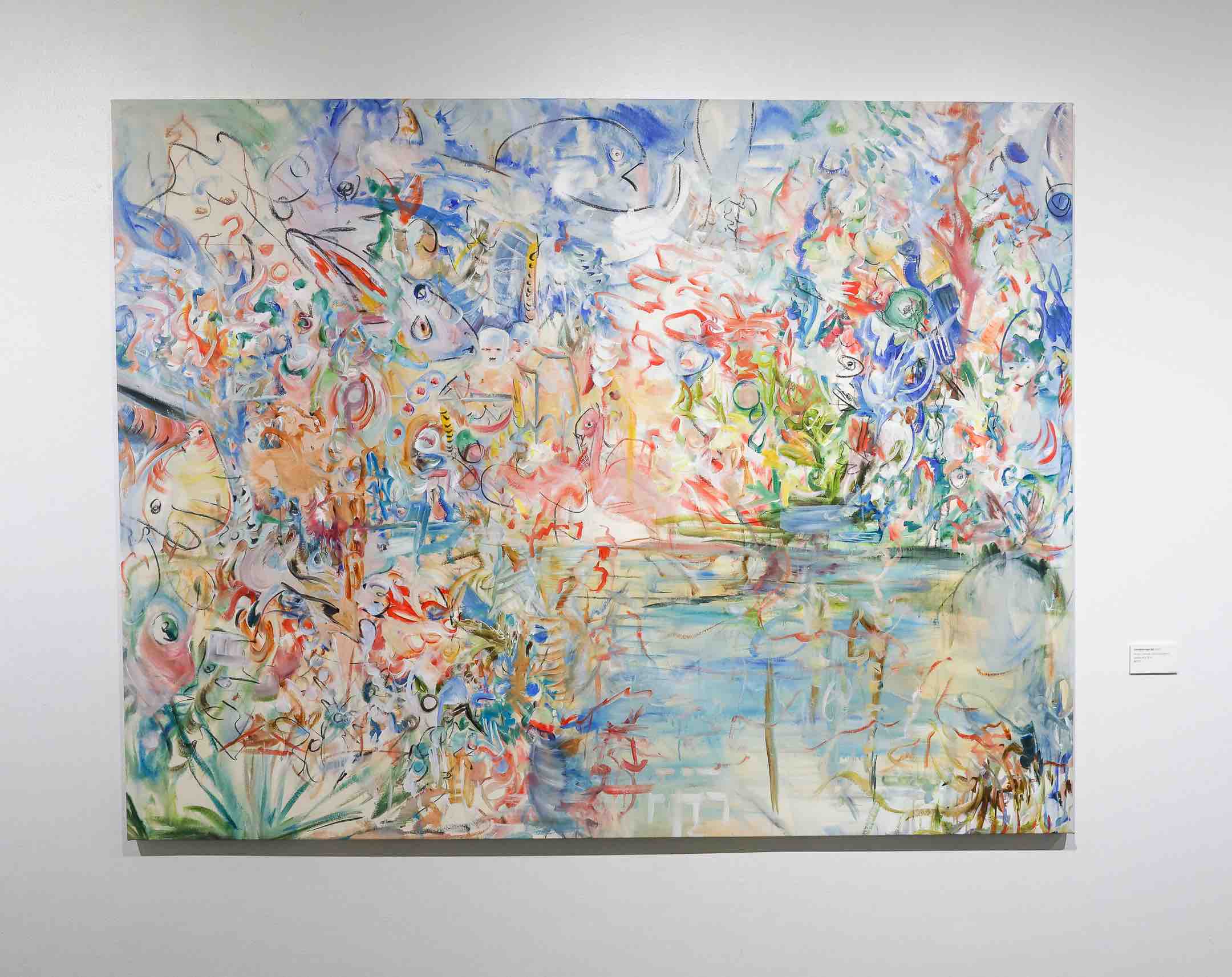
Land(e)scape 02 (2022) is reminiscent of a white-sand beach. It has narratives superimposed onto the seascape and was inspired by the stories of three older women who immigrated to the United States from Latin America when they were younger. I sat down with them and recorded oral histories to capture their memories of their homeland and their experience coming to the United States, and I listened to their recorded stories as I painted.

Something in the future you hope to explore?

In the future, I’d like to explore how I can achieve my watercolor aesthetic on a large scale. With watercolor, timing is everything, and I have to work very quickly—a difficult thing to do when working on larger pieces.

What events in your life have mobilized change in your practice & aesthetic?

Getting an art studio made a big difference in my work. I finally had the space and isolation required to make great paintings. My studio allows me to experiment with different mediums and to work larger than I was able to before. As a result, my art has evolved in complexity and confidence.

Describe your work in three words:

Distinct, Painterly, Movement.

What do you listen to while you work? Is music important to your art?

I almost always listen to music while painting. I usually put one album on repeat for many weeks before switching to something else.

What is your favorite read?

Art & Fear: Observations on the Perils (and Rewards) of Artmaking

Free Play: Improvisation in Life and Art

Best piece of advice you’ve ever received (any quotes or mantras you particularly connect with)?

The Joy of Painting episode featuring guest painter Ben Stahl—Stahl offers gems of wisdom throughout.

What makes you laugh?

Clever jokes. And watching YT videos of cats doing silly cat things.

What makes you nervous?

What doesn’t make me nervous?!

Is there anything you wish you were asked more often?

How does it feel to be such a famous artist? 🤠💀

Is there anything you’ve recently tried for the first time? 

I recently stayed in West Texas for a short artist residency; this was my first residency and it was an adventure!

Is there anything you’ve been hesitant to try in the past but you’d like to this year?

I don’t hesitate too much when it comes to trying new things.

Do you have any superstitions?

The evil eye (el mal de ojo) is real, and I work hard to keep it and all negative vibes out of my studio.

Would you rather know what the future holds or be surprised?

I don’t like surprises, tell me about my future!

What place in your everyday environment do you go to for inspiration?

I like going to the Museum of Fine Arts Houston and the Menil. I especially like to go to the Rothko Chapel to think in silence.

What are some things you’re most passionate about outside of your practice?

Social justice work and animal advocacy

What is your relationship with social media?

The one thing that I can bring to social media that is unique is my art; everything else is just adding to the noise. So I post about my art and little else.

Posted on

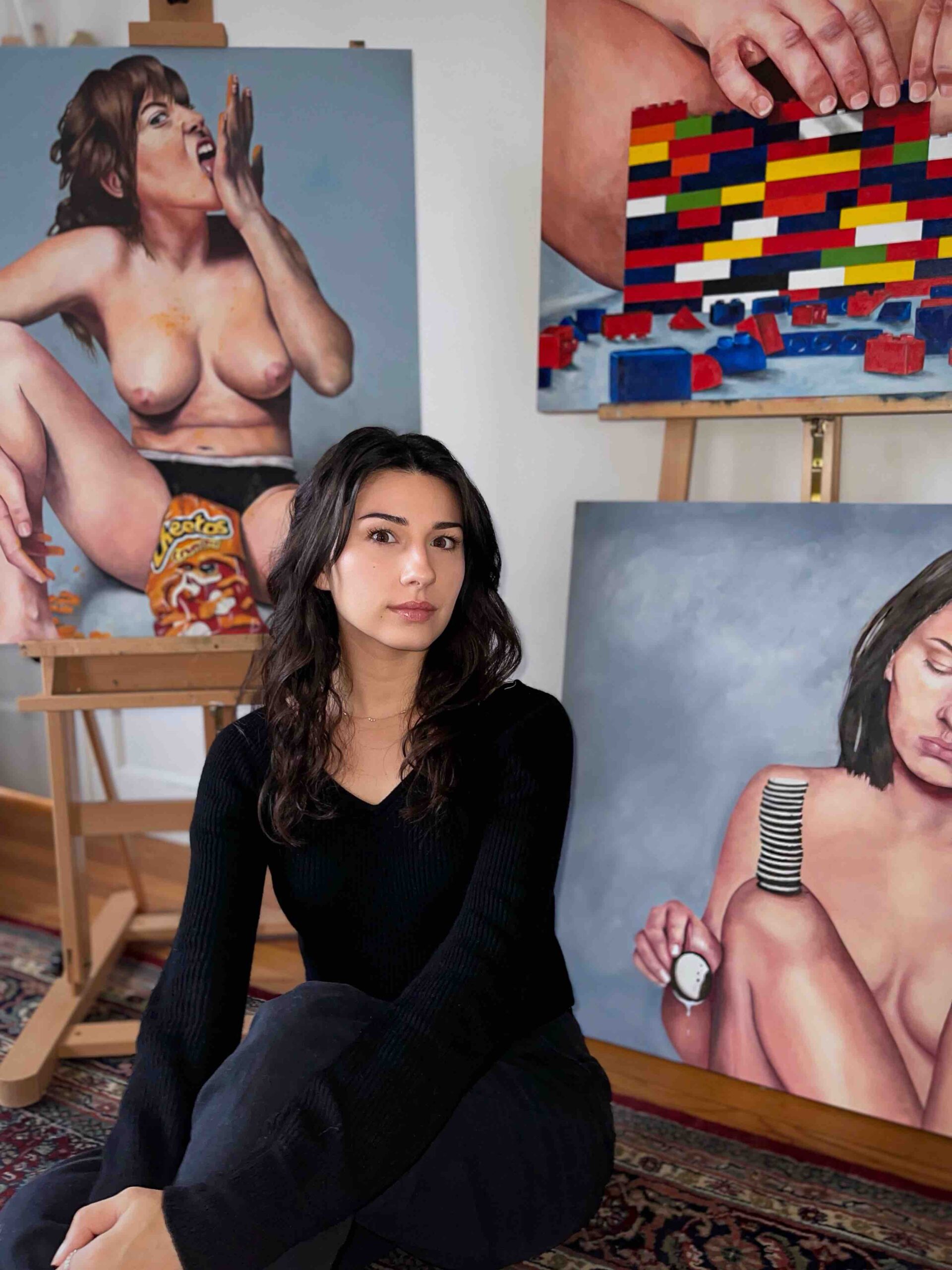
In the studio with Katherine Giordano

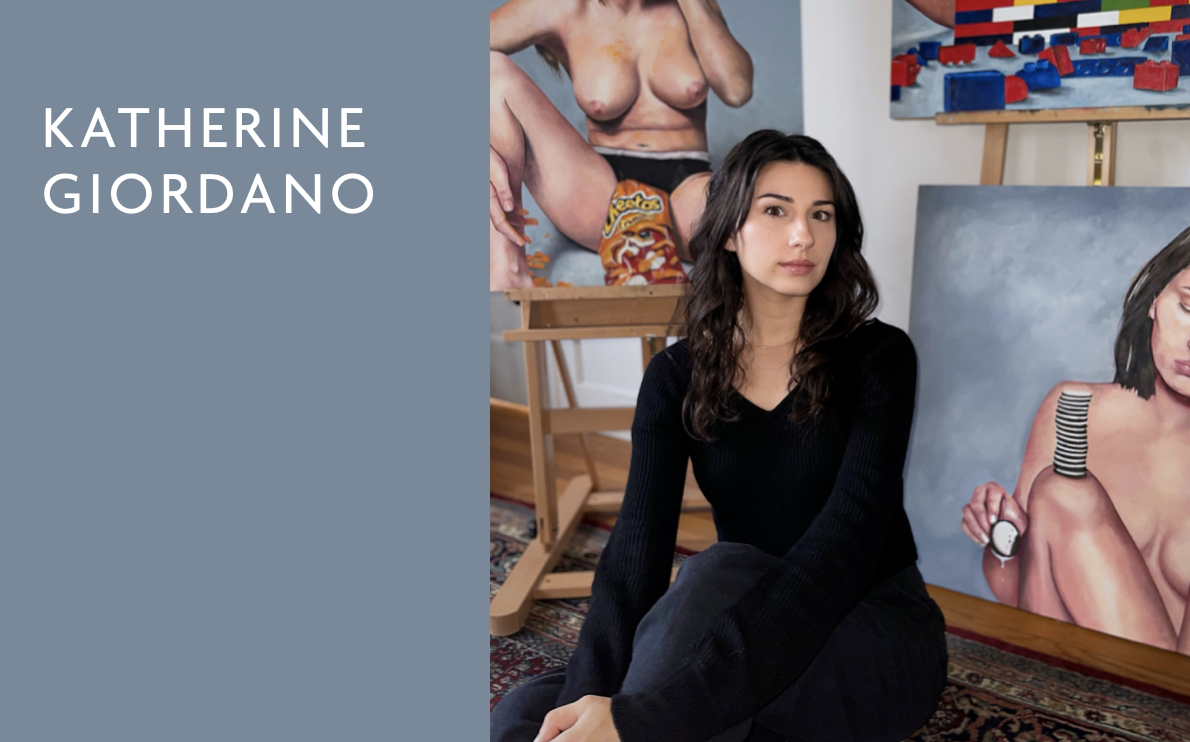
In the studio with Boston-based artist Katherine Giordano. We met with Katherine to tell us more about growing up in the suburbs, her relationship with the canvas, and her unexpected source of inspiration.

When did you first begin to see yourself as an artist? 

After the 45th United States Presidential Election, I began seeing myself as an artist in the spring  of 2016. After realizing the results, it was easy to feel voiceless about the concerns so many  Americans had in terms of the future of the country. My art practice gave me a platform to  visually voice these concerns and involve myself in a supportive space amongst other individuals  who shared the same fears. Nasty Woman Exhibitions started a movement throughout the United  States to raise money for various organizations supporting marginalized persons. I am grateful to  have been a part of multiple shows with my work. I have met many incredible people and  learned so much about the art industry through this trivial time attempting to make something  positive out of a hostile political situation. 

Where are you from and what was your upbringing like? How has this impacted your work? 

I grew up in the suburbs right outside of Boston. My upbringing felt safe yet sheltered, coming  from a generally quiet area and a small town. My family is extremely close, so growing up in the  same surrounding as my extended relatives was a privilege. In regards to this, as I became older  and went off to college, I always wanted to learn more about the world and experience so much  more outside of my community. I studied abroad in Florence, where I had the opportunity to  travel around Europe and eventually moved to England for my Master’s course at Goldsmiths.  My upbringing has impacted my work because even though I came from a small town, I never  wanted to feel like my voice had to be small. It pushed me to want to be myself authentically,  voice my concerns in my art practice, and see outside my community. 

Paint us a picture of your artistic journey. What inspired you to first pursue, and then  continue to practice, artistic work? Was there a pivotal moment when you felt you were on  the right track? 

When I was in my college courses studying painting, politics inspired me to think critically about  what I was making and how I wanted to display my voice in my visual work. At a young age  learning about the technical components of painting, I also found it essential to extract my  research from the news and media, learn about it, and then paint about it. Doing politically  charged work energized me to keep me on track, to continue painting and learning about the  complexity of the world around me. 

What’s the message of your work? Where do they come from?  How would you describe your aesthetic? 

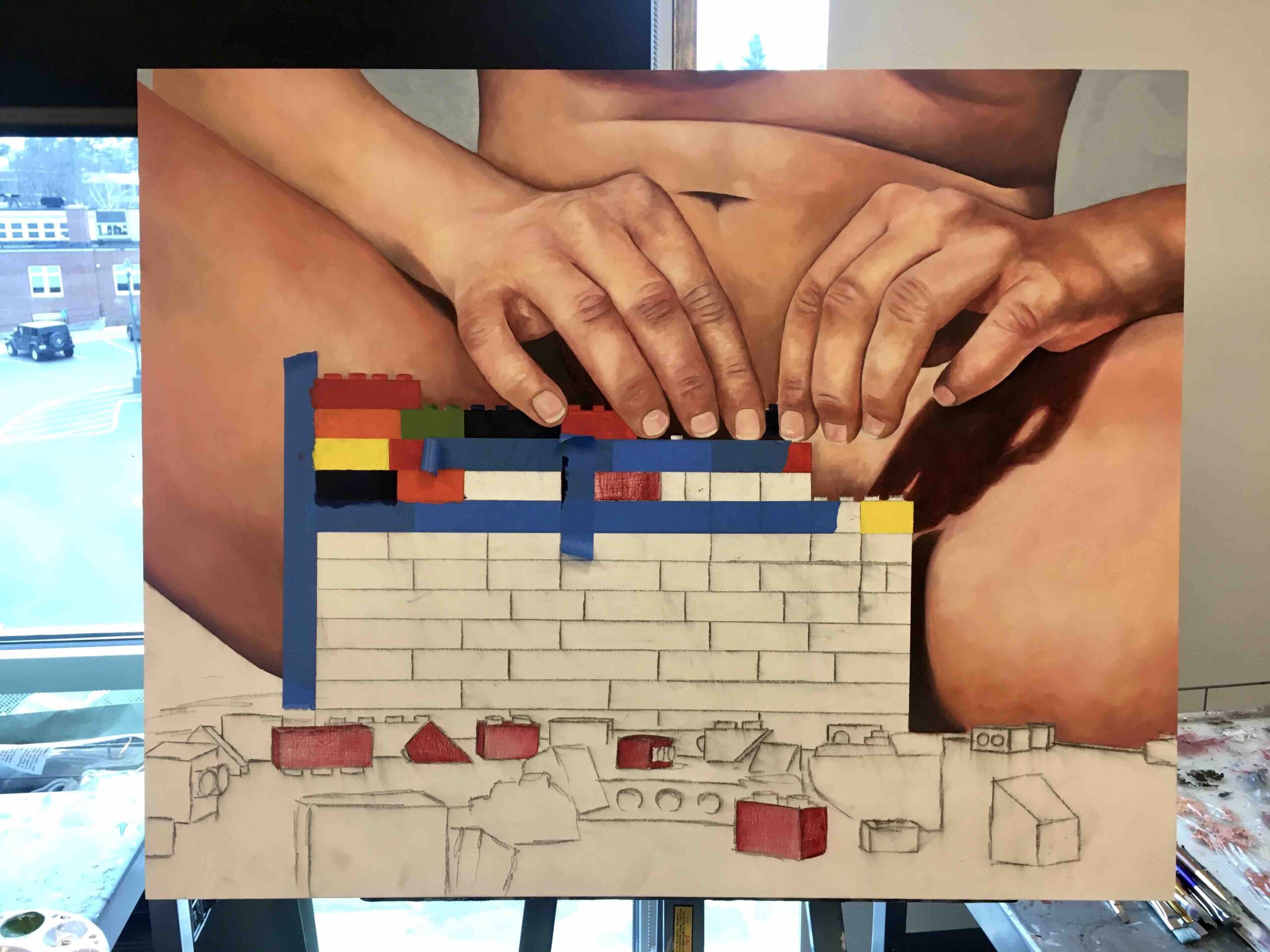
I have an obsession with rendering skin tone, it is hard to explain why, but I love the ability to  render something that feels fleshy and raw. In addition, the message of my work seems to fit into  the lens of empowerment in reclaiming agency that manifests in the female form. I also like to  include satire in my work, using objects as metaphors. 

Who/what are your greatest influences?

My most significant influences on painters are Chloe Wise, John Currin, Issy Wood, Jenna  Gribbon, etc. I could go on. I love going to painting shows and seeing the hand’s intimacy of the  artist. As I mentioned above, I have this obsession with the rendering of flesh, so seeing how  others portray fragments of that in their own work inspires my own practice. 

An unexpected source of inspiration? 

Ironically working as a bartender has been a source of inspiration. Working in your studio can be  quite isolating, especially when you’re not attached to an academic institution. The hospitality  industry has been such a positive experience for me in terms of meeting so many different kinds  of people that you usually wouldn’t come across and converse with about various topics. I have  learned a lot about work ethic and being thrown into high-volume stressful situations. I have  made some lifelong friends through hospitality and the constant social aspect of this job. Just  learning about others has inspired my work.

What do you want people to take from your work when they view it? Do you have the  audience consciously in mind when you are creating? 

I never want to assume how people will read or view my work. As an artist, I intend to  investigate a topic, visually represent that to the best of my ability, and allow my audience to  develop their own opinions. Of course, the audience is always in mind because I believe that  accessibility in my art practice is considered, but what I expect from my audience is just for them  to enjoy what I have made and give them the agency to view my work how they see fit. 

What events in your life have mobilised change in your practise/aesthetic? How has your art  evolved? Do you experiment? 

I haven’t lived in one place for more than a year over the past five years. With that being said,  I’ve so many new incredible people, artists and non-artists alike. So, getting feedback and the  opportunity to talk to so many different people about my work has pushed me on what I am  creating and critically analyzing why I am making it. Goldsmiths, especially, has been such a  profound experience in terms of the cohort I have the privilege to be a part of and see how others  operate in their practice to then reflect on my own. 

What are your ideal conditions or catalyst for creating a “good” piece of work? 

This is a tricky question, I think “good piece of work” is a subjective phrase. Personally, I never  feel any of my paintings are finished, so it is hard for me to stop and consider something good or  done. But, on the other hand, I just love to create, so sometimes, when I put something away and  move on from it, I can revisit a painting and see if I am satisfied with a fresh set of eyes.

Tell us about the inspiration behind one of your works? 

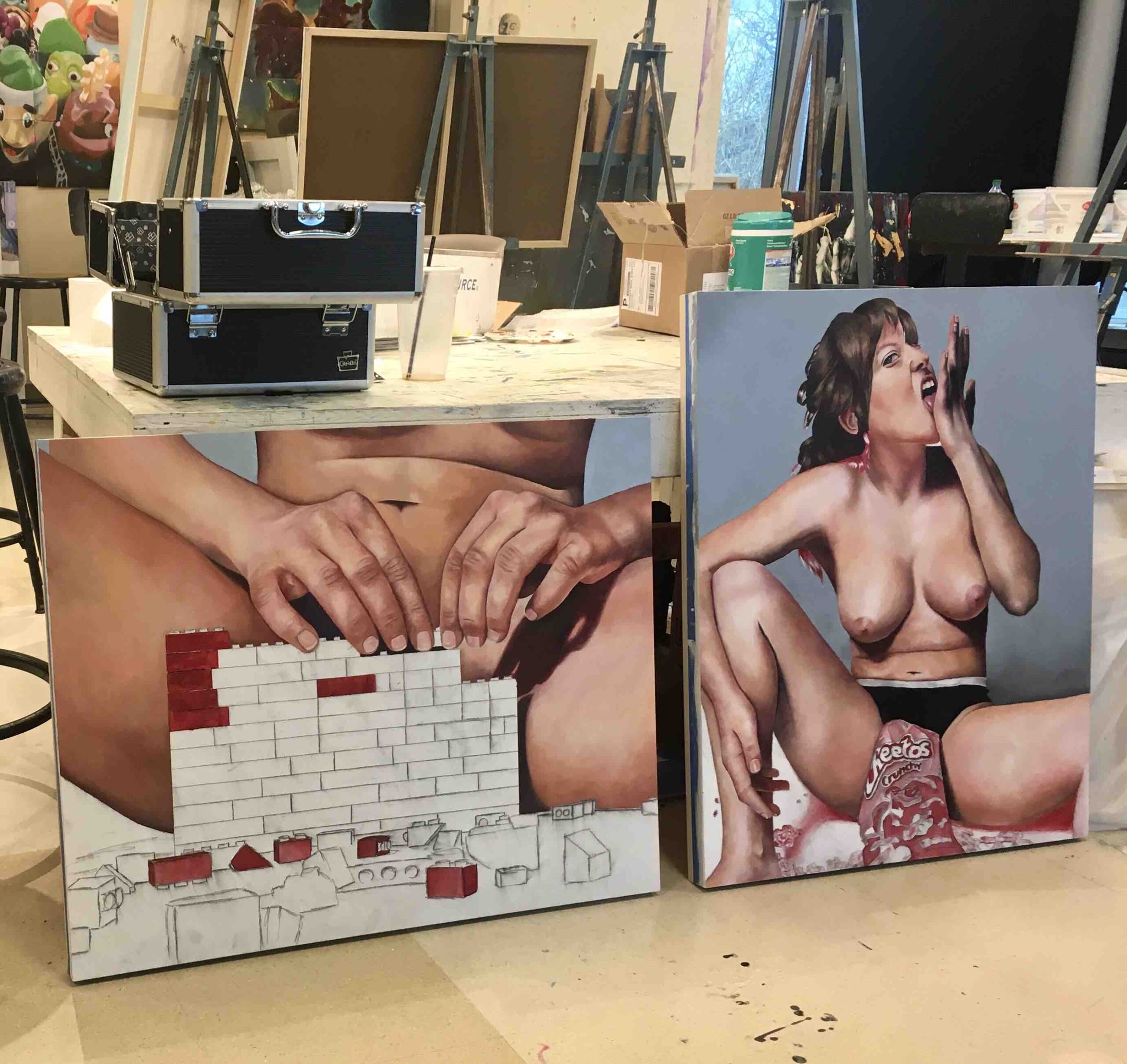
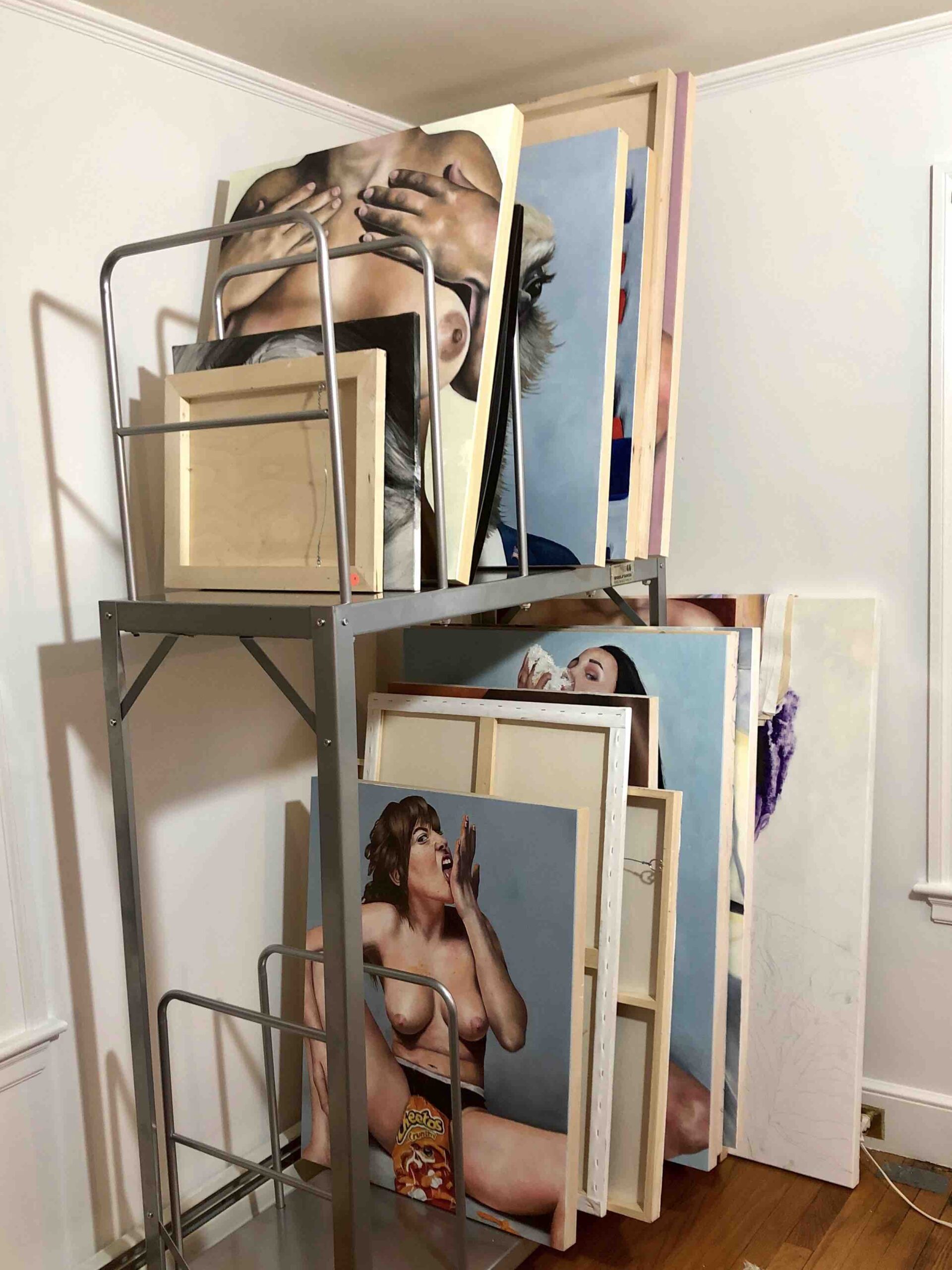
Nasty Women was created as direct commentary to when Donald Trump referred to Hilary  Clinton as a Nasty Woman during one of their debates. Politics aside, the feeling I got from him belittling a woman with such crude, and offensive language inspired me to reclaim some form of  agency from it. The model’s gaze is directly engaged with the viewer, seated comfortably,  grotesquely eating Cheetos. The power dynamic in scale is directly meant to be “eating his words”. We cannot control how others treat us, but I wanted to manifest in this work to rise from  derogatory language and not tolerate it. 

Something in the future you hope to explore? 

This list could go on. At the age of 26 I hope I have a lifetime of new and exciting things to  explore in my art practice and just life in general.  

Describe your work in three words: 

Fleshy, Charged, Ironic  

What do you listen to while you work? Is music important to your art? 

Honestly so many things, from rap music, podcasts, DJ sets, documentaries it depends what  mood I am in. Sometimes I just want to listen to someone else talk other times I need high  energy music to push through a session.  

What is your favorite read? 

Currently Glitch Feminism by Legacy Russel. It is an incredible book that speaks to the  contemporary discourse of intersectional feminism and the digital space online.  

Best piece of advice you’ve ever received?

Truly anything my mom says when I need advice on something. She is the most grounded and  supportive person I know.  

What makes you laugh?

Luckily my friends, I am fortunate to be surrounded by so many great people in my life. 

What makes you nervous? 

The realities of the world around us, it is hard to have a positive outlook on society sometimes  when watching the news.  

Is there anything you wish you were asked more often? 

Want to go on a holiday? 

Is there anything you’ve recently tried for the first time? 

Stretching my own large scale canvases instead of purchasing pre-stretched. My hands hurt but it  feels more rewarding.  

Is there anything you’ve been hesitant to try in the past but you’d like to this year? Maybe doing some ceramics, I typically just work in 2D mediums.  

Do you have any superstitions? 

Yes, coming from Italian heritage, culturally we are full of superstitions. I wear specific jewelry  that has been passed down through my family as a form of protection.  

Would you rather know what the future holds or be surprised? 

I have too many questions about the future if I think about it too much, sometimes ignorance is  bliss.  

What place in your everyday environment do you go to for inspiration? 

Probably my studio, I have a large cohort at Goldsmiths so it is always activated with friends and  critical conversations.  

What are some things you’re most passionate about outside of your practice? 

I really enjoy going to the gym, I think working out has been a great way for me to ground  myself in my daily life to stay healthy and happy.  

What is your relationship with social media? 

Can’t live with it but can’t live without it.

Posted on

This Butterfly We Tried to Anaesthetize

curated by Sonny hall
This Butterfly We Tried to Anaesthetize

Leading up to the moment where this show found its devoted plate to be plated on, to be starkly admired from and then savagely and honestly digested off of. I found myself obsessing violently about my kitchen and the fact it needed a large refurbishment. I had arrived at the problem. A problem that began in my head and then frighteningly composed a rather fruitful and telling existence, outside of me. In the cold water, in the silence of the kitchen gas, in the breeze that thrusted through my cracked kitchen windows, in the exact and cutting motion of my knife each morning when illustrating the onions, peppers and tomatoes that compliment my morning’s signature dish, in the obsessive compulsive disorder that graces me with such an enchanted and confident sequence to pleasantly manipulate each agonizing moment of each tempestuous day, in the absolute flux, in the non-transferable feeling that is naked and invisible and sits with me for breakfast every morning, uninvited. In a swirl of dread, In a trickle of contentment, in all that typifies one sensation in one vessel, that is me. And with that, in the world that I greet to leave, each day. Only to meet again in the next moment. This problem gave life to me, in a moment of delusional racketeering of self. Then to others, then to self, then others again. All divided, well portioned, liquidized, in a huge bowl I found in my kitchen. I owned and developed a mixture that I became and controlled all at once. I stirred it while being stirred, spat in, admired, crucified, mixed with love then hate then love, again. Whipped into a ghastly awareness, full of true sentient. 

By using any other technique or being in any other place with any less or more compulsive compression laid out into my heart and spirit, would have only been true to what I could not have handed to myself, misplacing the heart of the problem, misplacing my very actuality. 

The procedure meant everything. And we all know every procedure exercised within the principles of truth will always display complications. The complications and trials of my problem’s responsibility was where the true and shiny spectacles breathed unapologetically. Calling for nothing but a bamboozled being to the issued line of action. This is where the procedure’s potential held its definition in shimmer and shadow. This is where the butterfly rids the chrysalis, where crystalized triumph and disastrous potential are all catered for, by a confident sequence that is sprinkled then fueled by precise tampering. 

This sequence came with truth and nothing else. The probable outcome of the untangling of this muddle made it’s intentions known, initially in the swelling of my bowels. It was in this moment, when I truly gauged the scope for loss of self and dramatic discovery and my grand opportunity to germinate my world, healthily in one combustible instant. This instant came as a daggering feeling of unrest. A feeling that brang notice to the fact I was carrying all the earth’s soil in my stomach, as if I had swallowed my own mixture, as if I had eaten every matter in my kitchen’s interior while neglecting the food in the fridge, as if I had become too excited for life and dread ridden all at once. When noticing this, that is when I discovered the gas leak in my kitchen. The problem was established.  Like any grand discovery, soon after, I found myself in the hornet’s nest, my senses and my reasoning absolutely covered by a significant uncovering.  Uncoiling it from it’s true nucleus. The problem that became my mission transgressed into a defeat and a victory all at once. There and then came the queen’s succulent honey. Then the stings. Then the bayonetting stings. Then the sweetness and so forth.

This personal experience made me think of the process one has to bear in order to seek out the formidable all defining answers. The real notation that I took from this and swallowed up wholly, like a prescription from my chemist, was that no answer can solely be defined. And that the counterparts and intricacies within the labyrinth of the core problem are the true noteworthy contributors to the entire message and the entire answer you are looking to receive. But by receiving it and putting it in your pocket and thinking you have the real solution to your problem would be absolute insanity. It would be like licking a fool’s achilles heel in hope for enlightenment. You would never do such a thing. In order to reap the advantages of possessing an answer you have to look far into the rectum before cleaning it. You have to look in the places of dishevelment, in a single flower’s full development, in the unpolished conditions that actual flare can naturally exist, in confusion, in the source of understanding and the origin of vacancy. Only then, can you start to expect to understand the problem. Then the answer. Then you can unwrap the present and receive the miniscule diamonds that are embedded in the spine of the fight for understanding.

This sinuous and sacrificial process exists in each artist that I chose for this show. In choosing everyone, I knew the selection of artists had to be people I knew in some way intimately and truthfully. I knew that everyone involved had to conduct themselves through continual honourings of veracity to self and then the world. Their work being the aftermath of their discoverings and impulses. This mob of humans know of a personalized methodical countermeasure to the human condition in many designs, silhouettes and abrasions. By probing then laying out such a category, I was able to form a faith in a disjointed but natural unity that these artists greatly symbolize. Unified in their discrete solitary missions as creators and instigators of expression and fine utterings and unified together in the framework of each other’s shared values and blended obversitys that only interest the gamut of truth and it’s herculean abilities. This is the bonding answer to my dislocated problem. 

Alexander James

Jack Laver

Adrian Schachter

Aidan Wallace

Bella Newman

Nicole Della Costa

Georgie Sommerville

Kesewa Aboah

Machine Operated

What draws you to an artist?

When they want to communicate in a proper way. Proper, being; honest and unapologetic. I want to feel and see why they are taking action in offering a gesture of expression .... Desperation, really and truly.

AucArt Selections

The selection of artists I have chosen are all people I appreciate in their character as well as their works. I feel as if there is a parallel with each artist, in how their work complements their character and vice versa. This is important to me because it outlines a truthful act in the heart of their output. 

The show is all about truth and where truth comes from, the need to harbour it correctly and the ways to go about doing so. It is a boundless expedition for each and every human. And with this I find connecting to each other on this basis is the utmost important way to go. Yet action has to be made to arrive at this ultimatum

 But in my eyes I could never establish this practice, if you like, to be entirely and ultimately ultimate, ever. It is a constant back and forth, between finding truth, owning it and showing it. The bottom line is communication and I thought by choosing these artists it would bring about the perfect mixture of declarations and confessions of real feelings, that can be communicated in whatever way the artist chooses to, truthful to each individual. 


1993, uk

Triple Vision, 2020

42 x 30 cm

Acrylic on paper

Facetime Unavailable, 2020

42 x 30 cm

Acrylic on paper

Sweet Revenge, 2020

42 x 30 cm

Acrylic on paper

Alexander James patches elements of the past, the present and the pre-empted future through his practice. His works look to reflectively tell a story about time, manifesting characters and scenarios triggered from childhood memories, projecting facets of past encounters into present existence. Acting as a diary for the audience, Alexander attempts to showcase works on paper documenting his experiences or thoughts, which are later combined and expanded to create the wider narrative, weaving between mediums of digital collage, paint and fabrics. Alexander lives and works in London, UK.

1998, uk

Caves, 2020

42 x 60 cm

Mixed media on paper mounted on wood canvas

Aerial View, 2020

60 x 84 cm

Mixed media on paper mounted on canvas

Trodden Path, 2020

42 x 60 cm

Mixed media on paper mounted on canvas

Broken Fences, 2020

42 x 60 cm

Mixed media on paper mounted on canvas

Osseus, 2020

42 x 60 cm

Mono-print on paper

Stages of Silence, 2020

61 x 91 cm

Acrylic on canvas

Ghosts That Were Given, 2020

40 x 60 cm

Oil and acrylic on canvas

Tired Armour, 2020

40 x 60 cm

Acrylic on canvas

Jack Laver is an artist and musician, whose practice often works within printmaking and painting. Jack explores the fringes of these mediums, creating experimental works that utilise techniques commonly perceived as errors to create images. His work communicates an obscured view of the world that we live in, adapting everyday scenes and objects to make strange of the mundane. Jack lives and works in London, UK.

1996, spain

Untitled, 2020

10 x 14 cm

Pen on paper

Untitled, 2020

122 x 153 cm

Oil pastel on paper

Spoonfed, 2020

42 x 59.4 cm

Pastel and coloured pencils on paper

Lamentation After Giotto, 2020

29 x 42 cm

Oil pastels on paper

Throughout art school, Adrian Schachter was taught to question everything. Not to accept anything as given. As a result, Adrian’s developed a kind of idealistic cynicism, moving him to analyze all that he encounters, searching out hypocrisies and inconsistencies. When applied to the world of images, Adrian was bombarded with an online presence since childhood, along with the rest of his generation. There was an appetite for digesting data in every form that was nothing less than voracious. Yet, the more diverse and psychologically charged the information was, the more Adrian became increasingly numbed and detached. While trying to elaborate this though his practice, Adrian found that pairing disparate but somehow tangentially related imagery created unintended relationships more profound and unexpected than when they existed on their own. In the process of mining for content that gets translated into his paintings, Adrian teases out and highlights connections that transform the way the viewer perceives the underlying material, creating new and unforeseen narratives in the process. Adrian lives and works in London, UK.

1994, usa

TMIHNFM_SF1_G, 2020

41 x 51 cm

Oil, archival paper, and tape on canvas

CHRONOTOPE_27, 2020

100 x 100 cm

Oil, house paint, and carbon copy on canvas

UNTITLED_IMPRESSION_1, 2020

110 x 100 cm

Acrylic, ink, and archived sand paper on linen

ASFXMAFE, 2020

60 x 70 cm

Oil, charcoal, resin, silver pigment on fish glue reversed canvas

ISAFBYMN_7, 2020

41 x 51 cm

Oil, charcoal, resin, silver pigment on fish glue reversed canvas

IALLT.35, 2020

70 x 70 cm

Thread, rope, acrylic and house paint on wool

EMBRYNCEMBERS, 2020

55 x 75 cm

Thread, rope, acrylic, and house paint on wool

TRETTLOTHTMS_LEAD_3_R, 2020

30 x 24 cm

Expired elastomeric paint with polymer medium, ink, and archival paper on canvas
 

Aidan Wallace is an American artist currently based in Europe who works in a large variety of media including primarily painting, collage, sculpture, and performance. Often his work can be seen as an accumulation and collision of these techniques and materials. The objective, and underlying approach, is firstly to attempt at eradicating assurance with the material and perceivable composition. His work is in constant pursuit of an unattainable order through an alchemical process and relationship to surface. This transgressive nature allows the expression of the artwork-as-experiment to enter a realm of textural confrontation with any preconceived understanding of the codical qualities found within. Aidan lives and works in Berlin, Germany.

1999, uSA

Enderman and Her Cousin Kitty – Journal Page Diptych, 2020

25.5 x 18 cm

Inkjet and watercolour on paper

My Mom is the Only Person in this World, 2017

25.5 x 18 cm

Inkjet and watercolour on paper

My Friend Like a Petal, 2020

25.5 x 18 cm

Inkjet and watercolour on paper

Louise is not Afraid of Anything, 2020

25.5 x 18 cm

Inkjet and watercolour on paper

Mohair Dewdrop Bonnet, 2020

122 x 153 cm

Crocheted lace weight 100% mohair

Bella Newman is an American visual artists whose practice comes from a desire to position herself on the boundaries of reality. Her works reflect ideas of other realms, surrounded by mystical beings and folkloric entities, manifested through a fixation on nature and the human condition. Through film and photography, Bella combines the use of literature and imagery to recontextualize observations of a deepened story. She is influenced by her upbringing in a rural suburban town in, depicting the years where her artistic practice had developed a sense of “selfhood” conjured throughout her works. Bella lives and works in Pennsylvania, USA.

1992, brazil

Funky, 2020

22 x 28 cm

Ink and Pigment in Silica Flat on paper

Conduct, 2020

22 x 28 cm

Ink and Pigment in Silica Flat on paper

Squeeze, 2020

22 x 28 cm

Ink and Pigment in Silica Flat on paper

Wired Heart I, 2020

22 x 28 cm

Mixed media on paper

Wired Heart II, 2020

22 x 28 cm

Mixed media on paper

A Charm, A Single Charm Is Doubtful, 2017

76 x 102 cm

Acrylic on canvas

A Charm, A Single Charm Is Doubtful, 2017

122 x 122 cm

Acrylic on canvas

A Charm, A Single Charm Is Doubtful, 2017

102 x 152 cm

Acrylic on canvas

Nicole Della Costa, is an artist and poet born in Rio de Janeiro, Brazil. She works primarily in video, painting and poetry. Nicole has published two poetry collections and is releasing her next book As Serious as a Hiccup published by Pois é in Spring. 

Trafalgar Square, 2020

102 x 102 cm

Oil on canvas

Three Women With Parcels, 2020

41 x 41 cm

Oil on canvas

Untitled, 2020

41 x 41 cm

Oil on canvas

Untitled, 2020

76 x 76 cm

Oil and acrylic on canvas

Untitled, 2020

76 x 76 cm

Oil pastel on canvas

Venus in Boots, 2020

152.5 x 76 cm

Oil pastel on canvas

Untitled, 2020

76 x 61 cm

Oil pastel on canvas

Dogfight, 2020

102 x 76 cm

Oil on canvas

A Good Idea, 2020

122 x 91.5 cm

Oil pastel on canvas

Georgie Sommerville looks into the fluidity of moving image and the idea of storytelling through her artistic practice. Through taking early 20th century photographs of the East End, Georgie juxtaposes imageries through bright colours and bold line, creating abstract shape through silhouettes and shadow. Georgie scrapes away the oil off of the canvas, revealing the earliest marks and simplest forms. Instead of giving these figures an obvious identity, she focuses on silhouettes and shadows where faces and landscapes blend together. Georgie lives and works in London, UK.

1994, uk

Waterworks 1, 2020

103 x 67 cm

Dry pigment and pouring medium on paper

Waterworks 2, 2020

103 x 67 cm

Dry pigment and pouring medium on paper

Waterworks 3, 2020

103 x 67 cm

Dry pigment and pouring medium on paper

Waterworks 4, 2020

103 x 67 cm

Dry pigment and pouring medium on paper

Kesewa Aboah is a Ghanaian British artist based in London. She completed a BA in fine arts at the School of Visual Arts, New York in 2017. Following her move back to the UK after the completion of her studies Aboah has taken part in artist residency programs in Mexico City, Iceland and Kenya. Kesewa’s practice has a heavy focus on process; modernizing traditional techniques of embroidery and body imprinting to create a bold, colorful and sometimes haunting version of the 20th century tapestry. Her unconventional use of thread and paper relinquishes her control of the way in which the bodies take form. Allowing each work a personal narrative in both physicality and concept. Hours of untamed precision distorts her figures, realigns their limbs, rebirths their body, leaving a fragmented tribute to what once was. Kesewa lives and works in London, UK.

1997, uk

Incandecent, 2020

20 x 20 cm

Photographic negatives

B22, 2020

25.5 x 30.5 cm

Photography with hand-written text

E27, 2020

25.5 x 30.5 cm

Photography with hand-written text

GU10, 2020

25.5 x 30.5 cm

Photography with hand-written text

Machine Operated is a creative partnership between visual artists Josh Hercules and Nathan Taylor. Josh and Nathan live and work in London, UK.

Posted on
Petra Cortright Highlights

This month we asked Petra Cortright to select her favourite artists from AucArt. Nine of our most promising artists showcase their work in a range of mediums from works on paper to canvas.

Lucy Ralph

B Chehayeb

Mateusz von Motz

Khaleb Brooks

Oriele Steiner

Sarah Cunningham

Yulia Iosilzon

Agata Treccani

Ala Jazayeri

1994, uk

Lucy is a contemporary visual artist whose subtle compositions explore the body’s delicacy and resilience. At the age of 15 Lucy underwent total reconstruction and fusion of the spine which, although not disabling, has influenced many aspects of her life. This, as well as the complicated medical climate, continues to spur her interest with health and its exploration through art. 

A Charm, A Single Charm Is Doubtful, 2017

122 x 153 cm

Acrylic on canvas

£2,700

I was attracted to this because of the composition and I love the domestic space it evokes. The subtleness of the figure is very beautiful.

1990, usa

B  is a contemporary artist whose practice closely orbits themes of memory, identity and time. Her recent works confront the unreliability of memory and transfiguration, induced by nostalgia and often characterised by her gestural abstractions.

I was drawn to a lot of pieces by this artist and decided on this one. Whilst it’s an abstract selection, I think the movement and mood stir up something floral and wonderful. I’m a big fan.

Garage Sale Money for Sushi, 2020

41 x 51 cm

Oil on panel

£700

1994, uk

Mateusz is a Polish-German artist whose practice confronts ideas of memory, space, and deconstruction. His work combines architectural and natural forms, inspired by the concept of hyperreality. He continually explores the use of materiality, light, and technology through his practice.

Planting Fruits, 2019

150 x 112 cm

Oil and acrylic on canvas

£3,600

This has the floral “mood” that I spoke of. Very fun and playful.


1991, usa

Khaleb is a multi-disciplinary artist and researcher exploring blackness, transness and collective memory. Through painting, performance and video, his latest works blur the lines between history and future in an attempt to explore the possibilities inherent in liminal spaces. A liminal space is in between worlds, dislocation, without rights, non- being. By meshing the black queer figure with surreal environments in paintings and entering transcendental states in performance, he forces his audience to confront the literal and social death of black trans people globally. 

This is a stunning piece, it’s haunting and seductive. A mermaid on a bed is “flowers”, I don’t care if anyone says otherwise. Also the wallpaper pattern is floral-esque so there you go.


Tryna Make a Way Out of No Way, 2020

153 x 107 cm

Acrylic on canvas

£1,200

1993, uk

Oriele is a British painter whose work involves a wide array of techniques and processes. She uses colour and light as her principal means of experimentation and is particularly interested in the evocation of emotion through colour. Her works often comprise vivid dreamscapes inhabited by figures drawn from photography and the imagination. 

Snappy Club, 2019

21 x 30 cm

Oil pastel on paper

£400

This is like Outsider art meets Matisse and I hold both those things very dear, so I was drawn to this.

1993, uk

Sarah  is a contemporary visual artist who explores the way in which organic patterns and textures resonate through the use of oil paint and natural pigments. She investigates both the presence of the flora and foliage that can be found within a landscape – as well as how the plants that inhabit these scenes can describe the habitats they are a part of. 

This is my favourite piece – it’s enchanting. You can sit with it for a while and it unfolds in a lovely way. A lot of times my judgement for art is, would I hang this in my home? The answer on this is yes, yes, yes.

Twilight Zone 2019

50 x 40 cm

Oil on canvas

£950

1992, russia

Yulia is a London-based artist whose large-scale works  draw inspiration from children’s illustration, fashion and theatre to posit fragmentary narratives. An initial readability in her work is thrown into question by the persistent use of techniques which serve to interrupt the image and break down earlier impressions of visual plenitude. Yulia’s recent body of works explore the artist’s own deployment of burlesque, the grotesque, irony and humour in images.

Office Gossip, 2019

120 x 95 cm

Oil on transparent fabric

£2,800

Another Matisse vibe, but hey there is nothing bad about being compared to a great artist! The movement and colour is gorgeous. I also really enjoyed her other works as well, the birds are brilliant and I almost chose one of those instead of this, anything would have worked with my theme, she has a lovely style.


1995, italy

Agata is a recently graduated artist whose practice explores contemporary theories of visual language fed by social-contemporary dynamics. Every brand, marketing action or story on instagram is an element of study and a possible creation tool like a pencil on a sheet of paper. Agata materialises this theory through her recent paintings, videos and new media with differing works revolving around unconventional methods exploiting the same research object “contemporaneity”.

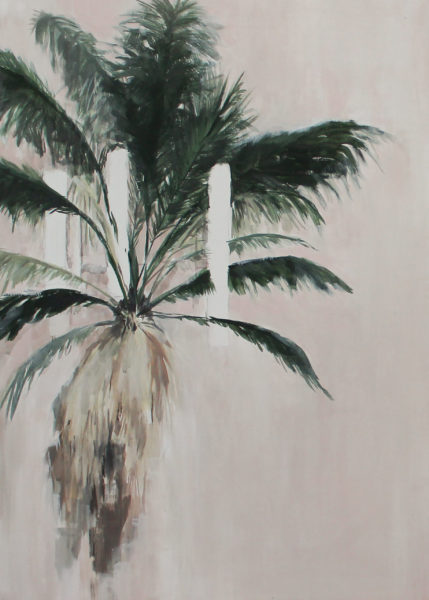
The palm trees are flowering outside of my studio window as I type this on the edge of Los Angeles. I have a serious affection for palm tree art. The cell phone suggestion is chic. It’s dreamy and a little bit doomy and that balance keeps it from being saccharine.


Natural Celltower (SARIBUS), 2019

70 x 50 cm

Acrylic on canvas

£1,550

1981, iran

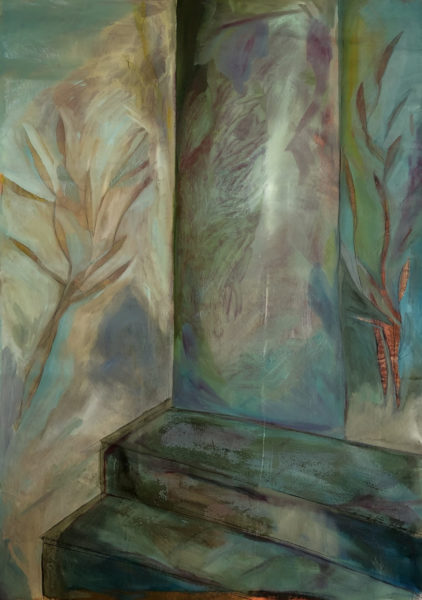
Ala is a contemporary Iranian artist who was born 3 years after the Iranian Revolution and 1 year after the onset of the Iran-Iraq War. The inspiration for her work comes from her personal experiences, often exploring the relationship between place, memory, and dislocation in relation to the emotional and affective investments they provoke and generate. 

The Traces of Leaves, 2019

100 x 165 cm

Oil on canvas

£2,400

This piece is so elegant. This was another artist where a number of works could have been selected – the way she works with rooms and dimensions is lovely and the color palette is opulent.


Posted on

Marco Galvan Highlights

This month we spoke to Marco Galvan,  AucArt’s in house curator, to select his favourite artists from AucArt. Eight of our most promising artists showcase their work in a range of mediums from paint, sculpture and design.

Peter Doyle (b. 1992, Irish) is a mixed-media artist known for his distinctly vibrant, acrylic figurative paintings. Doyle’s paintings possess a charming intimacy in their formal naivity driven by a voyeuristic restlessness to interpret the quick observations of everyday life whilst demonstrating his love of humdrum. Doyle see himself as a curious outsider, who takes pleasure in capturing rare instances of quiet or the daily mundane of his subjects – finding beauty and inspiration by the ways in which someone is sitting on the bus, on a chair or waiting in line. Peter lives and works in London, UK.

The Black Sheep, 2020

Acrylic on canvas
110 x 70 cm
£2,000

Self Portrait, 2020

Acrylic on canvas
110 x 70 cm
£2,000

Fish & Rain, 2020

Acrylic on canvas
15 x 30 cm
£450

Twins in Havana, 2019

Acrylic on canvas
122 x 152 cm
£2,500

Joseph Justus (b. 1982, USA) is a contemporary American artist whose works reimagine the physical and conceptual landscapes that make up the city. Drawing inspiration from the urban fabric and the human body, his paintings experiment with surfaces that act as lenses or x-rays steadily moving in and out of plane. Joseph lives and works in Los Angeles.

Untitled, 2020

Acrylic on canvas
183 x 122 cm
£2,000

Untitled (A Canticle), 2020

Acrylic on canvas
183 x 122 cm
£2,400

Untitled (Dream I), 2020

Acrylic on canvas
183 x 122 cm
£2,200

Untitled (Dream III), 2020

Acrylic on canvas
183 x 122 cm
£2,200

Jonathan Small (b.1994, USA) explores through his current artistic practice a reimagined image of the folded fan through modern techniques found in practices of sculpture, drawing and engraving. Referencing his Japanese heritage, Jonathan depicts scenarios of desire, love and violence through his works that are often otherwise difficult to express. Used to convey hidden messages within their designs, ancient Japanese fans represent devices of communication to hide one’s true emotion from society. Once opened, the fan becomes a motif of deception, a marker of a human instinct to oscillate between hiding and revealing our own image. By reimagining the form and function of folding fans, Jonathan challenges their associative qualities as delicate or flamboyant items and re-establishes them as weapons of defence. His works behave differently dependent on their surroundings and implicate their audience in a self-reflective environment. Jonathan lives and works in LA, USA.

Fan IX, 2018

Laser-cut mirror perspex and steel
53.5 x 105 x 8 cm
£2,300

Fan X (Faye), 2018

Laser-cut perspex, steel, and pigment dye
53.5 x 105 x 8 cm
£2,300

View Marco’s full interview with AucArt where he tells us about growing up in Italy, the exhibition that changed the course of his career and finally his latest guilty pleasure.

I think it’s very important for a curator to have an interest for what he/she may not understand. To transform a moment of ignorance or fear into excitement and curiosity, a willingness to learn, let's say.

British artist Alba Hodsoll (b.1990, UK) explores sexuality as the forefront in her graphic works. Her use of paint and ink, where crisp lines and restrained colour palettes combine with the negative space of the canvas produce a distinctive vision of feminine physicality. Opening up a space of interaction between ‘nakedness’ and ‘nudity’ just as she plots a delicate course between the figurative and the abstract, Hodsoll poses questions about the synthetic and the bodily. Alba Hodsoll lives and works in London, UK.

Superseed 1, 2018

Oil on canvas
50 x 50 cm
£3,100

Untitled, 2018

Ink and coloured pencil on paper
42 x 42 cm
£850

Untitled, 2016

Oil on leather
25 x 25 cm
£1,600

Pleasure Seed, 2018

Fibreglass and resin
25.5 x 27.5 x 16.5 cm
£2,500

Luc Paradis (b. 1979, Canada) is a contemporary artist who borrows imagery from the historical avant-garde, translated into popular local language. His references to the artistic canon are often humorous, preferring to identify with subcultures and dreamworlds. The work of Luc Paradis moves in and out of various media at a rhythmic and steady pace. This multifaceted practice includes painting, sculpture and drawing. Collage serves as a guiding principle, appearing both independently as individual works and as the preface to the assemblage and installation of the various elements of his oeuvre. Paradis’ interest in collage suggests the Bauhausian axiom of the total work of art – where design, craft and fine art meet and the distinctions between various creative endeavours are blurred. Luc lives and works in Québec, Canada.

Scorpio Rising, 2018

Oil on canvas
138 x 107 cm
£3,250

Stay Light On Your Feet, 2016

Acrylic on panel
138 x 107 cm
£3,250

The Egg, 2018

Acrylic and oil on wood panel
138 x 107 cm
£3,250

Fringe Runner #1, 2018

Acrylic and oil on wood panel
76.5 x 61 cm
£1,700

Louise Reynolds (b.1998, Scotland) is a Contemporary visual artist whose works conceptually explore the masculinist tropes seen throughout the history painting. Painters who constructed the grand narrative works which are presented as fact were never physically present for the events they were paid by a biased commissioner to illustrate. Louise sees through her own work a revised edition of history painting, poignantly in the era of fake news, but without an actual commissioner. This is substituted with the bewildering oversaturation of news items which proliferate her online existence. Louise habitually reads the news, informing her large scale oil paintings, recontextualising prevailing and fad narratives into dystopic visions of the present and future. Louise lives and works in South Lanarkshire, Scotland.

Statistical Phantoms, 2020

Oil on canvas
160 x 100 cm
£1,700

California Wildfire, 2018

Oil on canvas
120 x 90 cm
£1,500

If You Didn't Laugh You'd Cry, 2020

Oil on canvas
150 x 130 cm
£1,850

Blissful Ignorance, 2020

Oil on canvas
150 x 150 cm
£1,950

Mattia Barbieri (b.1985, Italy) is an Italian visual artist whose works explore the traditions of art history through a contemporary lens. While relatively small in size, Mattia’s works are loaded with layers upon layers of visual information. The aftermath is a picture so dense with reference that it cannot hold onto a single idea or message for very long, presented by elements and symbols that are disconnected and compete with each other. Mattia offers insight on human experience in a digital world where fragmented and ever-changing computer screens are forming our perceptions of reality and each other. Mattia lives and works in Milan, Italy.

Paracelso, 2020

Oil on wood framed with aluminium
126 x 90 cm
£5,500

Basilide, 2019

Oil on wood framed with aluminium
63 x 46 cm
£3,100

Very Noisy For Anything, 2017

Oil on wood
40 x 33 cm
£2,650

Screen Epiphany, 2017

Oil on wood
40 x 33 cm
£2,650

Khaleb Brooks (b.1991, USA) is a multi- disciplinary artist and researcher exploring blackness, transness and collective memory. Through painting, performance and video his latest works blur the lines between history and futures in an attempt to explore the possibilities inherent in liminal spaces. A liminal space is in between worlds, dislocation, without rights, non- being. Meshing the black queer figure with surreal environments in paintings and entering transcendental states in performance he forces his audience to confront the literal and social death of black trans people globally. Khaleb is currently an artist in residence at the Tate Modern. Khaleb lives and works in London, UK.

American Target, 2017

Print on archival paper
59.5 x 42 cm
£250

Haunted By Self Care, 2017

Acrylic, charcoal, braids on canvas
122 x 91.5 cm
£1,000

100% COTTON, 2018

Acrylic and ink on canvas
181 x 155 cm
£1,200

The Tides Are Changing, 2020

Acrylic on canvas
181 x 185 cm
£3,000
Posted on

Kate Bryan Highlights

This month we asked Kate Bryan, Soho House’s global Head of Collections, to select her favourite artists from AucArt. Eight of our most promising artists showcase their work in a range of mediums from paint, print, photography, sculpture and design.

London born and raised, Cyrus Mahboubian’s education began with an obsession with drawing and an Art History degree. Ten years down the line he has had solo exhibitions in London, Los Angeles, Paris and Dubai, participating in group exhibitions internationally. Whilst the advancement of the digital world has seen a surge in electronic dependency, Mahboubian’s photographic practise has shifted against the current, gravitating towards traditional analogue methods which open his work up to chance, imperfection and unexpected results. His small-scale monochromatic imagery encapsulates a strong sense of atmosphere and stillness. His influences include the natural world, specifically rugged coasts, waterfalls, moonlight and mortality.

Untitled, 2016

Unique polaroid photograph
8.5 x 10.8 cm
£1,350

Untitled, 2017

Unique polaroid photograph
8.5 x 10.8 cm
£1,350

Untitled, 2019

Unique polaroid composite
8.5 x 10.8 cm
£1,350

Chinese artist, Salome Wu, spent her early life moving around Singapore, Tokyo and Beijing, eventually settling in London at the age of 19. Wu pays homage to her own experiences, engaging with ideas on religion, psychology and philosophy, incorporating her background in calligraphy in order to establish an ever-evolving interpretation of personal mythology. Her focus on storytelling and engaging with human mortality welcomes a sense of otherworldliness and a chance encounter with the sublime, whilst she simultaneously endeavours to heal in response to trauma and loss. Preoccupied with the fragility of time and impermanence of life, Wu draws attention to the oxymoronic nature of her work, as her dealing with pain and life cycles are aimed to transport her viewers to a place of comfort and beauty.

Swansong Duet, 20169

Oil on canvas
124 x 70 cm
£2,200

In Contemplation, 2019

Oil on canvas
92 x 56 cm
£1,140

Untitled, 2019

Oil on canvas
122 x 77 cm
£1,890

In the Warmth of Rafflesia, 2019

Oil on canvas
122 x 154 cm
£3,770

English artist, Chris Gilvan-Cartwright, spent his earliest years in Germany, with a childhood marked by fantastical stories of the Brothers Grimm, shrouded in the forests of the Odenwald Mountain range. His family were musically inclined, which meant that he often found himself backstage, around the props and sets of operas. Consequently his work plays with reality and illusion, the fantastical and doubtful, even the beautiful and downright grotesque. This duality is also found within the artist, as he explores his creative endeavors through his other identity, ‘The Baron Gilvan’. Gilvan-Cartwright describes his work as a “hallucinatory playground”, saturated with colour, drama and teetering on comprehension. 

Candle Wax and Depositions, 2019

Oil on canvas
65 x 85 cm
£2,400

Unseated Rider No.1, 2019

Oil on canvas
60 x 85 cm
£1,950

Unseated Rider No.2, 2019

Oil on canvas
60 x 85 cm
£1,950

Opening Doors And Pulling Strings, 2019

Oil on canvas
52 x 67 cm
£1,680

View Kate Bryan’s full interview with AucArt where Kate tells us about her not so easy journey into the art world, buying her first artwork and what she’s learnt during lockdown

Are you a safe person? Then buy safe art. If not buy something that speaks of who you are, what you stand for, what you believe in. Never buy anything that looks good with your sofa.

Orsola Zane is a young emerging artist from Italy. She typically works on scenes of parties, collectives and crowds, individually isolating her subjects. Her sources, low-resolution screen grabs from rave culture spanning from the 80s to the 00s, are used to subvert the idea of belonging, to explore the fragility and illusory nature of inclusivity. The effect is both isolating and bewildering. With low quality comes pixelation, which allows her to simplify the figure to a blurry collection of shapes, whilst still resembling reality. Her work is both investigative and discursive, shedding light on ideas about humanity and detachment.

Looking For, 2019

Oil on canvas
30 x 25 cm
£480

Stunned By, 2018

Oil on canvas
25 x 30 cm
£480

Thinking About, 2019

Oil on canvas
30 x 40 cm
£610

British artist, Amy Worrall, is a sculptor and ceramicist, producing decorative objects that playfully explore her own distorted sense of reality. Her work is in dialogue with consumer culture, born out of a background in illustration and a preoccupation with developing personalities for inanimate objects; each of her sculptures have backstories which guide her practise. Her quirky, scantily clad female ceramics are playful, vivid, glossy and equally perturbing. So heavily reliant on pop culture, Worral’s practise is constantly evolving with the times and testing the viewer – paradoxically light hearted, whilst socially critical. She currently works in Stockholm, Sweden.

Crying in the Daisies, 2019

Ceramic
40 x 35 x 35 cm
£1,100

Midsummer Madness, 2018

Ceramic
25 x 7 x 7 cm
£350

Nip Slip Nina, 2019

Ceramic
35 x 30 x 15 cm
£1,100

Hairless Harriet, 2019

Ceramic
60 x 35 x 35 cm
£1,100

Davide Serpetti was brought up in the Abruzzo countryside, an area dense in forestry and animal life which conjured memories still vividly accessible to the artist today. His preoccupation with animal forms is felt thematically in his use of the hero and beast tropes. The hero is a modern character, usually delineated by famous personalities, whilst the beasts are inspired by the irrationality of childhood which remains in each of us today. His work is heavily indebted to the prominence of image-sharing platforms as he investigates how mass culture has reshaped our newly accepted  and perhaps warped standards of beauty. Our current selection of his works are inspired by sculptures, which come in the form of icons. Other influences include mythology, the golden ratio and a strong belief that one can only paint narrations which words can’t describe.

Torso of a Warrior, 2017

Pencil, oil and acrylic on paper
31.7 x 60 cm
£700

Relic #5, 2018

Oil on canvas
72 x 72 cm
£1,800

Finnish artist and designer, Milla Vaahtera, creates sculptural mobiles crafted from brass and glass, made by hand from scratch. Exploring the interfaces of sculpture and design the artist questions emotion, sexuality and appropriations of space. The final product is created through the artist’s ability to listen to the materials she uses. Vaahtera investigates the performative nature of her works as even the lightest touch or airflow coaxes the stabile structures to move.

Stabile No.24, 2019

Free blown glass and brass
60 x 20 x 20 cm
£2,600

Mobile No.79, 2019

Free blown glass and brass
70 x 50 x 15 cm
£1,600

Mobile No.78, 2019

Free blown glass and brass
70 x 40 x 8 cm
£1,900

Mobile No.77, 2019

Free blown glass and brass
50 x 80 x 30 cm
£3,250

Previous winner of the ‘Sky Arts Portrait Artist of the Year Award’, Kemi Onabule’s work challenges a world in turmoil. Her visions of idyllic paradise transport us to a society rid of damaging socio-economic structures and ecological disarray, instead providing us with scenic visions of a place removed from the clutches of modernity. Using the figure, the British artist welcomes a symbiosis between human and nature, a relationship marred by modernism. Her decision to use the female body uproots the phallocentric male gaze, conveying the importance of femininity whilst questioning our relationship with it. Drawing on her Nigerian and Greek descent, Onabule explores the mythology and the importance of love, sexuality and our relationship with earth. Her work ultimately aims to bring the viewer closer to their own beginnings.

Sisters Lay Down, 2019

Monotype on paper
29.7 x 21 cm
£300

Harvesting Our Love, 2019

Monotype on paper
29.7 x 21 cm
£300

Resting Figure, 2019

Monotype on paper
29.7 x 21 cm
£300

Dancers II, 2019

Monotype on paper
29.7 x 21 cm
£300
Posted on

In the studio with Yael Ben-Simon

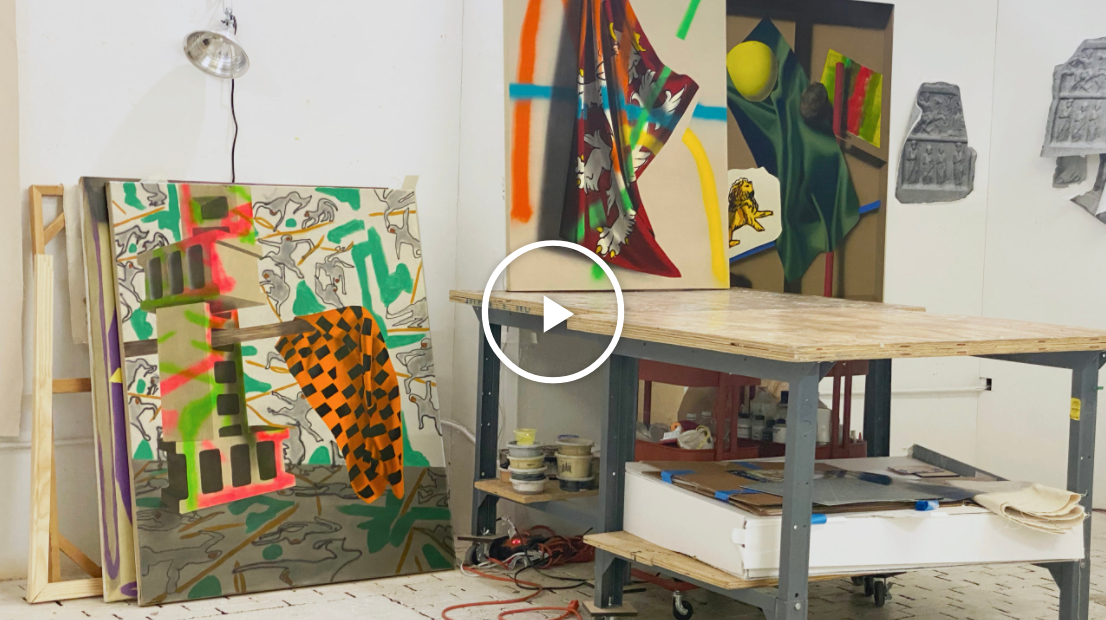
Discover the studio of Yael Ben-Simon whose practice explores the relationship between propaganda, identity, magic and symbol making through painting.

Joanna Hirsch visited the studio of Yael to speak with her about her work. Read the full interview below.

interview with yael ben-simon

Joanna: So could you tell me about your background? Where you’re from, where you went to school?

Yael: So a little bit about me – I grew up in Israel. I went to school in Jerusalem for my BFA and after that I moved to Chicago to pursue my MFA. I graduated in 2015 and since then I’m in the US working on my practise. 

Joanna: Have you always been a painter?

Yael: Yes. I think during school I started as a painter and obviously when you’re going through art school there are so many areas to pursue and discover. I kinda flirted with sculpture and photography because that’s what they encourage you to do at art school. I had a period when I was like, I’m not gonna do painting anymore because I was kind of frustrated with it. But then I did an exchange programme in New York and going there I decided I wouldn’t do painting, I would just do other things. But I kinda went back to painting, unintentionally. I think painting is my way of saying things and I feel most comfortable, but also most challenged by. So it’s kind of weird in that sense. Because painting is so hard, but I feel at home when I’m painting. 

Joanna: What made you choose to use different mediums?

Yael: I explore different mediums because I like to have complexity in my work and I like to have layers and when I’m developing my composition and my paintings I think a lot about textures and how every element would be depicted. So I treat every part of the painting the way it deserves to be. So that’s kind of what calls for a different approach, a different medium and I like experimenting with different materials a lot…make something new, discover a new technique, or you know, maybe by mistake I do something that would add another tool to my toolbox, so that’s fascinating for me. That’s why I’m all over the place.

Joanna: Could you tell me how you use your computer and your digital processes in your paintings?

Yael: So I use computer a lot. I use technology. For me it’s just another tool to develop my paintings and to execute them. So, they first start off as a model in a 3D animation programme that’s called Blender. Basically what you do in this programme is you create your own world, like you do in animation and films. My approach to it is sculptural; I build elements on top of each other and recently they’re all contained within a box. The box element re-appears in my painting. It’s like a structure for all of them and I have a period of time where I dedicate solely to making these models on the computer. So it would take me a few weeks to develop and to think about new paintings in that way. So the way this programme works is you can actually create worlds and bring models from all over and build your own models and build your own elements and after I’m satisfied with the model, I render it and make an image out of it. So, that’s my road map, if you will. Then after I make this I try to determine which way is best to depict those and to transform what I had in the computer to actual paint, so it’s like the translation mode. The process I use, screenprint, recently, which is also something that’s kind of analogue, but I use digital images to make the stencils and I use photoshop of course during my work on the piece. Before that I used to work a lot with stencils and I used to print them. I have a special printer for that. 

Joanna: You make your own stencils?

Yael: Yeah, but recently I haven’t been using that that much. 

Joanna: You said it takes you a few weeks to do the render.

Yael: Yeah 

Joanna: Do you work on one piece at a time and if you do how long would it be from your start to your finished painting?

Yael: I try to work on a few pieces together. Just because there are… I kind of see them as family, so I work on them together and I have a lot of things to do at a time. So for example when I put a layer of paint and I wait for it to dry, I can work on other stuff. In a painter practise there is a lot of dead time where you wait for things to dry or you prepare paint, so it allows me to work on a few things concurrently without looking at the paint. 

Joanna: What brought you, or can you tell me what you felt when you moved to New York and how has New York influenced your practise if it has?

Yael: I can’t really say specifically how New York has impacted my practise, but it’s such a great thing to be able to be in a place where you consume art on a daily basis and you get to see all the most amazing artists.

We were saying about the novel that this kid had so many drawings of animals and he kept obsessively making those to prove that he has a soul and that he’s worthy of redeeming. Because the kids in the novel are destined to be… their organs are to be harvested for…

Joanna: Oh I know this!

Yael: Yeah, for sick people. So he wanted to convince the headmaster of the school that… in the centre of this novel… that he has a soul and his fate should not be as his friends.

Joanna: Gosh I read that, I think a few years ago.

Yael: Yeah.

Joanna: I’m gonna read it again.

Yael: It’s really heartbreaking, 

Joanna: So you enjoy reading obviously. 

Yael: Yeah I really enjoy literature. I try to read as much as I can but sometimes it’s not feasible but the fox… I have a fox series. It’s based on a fable, an old jewish fable about this fox who sees a hole in the fence of a vineyard, but he can’t get in because he’s too fat. So he comes up with a plan that he would not eat and he would get slim and then he could go inside the vineyard because there is all these amazing grapes there that he can feast on for days. So the plan works and he manages to get in and then he feasts on the grapes for days on end and then he gets fat. But he has to get out. So he has to have a diet again. So I guess the whole message of this fable is don’t be greedy and the foolishness of the greedy person or the greedy individual and I found this fable really visual and really kind of like crazy and great. 

Joanna: Is that what this piece is about?

Yael: Yeah. So I have three of them that are kind of like squeezing…so part of my practise back then was… I did a lot of flags. So this fox here is actually a heraldic fox, which means that it appeared on flags or a coat of arms of different families or monarchs and I have this index, this dictionary or atlas of all these images and actually every other animal appears there, so I looked for the fox and then I found the depiction of it in the language of heraldry and then I put it on a flag. So in the pieces the flag or the fabric is trying to get in the hall, not an actual fox, that goes to the idea of representation and how we use proxies of certain things instead of the actual thing.

Joanna: I can imagine you’re a very visual person obviously, are there stories of your childhood that reflect in your pieces sometimes?

Yael: Um, not really. I don’t know if I have anything that is actually personal, I mean, these are very personal to me because I think about them and I read about them and I live them, so in that sense it’s personal, but I don’t know if I have anything from personal experience that have been translated into making these pieces. Just a way I view the world or perhaps unconsciously maybe I saw something and it creeps into my pieces, yeah. I’m not sure if I can answer that question, maybe during a hypnosis or something?

Joanna: How would you describe the style of your works?

Yael: I’m not sure how to answer that question. What do you mean, style?

Joanna: Well….an artist said that they hope that people look at their work in an abstract way. If someone was asking you what you paint how would you respond? What do you paint? Or how would you describe it to someone?

Yael: That’s actually a really hard place for me to describe because I guess they’re representational. I make my own composition and my own specific vision that I translate to a setting and then I translate it in paint. So it’s representational but of a different vein I think than I think what most people would view as representational.

Joanna: How do you go about choosing the colours for your work?

Yael: I mean some of the things I am working with are from life, like I use a lot of boxes recently so I try to make them in the colour of cardboard colour. I try to make them vibrant. I have a strong use of very saturated colours and I use sometimes fluorescent colours. Yes, I really like them to be ….To look at things I think makes you a more engaged person. So maybe that’s my goal to make people more engaged.

Joanna: What’s next? Do you have any future projects/shows/collaborations? Would you want to do a collaboration?

Yael: Yeah, I would always welcome collaboration. I have a show in the summer at a print residency I did during the last summer. 

Joanna: Where?

Yael: Here in New York city in the Elizabeth Foundation for the Arts.

Joanna: Do you know what’s next for your practise?

Yael: I’m gonna continue experimenting with print. I’m going to continue doing prints and corporate prints in my paintings which I think is a very exciting thing for me to do because a huge part of my work comes from old prints or old symbols that used to be printed, so I like the way the two can converge.

Joanna: Is there a medium you’d like to try in addition, in the future? 

Yael: I’m sure there are! I’m sure I’m gonna experiment some more. I think print is where it’s going. 

Joanna: Last question, or last two. What’s the best piece of advice you’ve ever received and what advice would you give to other artists?

Yael: The best piece of advice….

Joanna: Or is there something someone’s told you that you remember

Yael: I think just do your thing. Whatever gets you going and whatever you’re interested in, just do it, explore it, read about it, dream about it, do it in many different ways, regardless of what everybody else is saying and I think eventually if you’re doing something that you’re into and you’re passionate about, others would see it. 

Joanna: And the best advice you’ve received?

Yael: I received…. Just talk about your works, not only with artists… you know, with your family, with your friends that are not artists. Tell stories about your works and tell stories to yourself. Yeah, just have a different perspective of the work outside of your immediate community. That helps a lot I think.