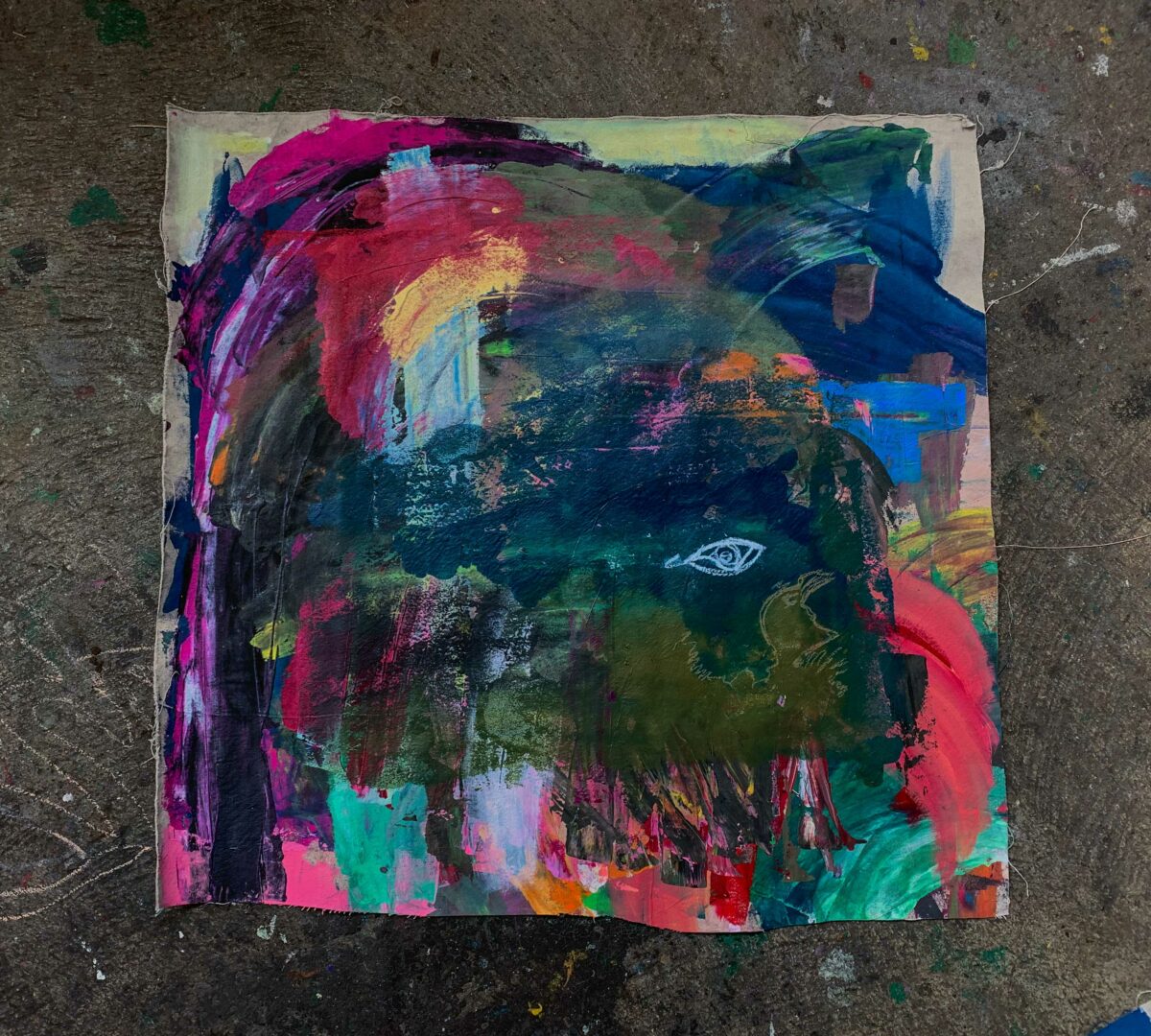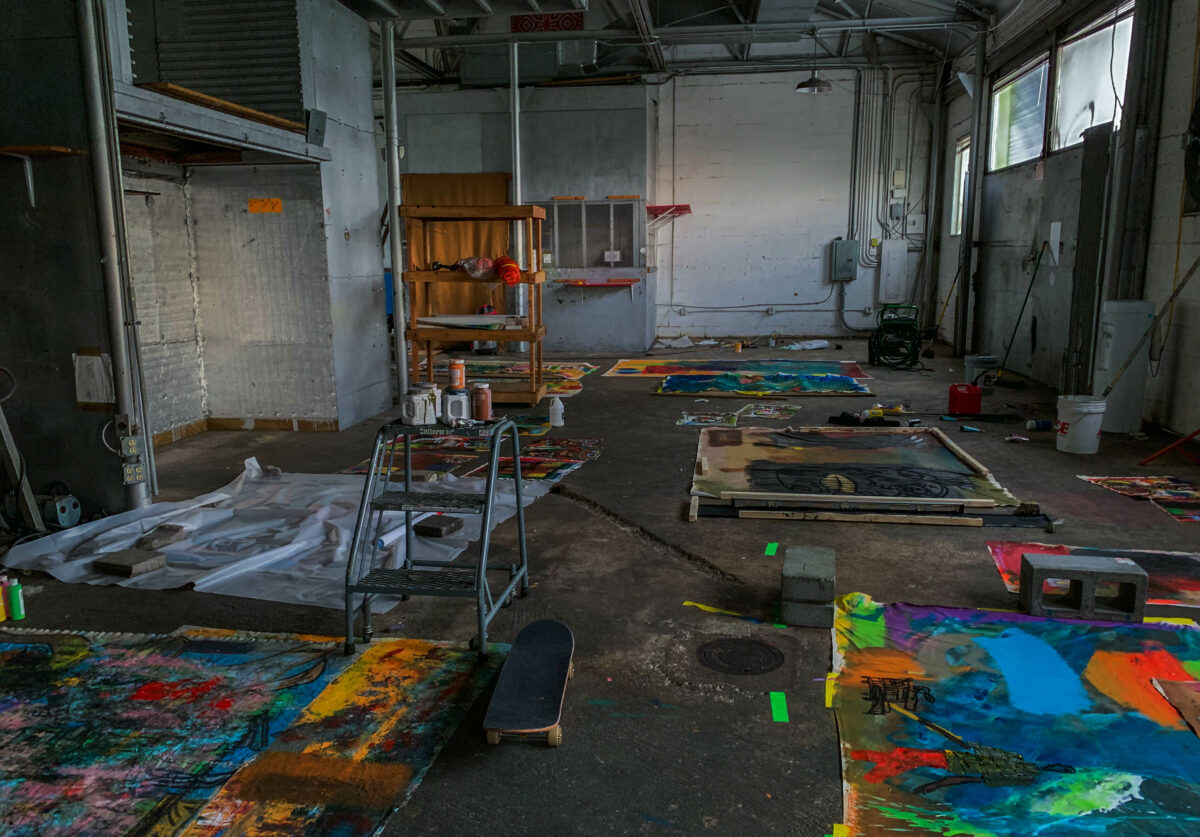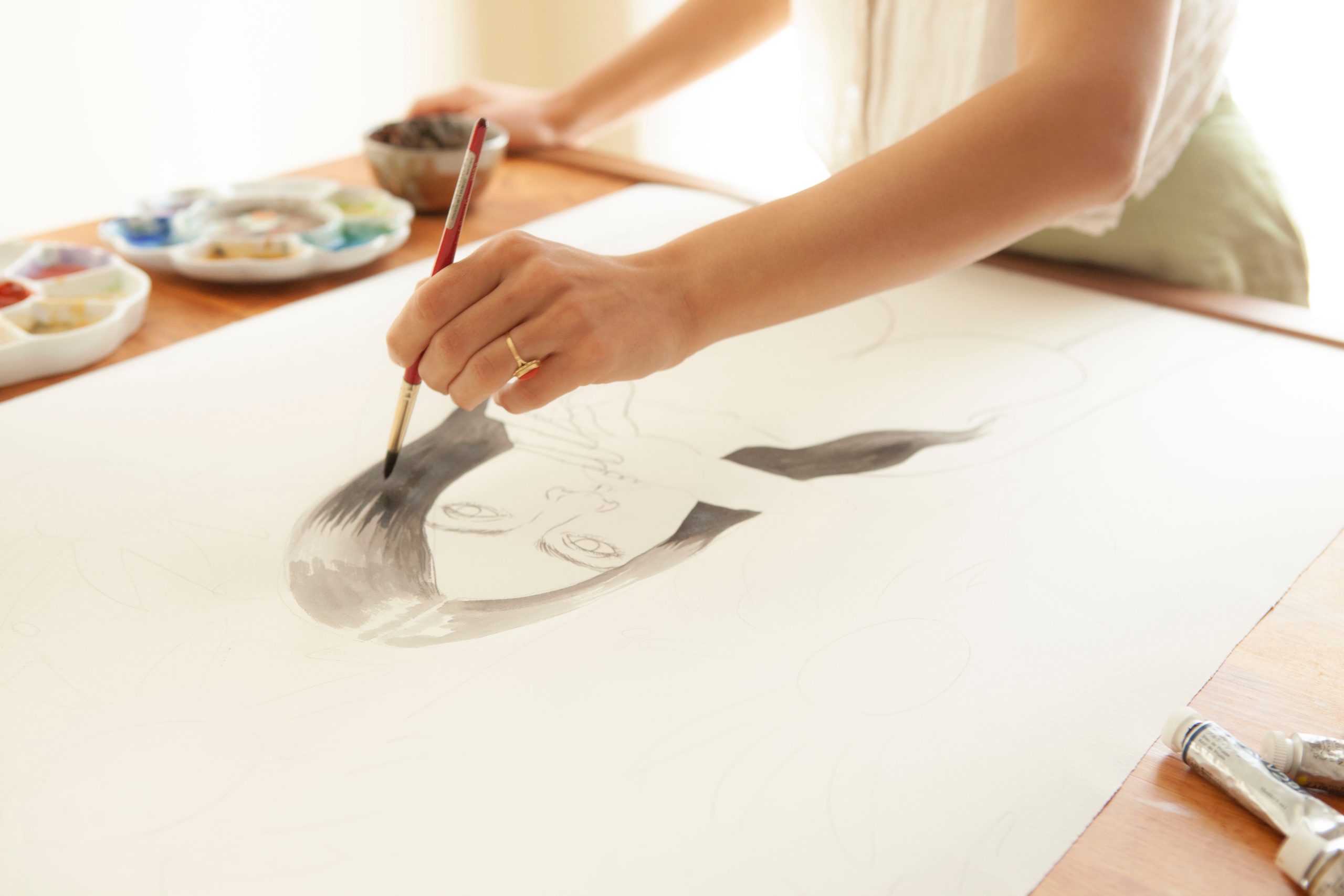
Posted on

In the Studio with Thénie Khatchatourov

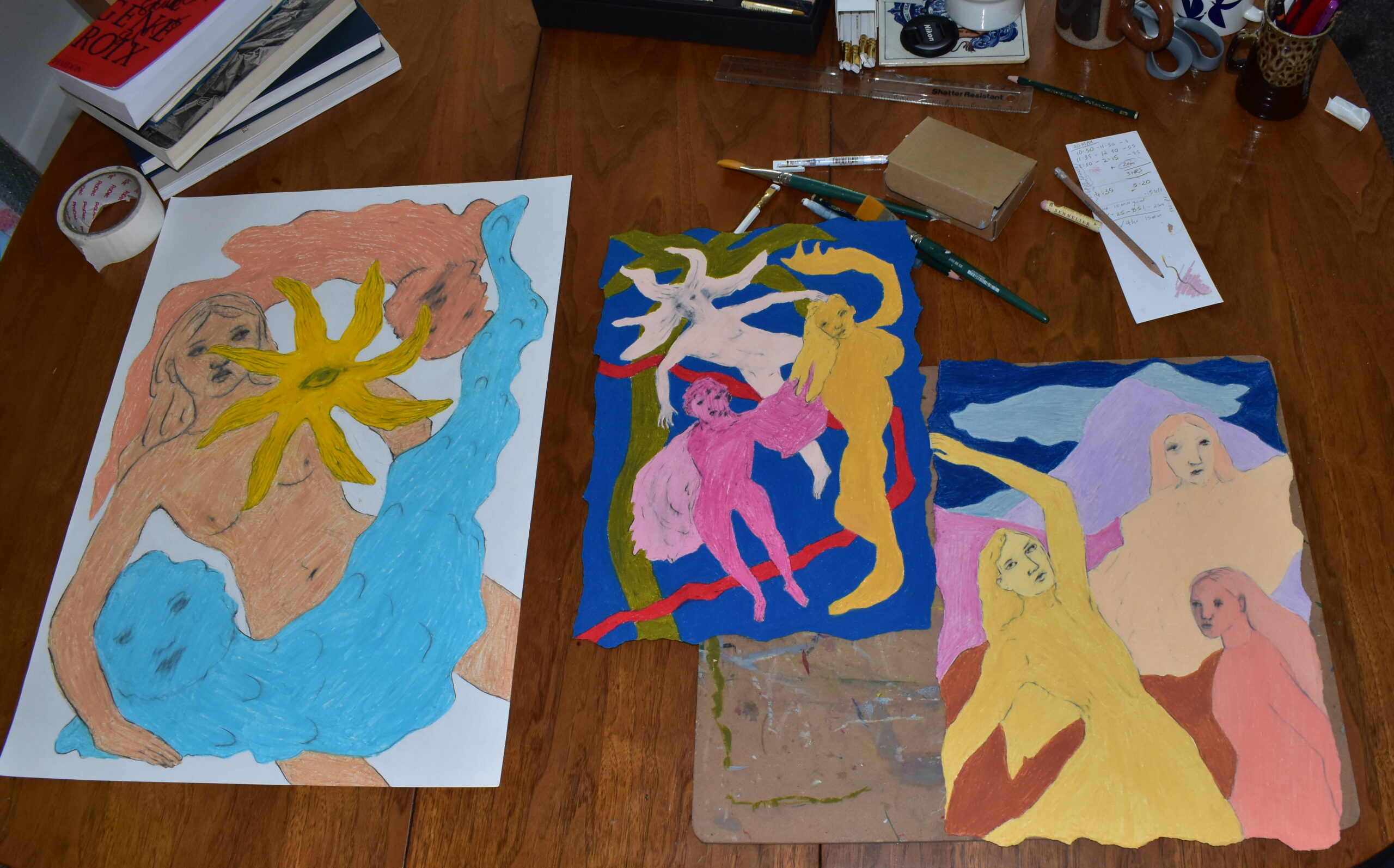
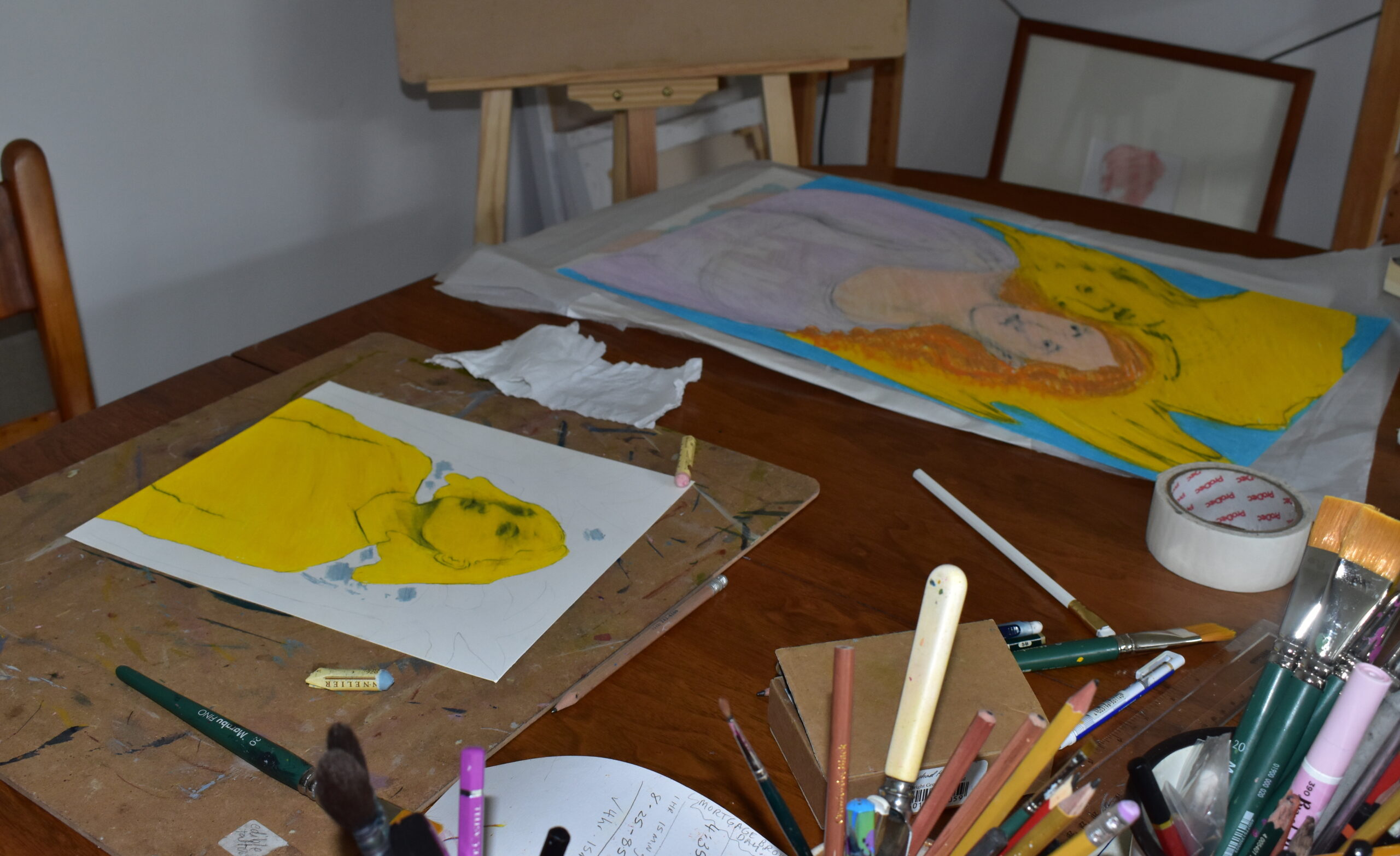
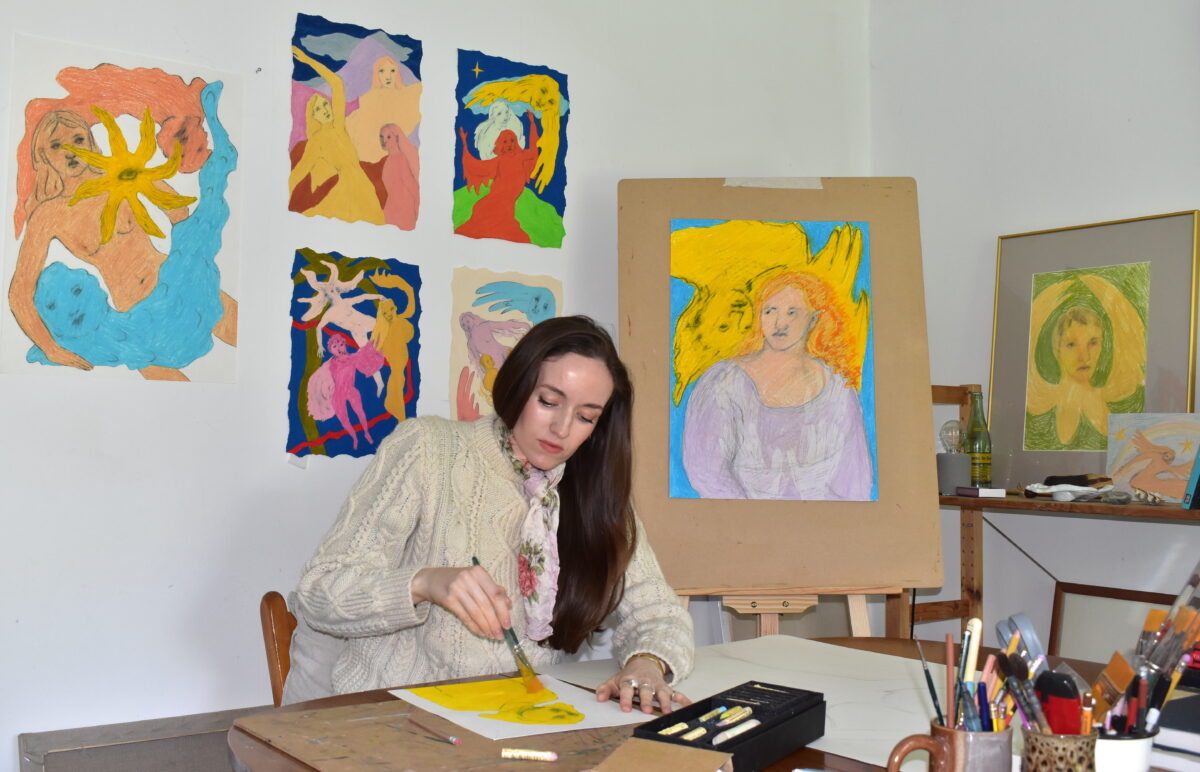
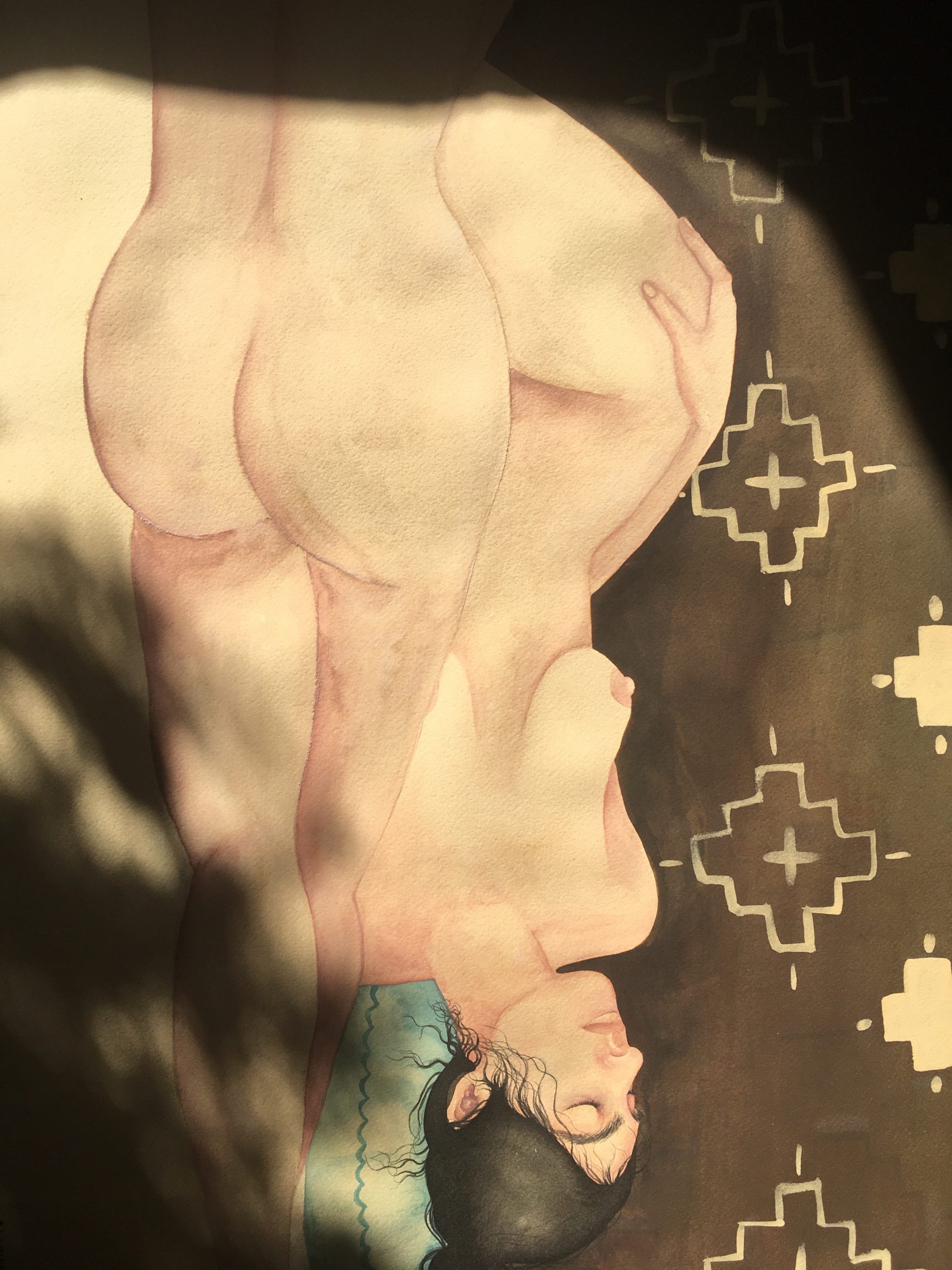
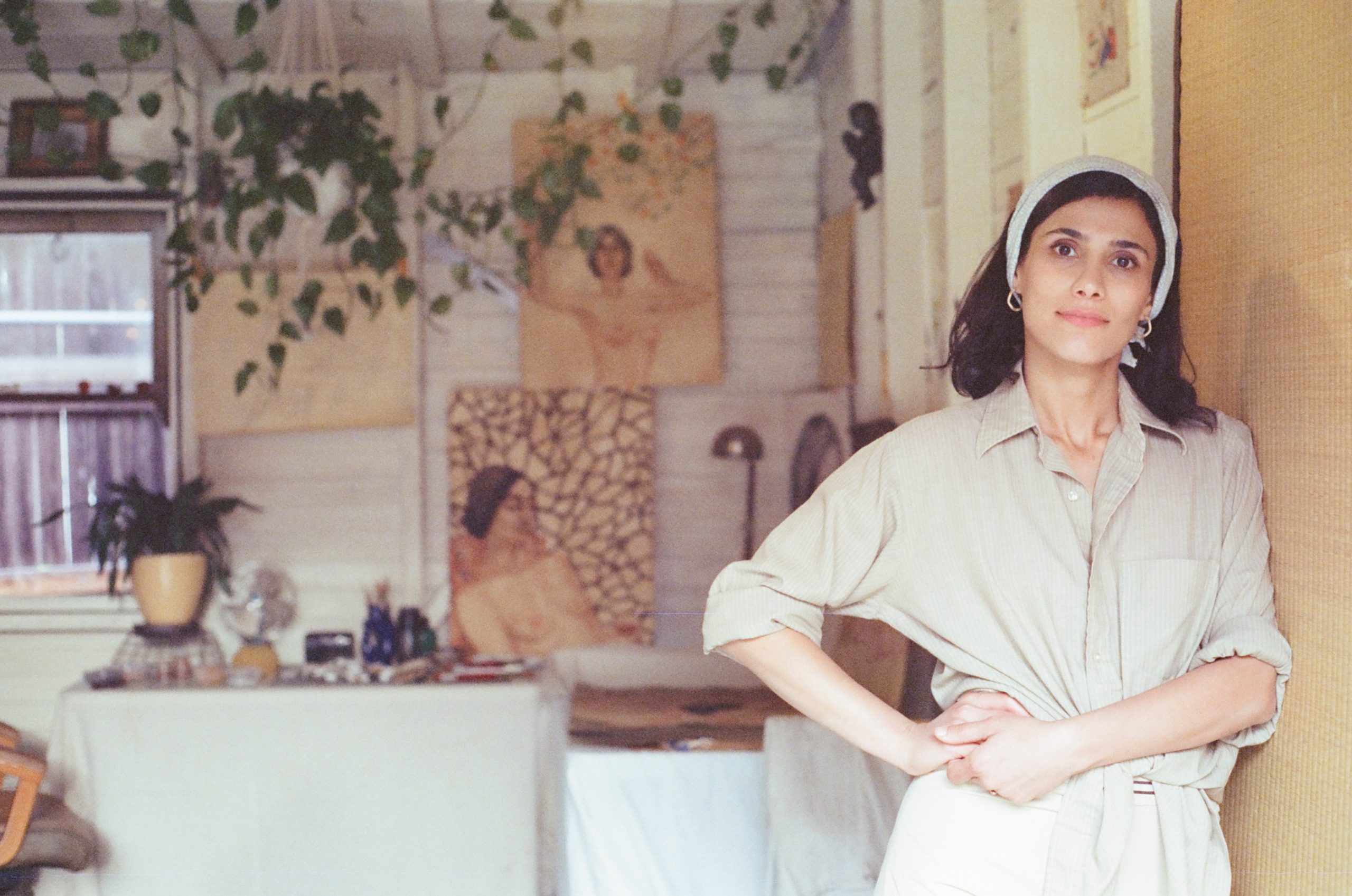
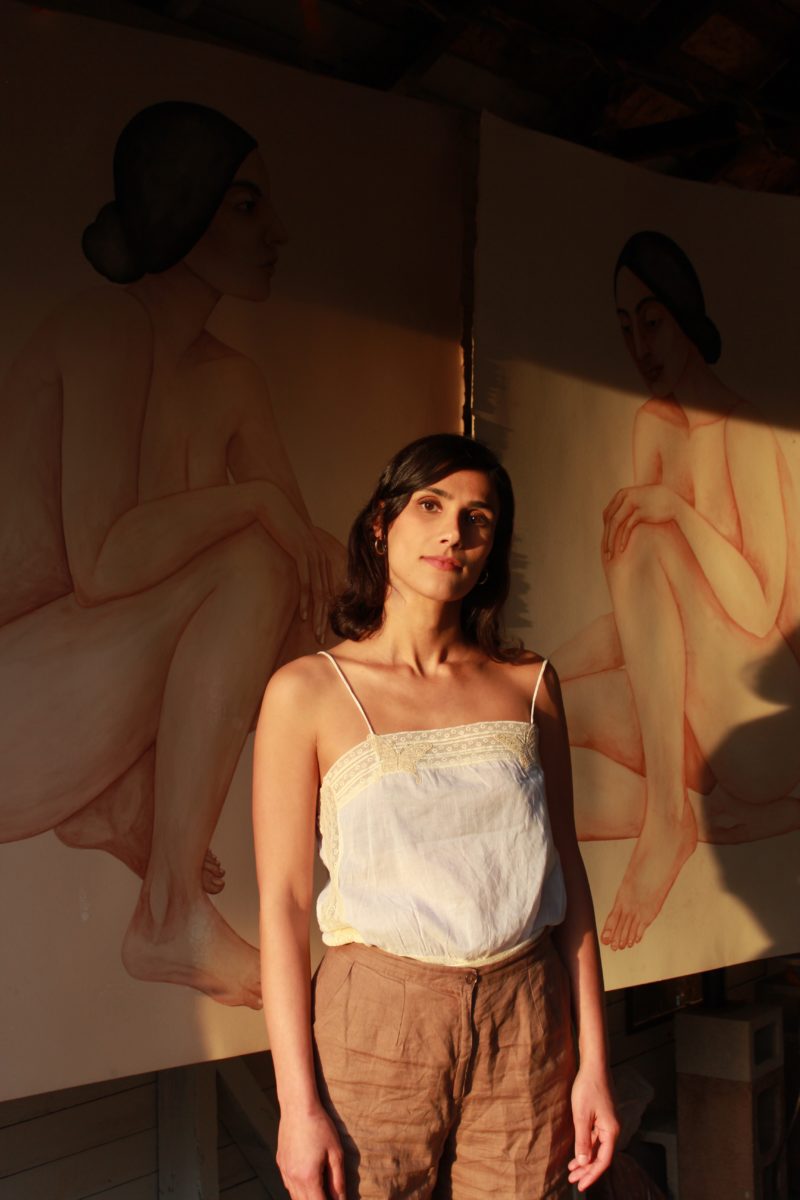
In the studio with Thénie Khatchatourov, a contemporary visual artist whose works seem by nature to be a bridge between individuals and a way to transcend borders. We met with Thénie to tell us about growing up in Switzerland, her Armenian origins, and the exploration of love as a core theme through her practice.

When did you first begin to see yourself as an artist?
 

I started seeing myself as an artist when I could materialize my ideas and turn them into concrete pieces of art. An artist, to be considered as such should be able to build up a strong esthetic arsenal and a strong and sensitive corpus. 

Where are you from, and what was your upbringing like?
 

I was born in Geneva Switzerland, I am of Armenian origin. Coming from a family of Armenian musicians, grand-niece of violinist Jean Ter-Merguerian, I grew up between classical music and paintings, surrounded by artists, painters, musicians.

I took the artistic path after university studies in socioeconomics at UNIGE and a Master Innokick, at HES-So. After my studies, I moved to Armenia for a mission at the Embassy of Switzerland in Yerevan, where I stayed for two years. I started drawing, painting in Armenia.

Paint us a picture of your artistic journey. What inspired you to first pursue, and then continue to practice, artistic work? Was there a pivotal moment when you felt you were on the right track? 

When  I got back to Geneva, I knew I could not work in an office. I decided to take the artistic path, no matter what and give it a chance. In the first month I met a galerist who offered me to have my art pieces for an exhibition in 2019. On the opening night of the exhibition 25 of the 34 pieces exhibited were sold. I couldn’t believe it, and to me this success was a clear sign that I had to keep working and fully exploit my creative potential. 

What’s the message of your work? How would you describe your aesthetic?
 

The sacred as a subject for the painter is divested, even profaned today. My approach aims to question the importance of the return of the sacred in art, in a dialogue with the present, by updating mystical subjects among which love, union, motherhood, peace. However love remains the main topic in my work, as it is the greatest topic ever used in art, all forms of it combined. I just choose to keep celebrating love, by depicting couples intimacy, figures facing and kissing each other. The love scenes depicted and the close connexion I build up between personas is an invitation to a peaceful relationship between men and women. I am trying to spread a message of reconciliation between genders. Because this topic is a hot one today, because genders tend to think they are living separately while they are complementary, I had to find a way to reunite them in a poetic way in order to avoid the threat of a symbolic separation thereby avoiding the symbolic death of Humanity.  I still believe that art, above all forms of expression is the best way to instill the desire for union

Who and what are your greatest influences?

I really started drawing when I  first came across Gustav Klimt and all the Viennese Secession movement artists’ works. I then discovered Gauguin, Van Gogh and all the post impressionism and the Nabis movements that I particularly like for the composition and  the colors. I am also very inspired by Armenian artists like Rudolf Khachatryan, Minas Avetisyan, Martiros Saryan. 

An unexpected source of inspiration?

The Opera Anoush by Armen Tigranian, and the Ballet Orphéus and Eurydice by Gluck  choreographed by Pina Bausch for they are full of Christian and pagan symbols. 

Are your works planned? What do you want people to take from your work when they view it?

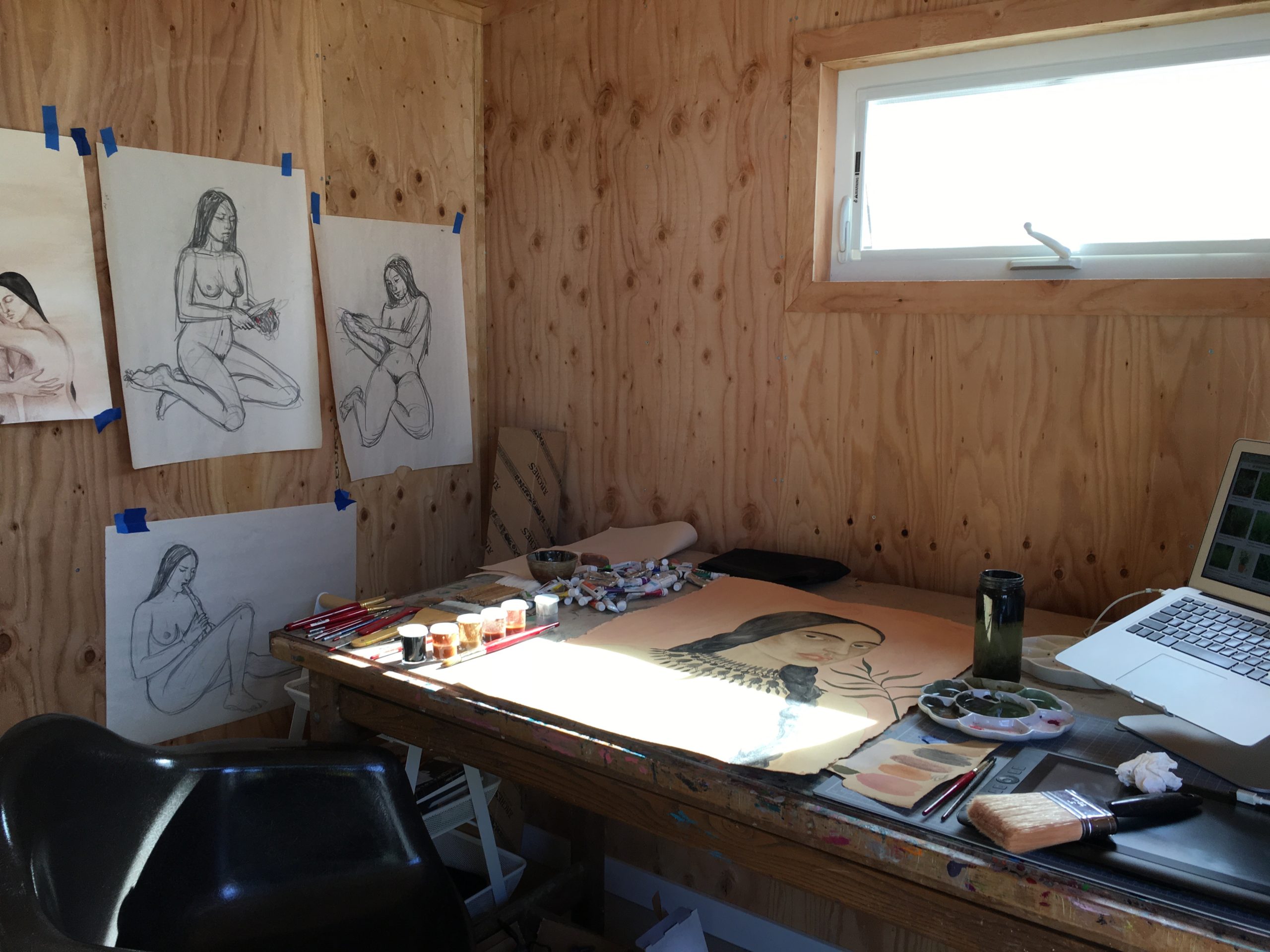
I tend not to plan too much about what themes or figures I’m gonna paint, but I always have A7 format notebooks where I quickly draw and prototype ideas. I work a lot on composition and color association. I have now nearly 14 notebooks full of sketches and ideas that I regularly open to get inspired again.

I have no specific target, since art pieces are not products although there’s a market for it. People who love my artworks love the vibration of the intention I’ve put in it. It always makes me happy when people come to me to share their emotions or thoughts on my painting. I want people to feel so familiar and comfortable with what I draw that they couldn’t stop watching it.

What events in your life have mobilized change in your practice?

Understanding the world around me, reading and getting more curious about life and people impact my art because what I think needs a way out, a way to be turned into a concrete form.

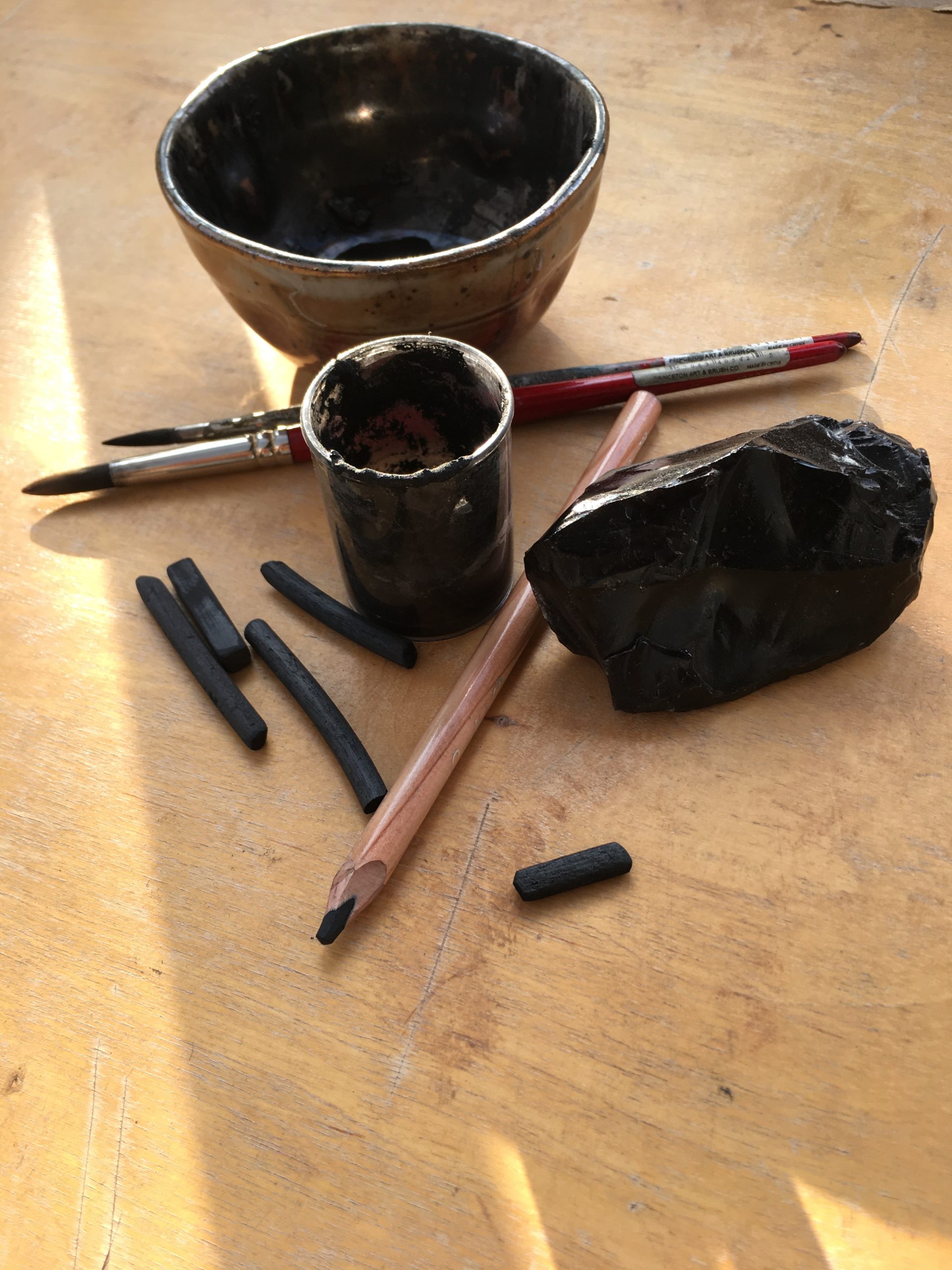
I experiment with a lot of different materials, explore new techniques to say things I’ve said before, and the other way around, to find new things to say with traditional techniques.

What are your ideal conditions or catalyst for creating a “good” piece of work?

A good piece of work is sometimes a happy coincidence. A good piece can emerge anytime, anywhere, after days, weeks, sometimes months of observation and reflexion. But some of my best pieces were made in a day, in an hour. It’s hard to say, I’m afraid there’s no magic trick. 


Tell us about the inspiration behind one of your works?

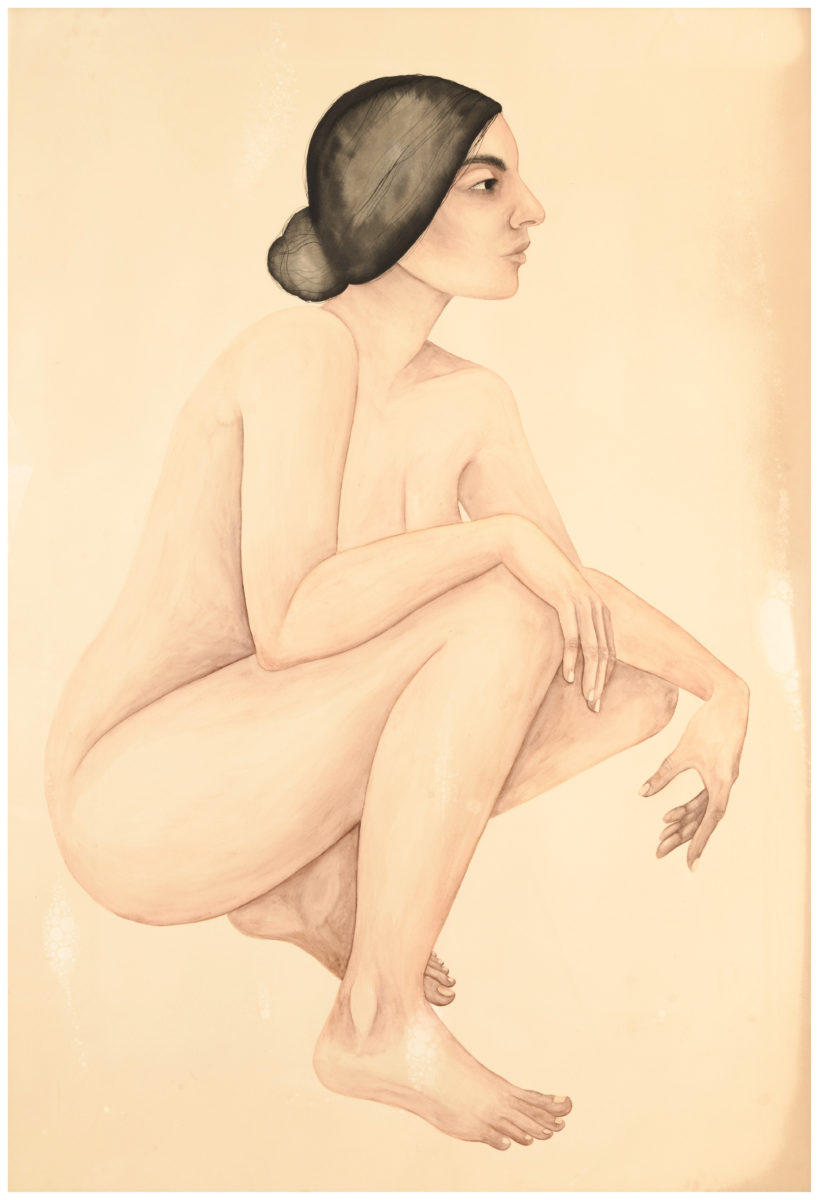
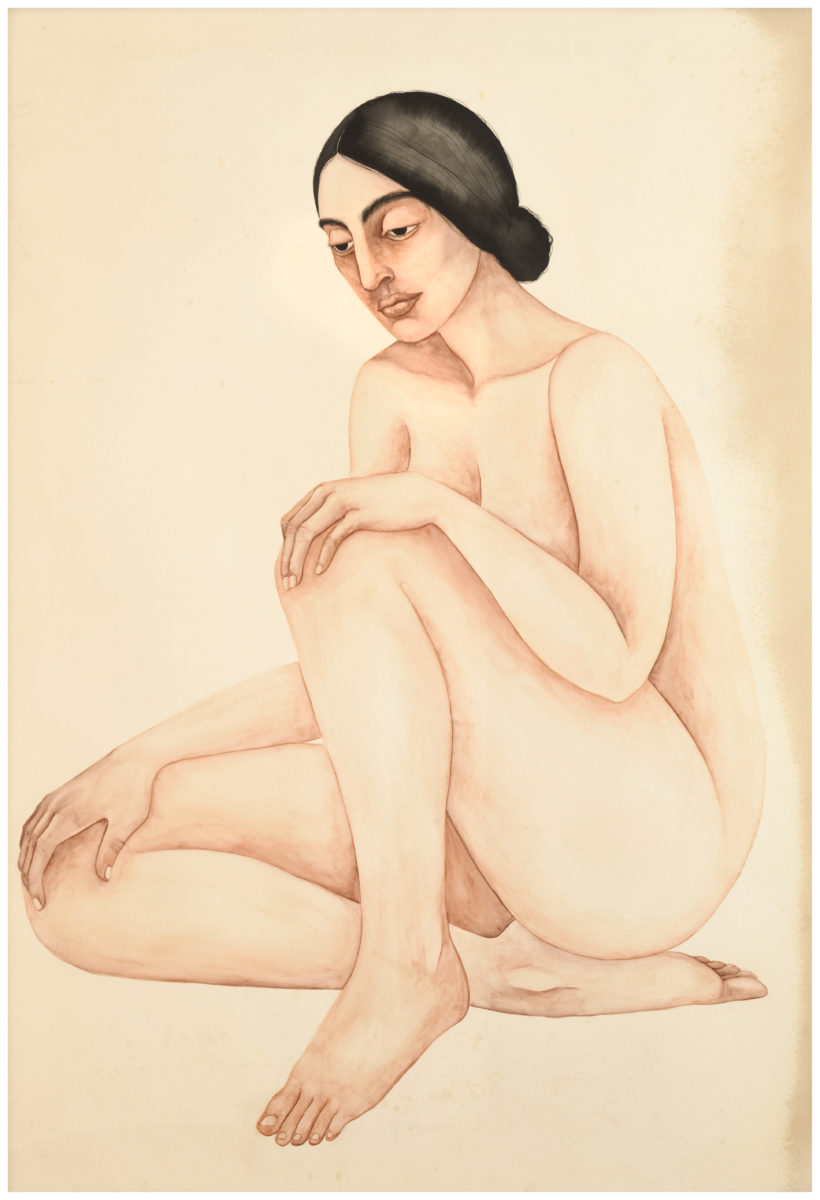
The Lovers’ was more that inspired by a man I loved, who’s a talented Armenian artist, architect and stone carver that I admire. Love and passion is behind all of the pieces I’ve created I guess. Here is the trick. Love.

Posted on

In the Studio with Catherine Lette
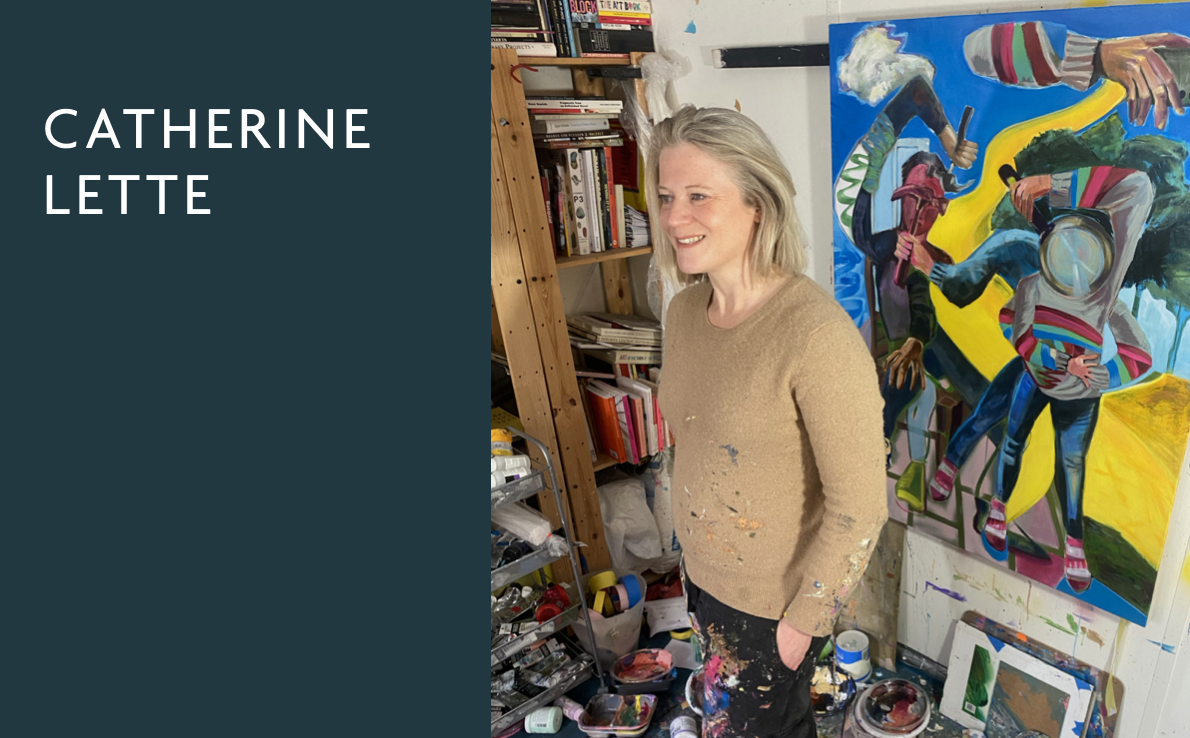
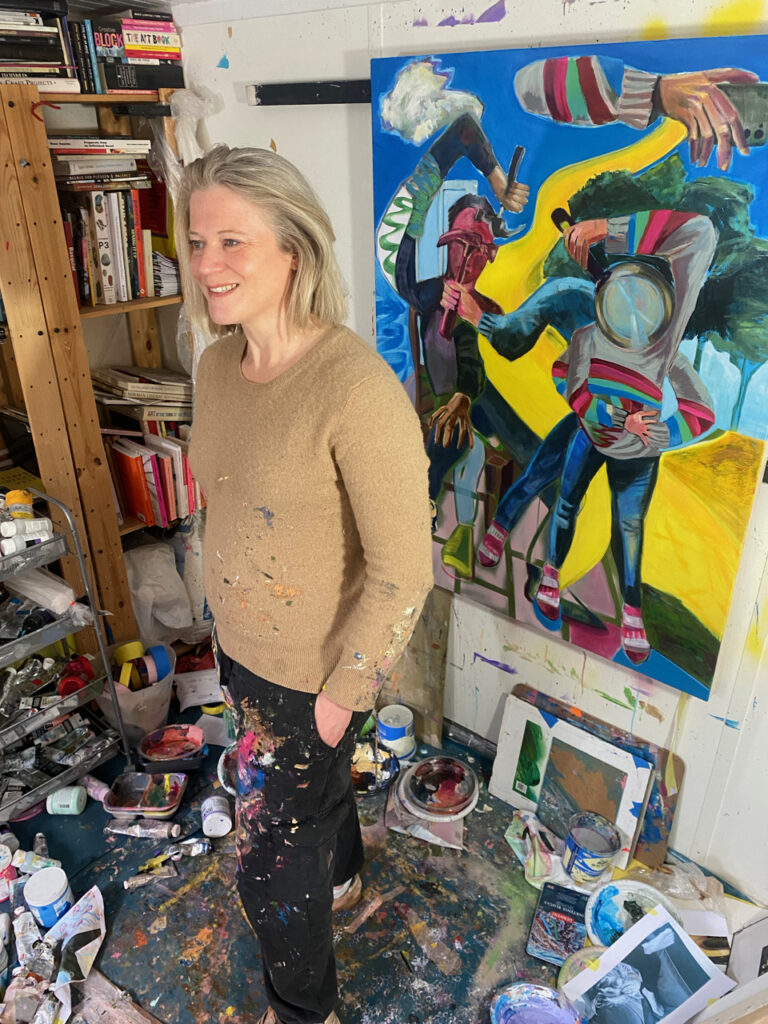
Catherine Lette is a visual artist whose work is concerned primarily with the impact of contemporary life upon the body & mind. We met with Catherine to tell us more about growing up in Cornwall, her greatest source of inspiration and how recent months in lockdown have affected her practice.
When did you first begin to see yourself as an artist? 
 

I wanted to be an artist since I was a child, but I was encouraged to explore other career options first due to funding, so it took a while for me to make my way back to art.  The other jobs I did gave me a good salary but no satisfaction, so I took myself back to art school and committed to life as an artist, which I love. 

Where are you from and what was your upbringing like? How has this impacted your work?

I come from Cornwall and grew up as the youngest of three children in a lovely slightly chaotic house in the country.  My father is a designer silversmith, my mother a partner in his business, my brother makes gin and my sister works in silver too.  We come from a long line of makers and collectors and I think the thread of artistic endeavour running through the family has definitely influenced me.  The house I grew up in has walls covered in wonderful artwork from early modern to contemporary, I was incredibly lucky to grow up in a place with inspirational art on the walls and be surrounded by inspirational people.  My father always said to me don’t buy artwork to match your paint colours, paint rooms to display your art.  Being brought up to see art as intrinsic to everyday life, a way to question things and create meaning has certainly impacted on my practice.  

Paint us a picture of your artistic journey. What inspired you to first pursue, and then continue to practice, artistic work?

I always had a form of practice in drawing and painting since childhood but going to Central Saint Martins in 2005 was where it began to shape into a more serious commitment.  I did my BA in Fine art at CSM part time over 7 years, working as a PA in a property company to fund my way.  I think the slow progress was really helpful to conceptually develop my practice and understand where it might fit within the wider world. CSM was my first foray into formal art education and I found myself veering towards making 3D sculptural work because it seemed to fit the conceptual theory of the time.  I began the degree wanting to paint though and left wanting to paint, so decided afterwards I would pursue painting which is where my passion was.  Discovering Turps was a huge turning point for me, an undercover art school filled with incredibly inspirational painters and mentors who are all committed to talking and making painting.  When Marcus Harvey, founder of Turps, said ‘Welcome to the family’ as we joined, I felt I was on the right track.  
What’s the message of your work? Where do they come from? 

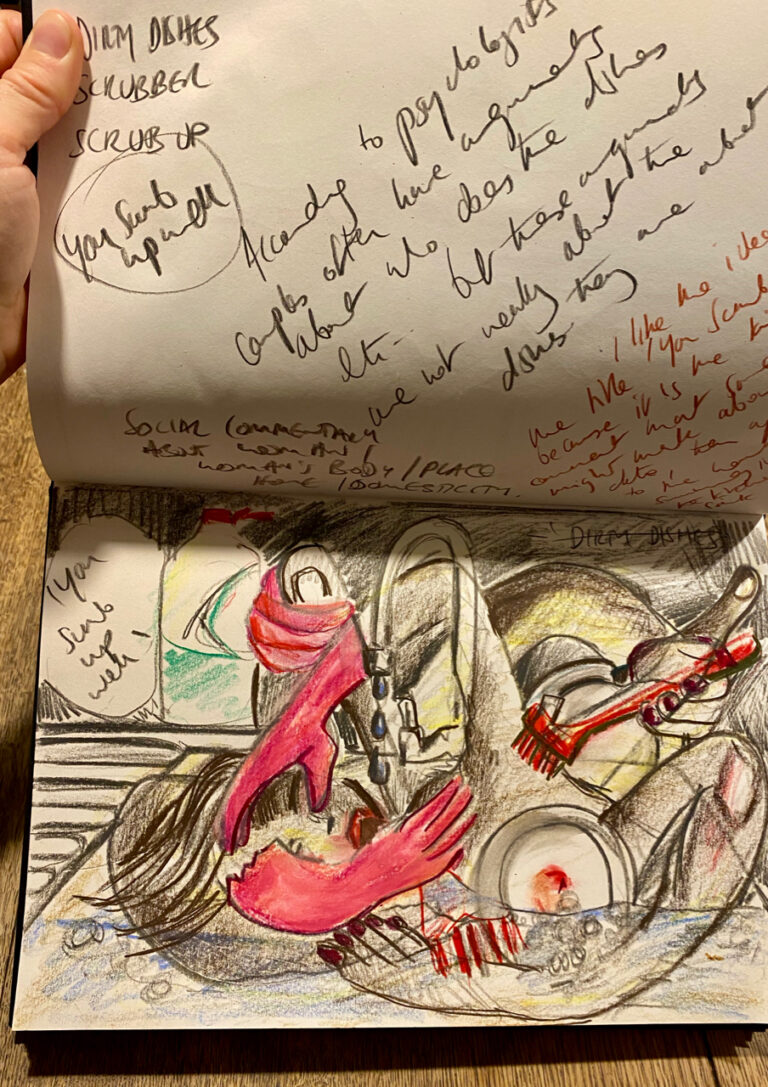
My work always starts with the human body as I see this as both our touchpoint to the world around us and the vessel that carries our minds around.  My interest in the figure is always rooted in my own present and a questioning of life and society experienced around me.  Currently we are bombarded with imagery, simulacrum, different ways of experiencing life in the virtual and the real and I try to question that status quo within my painting. Most recently this has centred in a questioning about the effects of the lockdowns due to the Covid 19 pandemic.  I have been thinking about figures bound into certain spaces, pushed together or perhaps pulled apart both physically and mentally.  Lockdown has been a place of safety, privacy and solitude for some, but a place of danger and destruction for others and I have been considering that as I have painted through some of these ideas.  In the space of a year our attitudes to certain objects or habits have completely changed and that has fascinated me.  

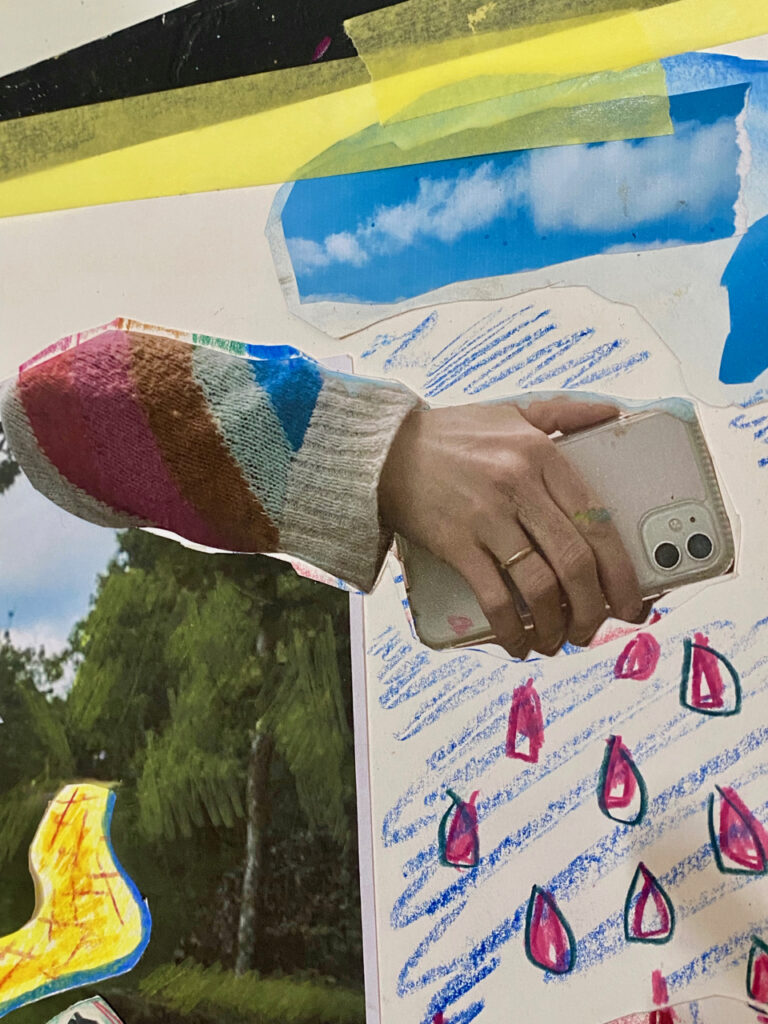
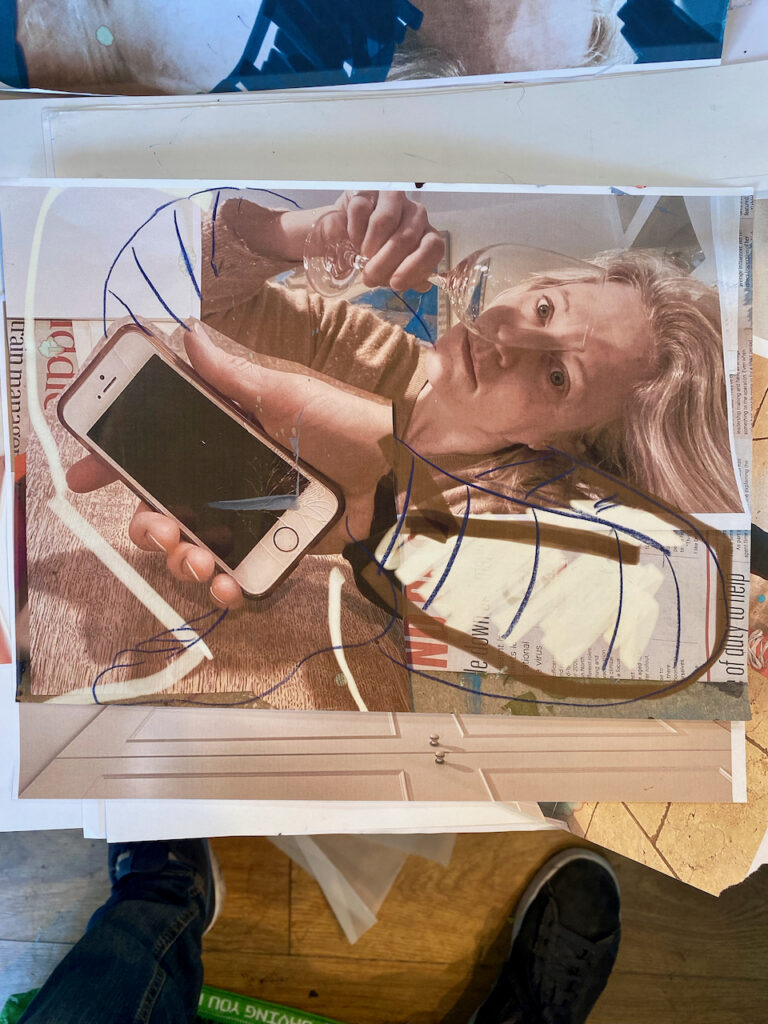
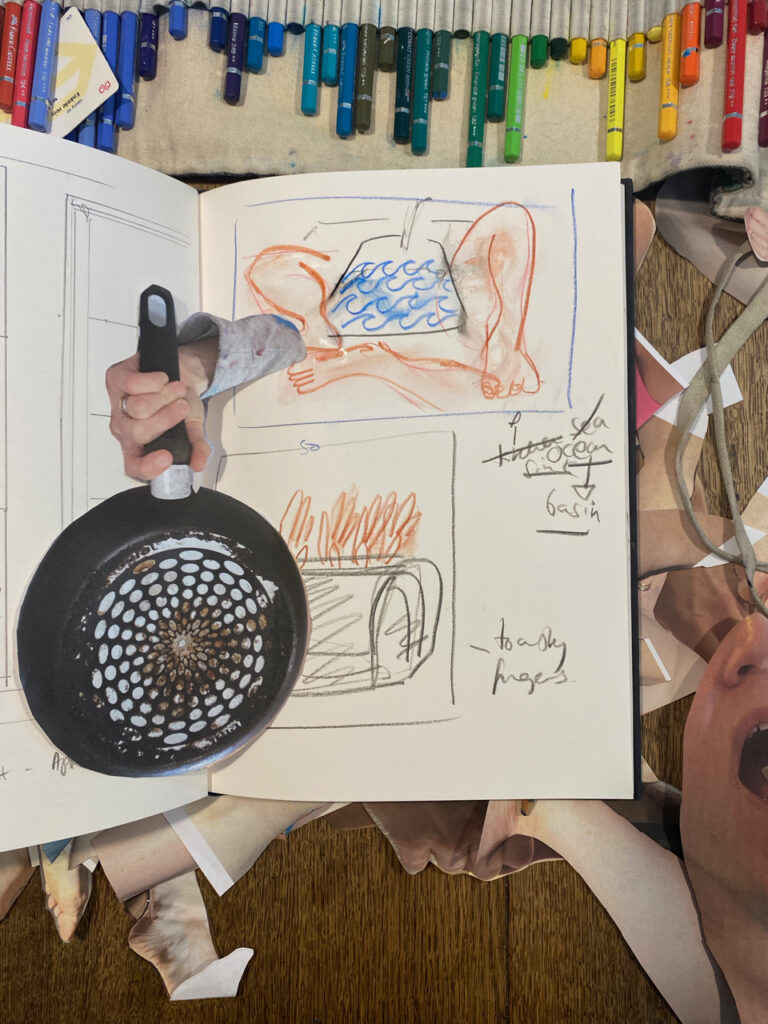
In terms of practice I am experimental and playful, I allow the making to lead me, even if at times that seems uncomfortable.  As a result of that the aesthetic is malleable and my pallette also changes, but there is a thread that runs from one painting to the next.  All my work is underpinned by drawing, which I do daily, sketching the people around me from life or ideas that pop into my head.  I always carry a sketchbook and watercolour pencils with me, I feel bereft without them.  
Who and what are your greatest influences?

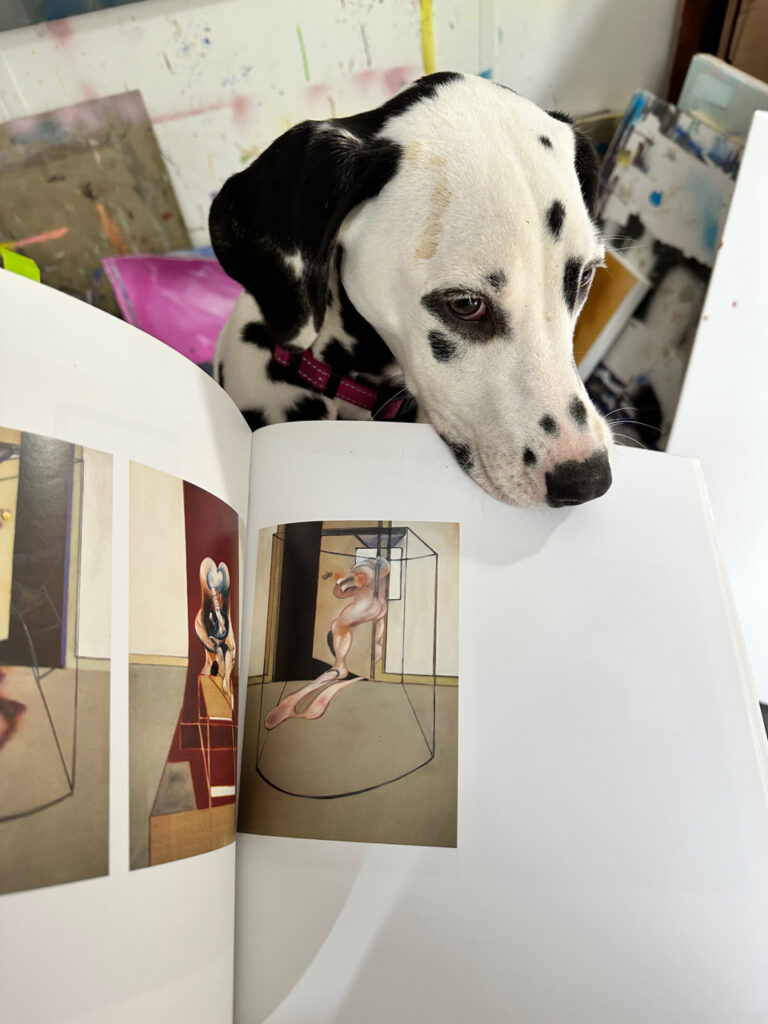
I’m like a magpie when it comes to artistic influences, I find something to inspire me in almost every show I go to and have a bookcase crammed with other artists’ catalogues and tomes.  Some of my favourites right now are Christina Quarles, I love her figures and the way she thinks about identity and the sense of looking at the body from both the inside and outside.  Dana Schutz, the compositions and crazy scenarios her paintings conjur up are brilliant.  Michael Armitage, David Salle, Paula Rego, Carlos Quintana, Njideka Akunyili Crosby, George Condo…I could write pages of artists’ names so I’d better stop.  Another huge art love is Venice, I haven’t been many times but I have been so captivated when I have.  I could camp out in Madonna dell’orto and look at Tintoretto’s Presentation of the Virgin… which is saying something as I’m not a keen camper!

An unexpected source of inspiration?

I find Instagram a big source of inspiration as I follow so many great artists and love getting to see their work in progress and behind the scenes…their sketchbooks or thoughts…the bits you never see in the gallery shows.  The ability to have conversations with other artists around the world or see into studios as work is being made, creates a sense of community and a feeling of being part of the wider art world even when you are sitting painting in your own studio alone.  It’s a very different type of inspiration from the one that you get from seeing art in real life hanging in a gallery or museum, but I find it really important as well.

What do you want people to take from your work when they view it? Do you have the audience consciously in mind when you are creating?

I hope that when people look at my work they will see both the familiar and unfamiliar in it.  They will enter it via something that they recognise and then perhaps be offered a question held within something that is ambiguous or unexpected.  I hope that it will make them think about their relationship with the body or figure. 

I don’t think of the audience when I am making work, I think of the question in my head such as what does it mean when we disassemble body parts, what does a cartoon eye versus a ‘real’ eye convey?  I only consciously become aware of the audience when I step back from making and try to look at what I’ve made critically.  
What events in your life have mobilised change in your practise/aesthetic? How has your art evolved? Do you experiment? 

I feel like I am always evolving, which keeps me bound to a certain energy and integrity within the work.  I am very experimental and because I respond to contemporary life around me, I feel like the work always has the potential to change. 

What are your ideal conditions or catalyst for creating a “good” piece of work?

I don’t think there are ideal conditions for making good work, other than to keep working and keep challenging yourself and questioning what you do.  Sonia Boyce was one of my tutors at CSM and she told me to trust in the making, that doing will lead the way.  It took a bit of time for me to understand exactly what she meant, but now I do.   
Tell us about the inspiration behind one of your (consignment) works?

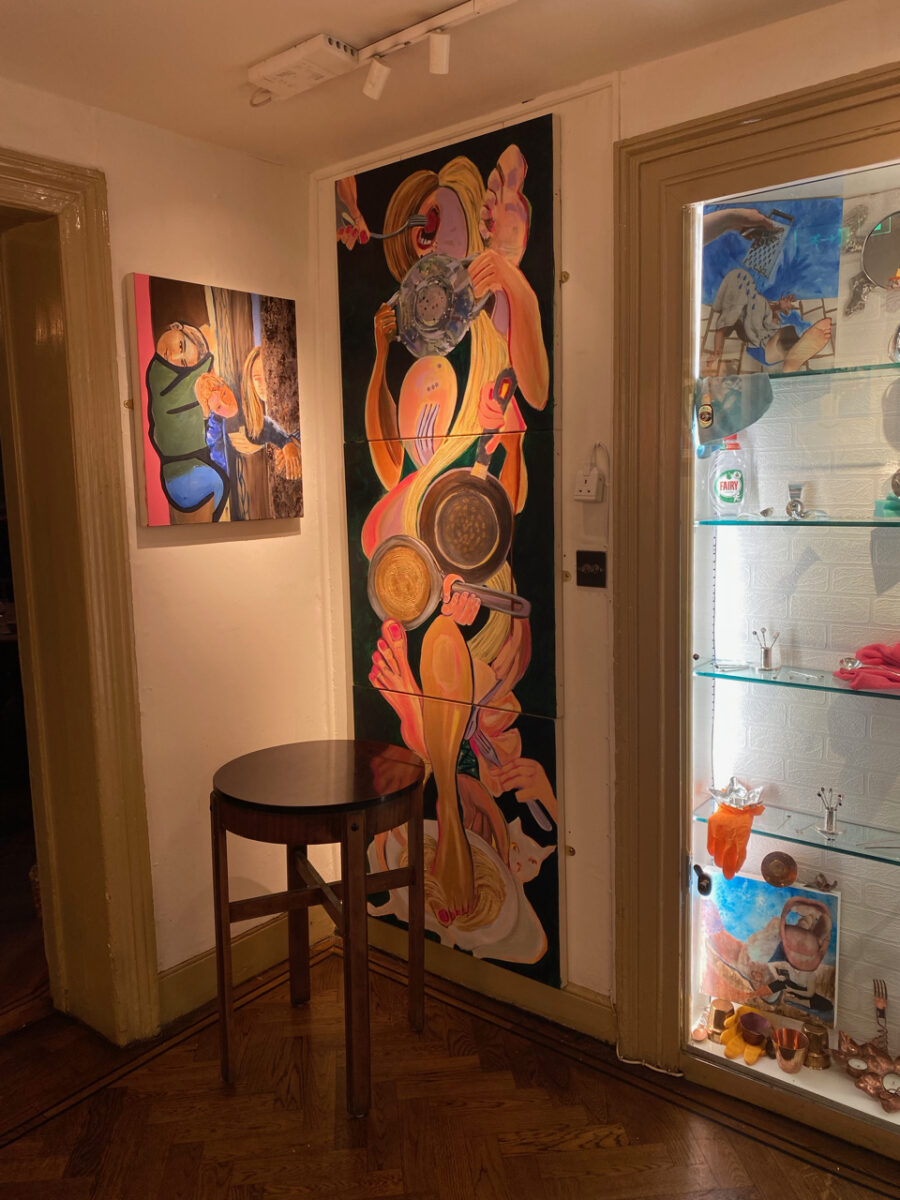
One of the pieces I have consigned is called ‘Unquilted’ and it is inspired by the psychology behind panic buying toilet roll.  It fascinated me that the pandemic led us into a place where toilet roll became the icon of a country’s anxiety and it was exploited by shops putting prize pyramids of Andrex in their window displays.  I was interested to read that panic buying toilet roll denotes general anxiety as opposed to specific worry.  I started to make sketches of figures surrounded by toilet rolls, grabbing onto them or running away with them.  This painting was developed from one of those sketches, in which the figure is frozen in a parody of movement, its limbs mimicking the palette and form of the toilet rolls.  I liked the sense that the figure had become subsumed by these objects, almost petrified, except for the claw-like markings in the hand.  There is nothing very real about this figure other than perhaps its direct gaze which I think references the reality of the situation that it has been placed in.  The title ‘Unquilted’ is a nod both towards the value system that is created around toilet rolls and the wider connotations of the word.  
Something in the future you hope to explore?

The exploration in toilet roll paintings led me to think more about our relationship to inanimate objects, which is something I am now exploring further.  I am always experimenting with my paint and am thinking about testing working on different surfaces.  I have never done any screen printing and keep seeing really interesting painting mixed with screen print, so I think I’d like to try that at some point in the future. 
Posted on

In the Studio with Rebecca Sammon

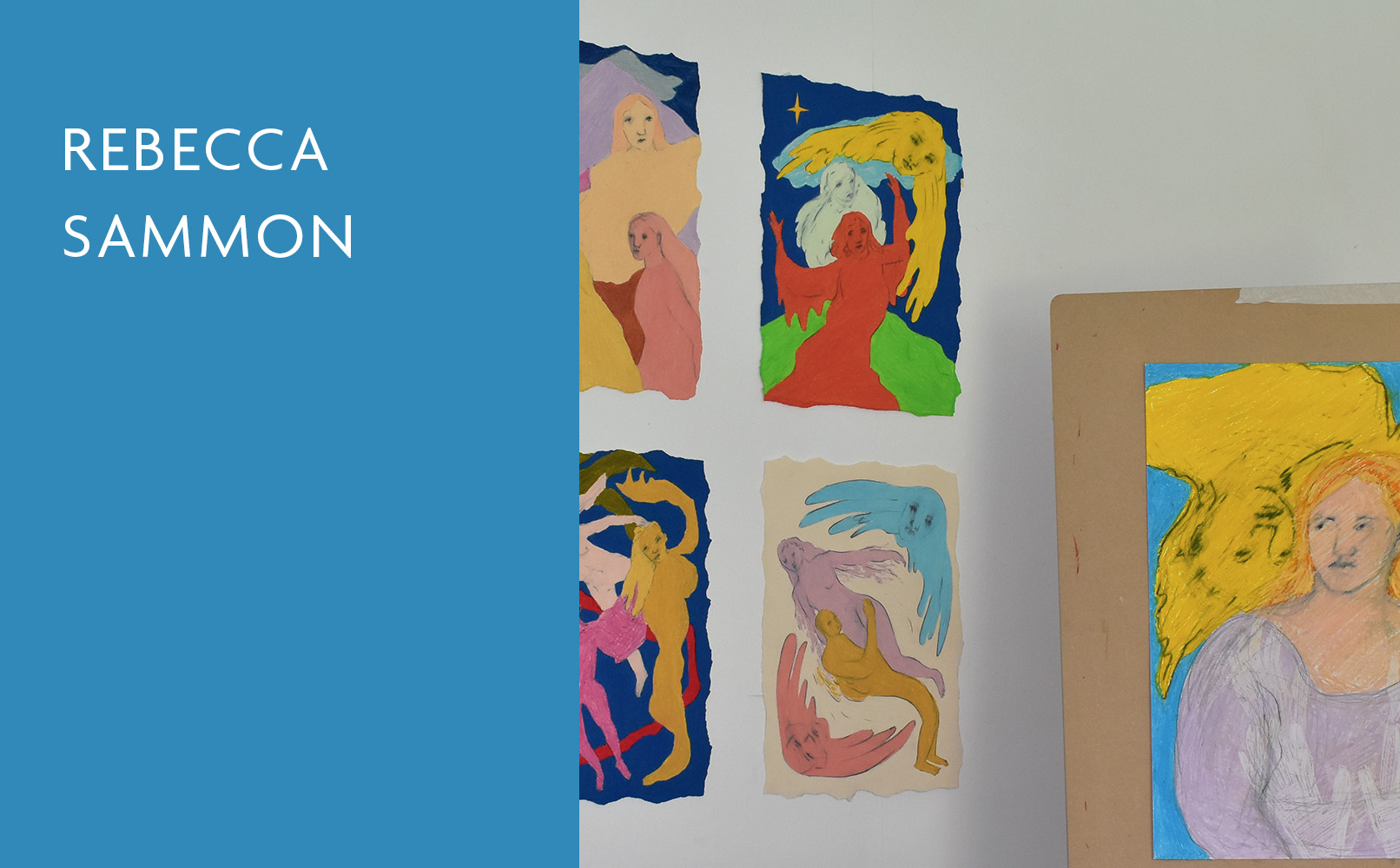
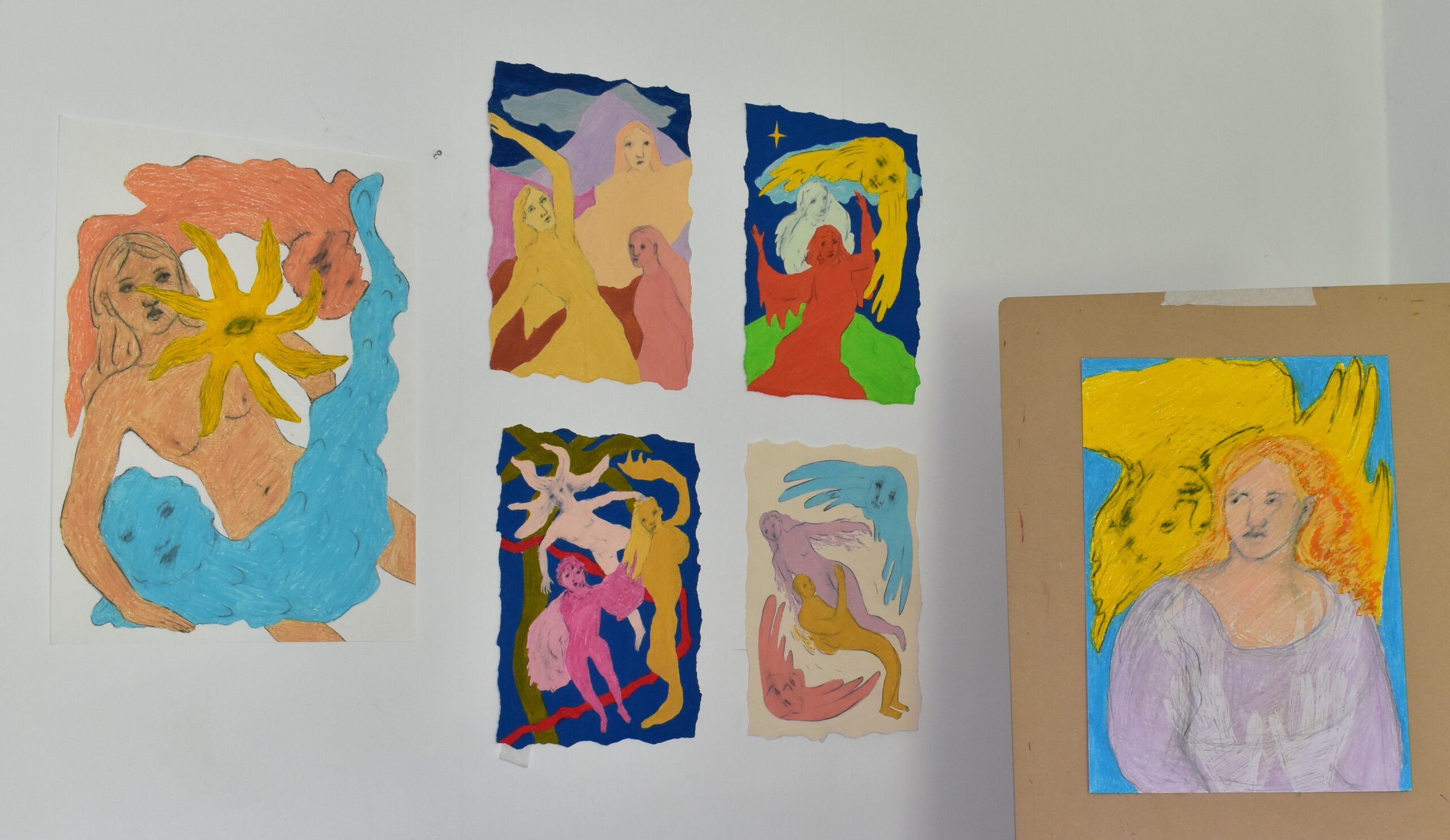
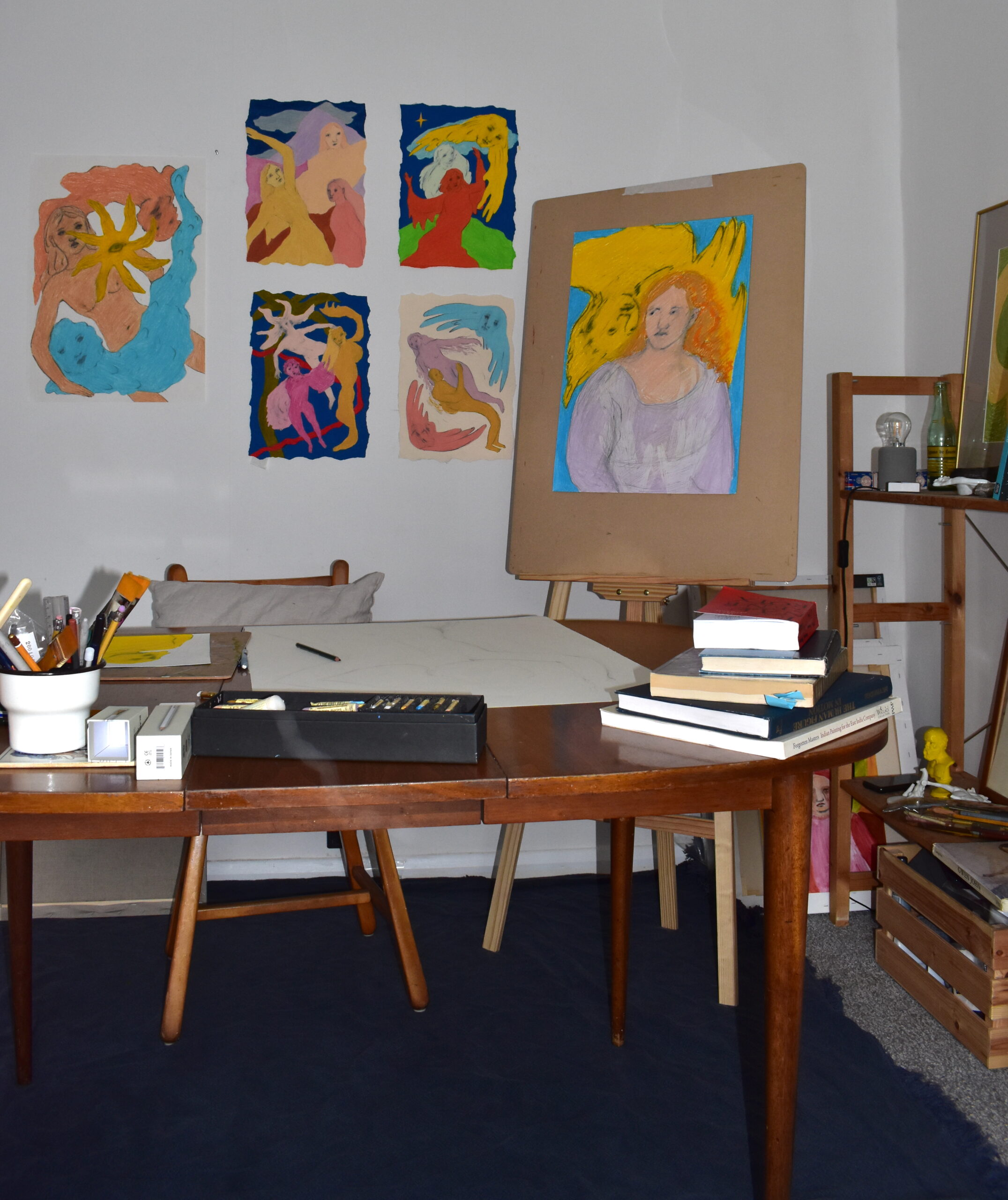
Rebecca is a visual artist whose bold, poetic pieces pulse with vibrant immediacy. Her works are inspired by abstracted elements of nature at play with human forms within imagined landscapes, moving from suggestions of mythical narrative into the more ambiguous, fluid space of uncertainty. We met with Rebecca to tell us more about growing up in Manchester, and unexpected sources of inspiration.

When did you first begin to see yourself as an artist? 

I would say only in the last year. I felt I was an artist at age 17 but then went to art school – my course was Critical Fine Art Practice at Brighton and it made me feel alienated from making art, I left university and worked in the fashion industry until 2016 when I left it all behind to travel and from that point on I have made work pretty much every day. 

Where are you from and what was your upbringing like? How has this impacted your work?

I grew up in Wigan, Greater Manchester as a family we also spent time every year in Connemara on the west coast of Ireland (half my family is from there), from a young age my experiences there filled me with a love for nature and mythology. There is a mystery and intrigue layered within the place for me which always comes to mind as a place for my imaginary characters to exist.

 Paint us a picture of your artistic journey. What inspired you to first pursue, and then continue to practice, artistic work? Was there a pivotal moment when you felt you were on the right track?
 

When I left London to travel, I started on my artistic journey again – I took a case of art supplies and set up makeshift studios along the way, I drew from temples and strange landscapes. I spent the most time in Sri Lanka, Vietnam, Nepal and Myanmar and snippets of memories from all these places continue to inspire my work now . The uniquely strange and wonderful Myanmar was so inspiring, I particularly loved Bagan – the city is quite dusty which creates a hazy mist that fills the air and diffuses the light – at sunset the whole place has a kind of mystical light that covers all the ancient temples and I would love to bring a feeling to my work similar to that I experienced in these spaces. 


What’s the message of your work? Where do they come from? How would you describe your aesthetic?

I create figurative pieces influenced by snippets of mythology and symbolism reworked into new stories. The pieces are often led by certain narratives or ideas which become disjointed when merged with motifs and details from other places. I don’t want to create purely narrative pieces – it’s the feeling of something off balance or unexpected that I feel transports my figures away from a truly representational scene. Colour is also very important to me and I love working with combinations that take the figures into another world. 

Who and what are your greatest influences?

My influences vary from week to week with so many amazing artists out there, Diane Dal Pra’s work blows me away. Overall though, I always find myself going back to look at Old Masters paintings for inspiration and always love, Botticelli, Piero Della Francesca, Andrea Mantegna, and Veronese and I always find something new in these works. 

An unexpected source of inspiration?

I still go back to photos I took of wall paintings in abandoned Bagan temples – I spent so much time there and found them incredibly beautiful – most of the temples were completely abandoned and you could go and spend time there with ancient wall paintings that would usually be viewed through glass. 

What do you want people to take from your work when they view it? Do you have the audience consciously in mind when you are creating?

I usually don’t have the audience in mind when creating but as a piece progresses I often encourage the expression of my figures to interact with the viewer, I often work and rework expressions in faces to create areas of the piece that are direct and engaging.

What events in your life have mobilised change in your practise/aesthetic? How has your art evolved? Do you experiment? 

I think the last year has been the biggest one for me and I’m so grateful that I have had my artwork to fill my time this year. The time in multiple lockdowns has allowed me to focus and build on my aesthetic. I am experimenting with other materials on the side but for the moment my main experimenting is in building composition using the materials I work with more regularly.

What are your ideal conditions or catalyst for creating a “good” piece of work?

Ideal conditions vary for me. I usually listen to music for drawing as music can help me get into the right state of mind, great music can really lead the drawing, once it’s at a stage where I am working with colour and adding details I tend to switch to a film – maybe one I have already seen that plays in the background that isn’t too distracting, otherwise I listen to podcasts – whatever keeps me glued to the studio works best. 

Tell us about the inspiration behind one of your  works?

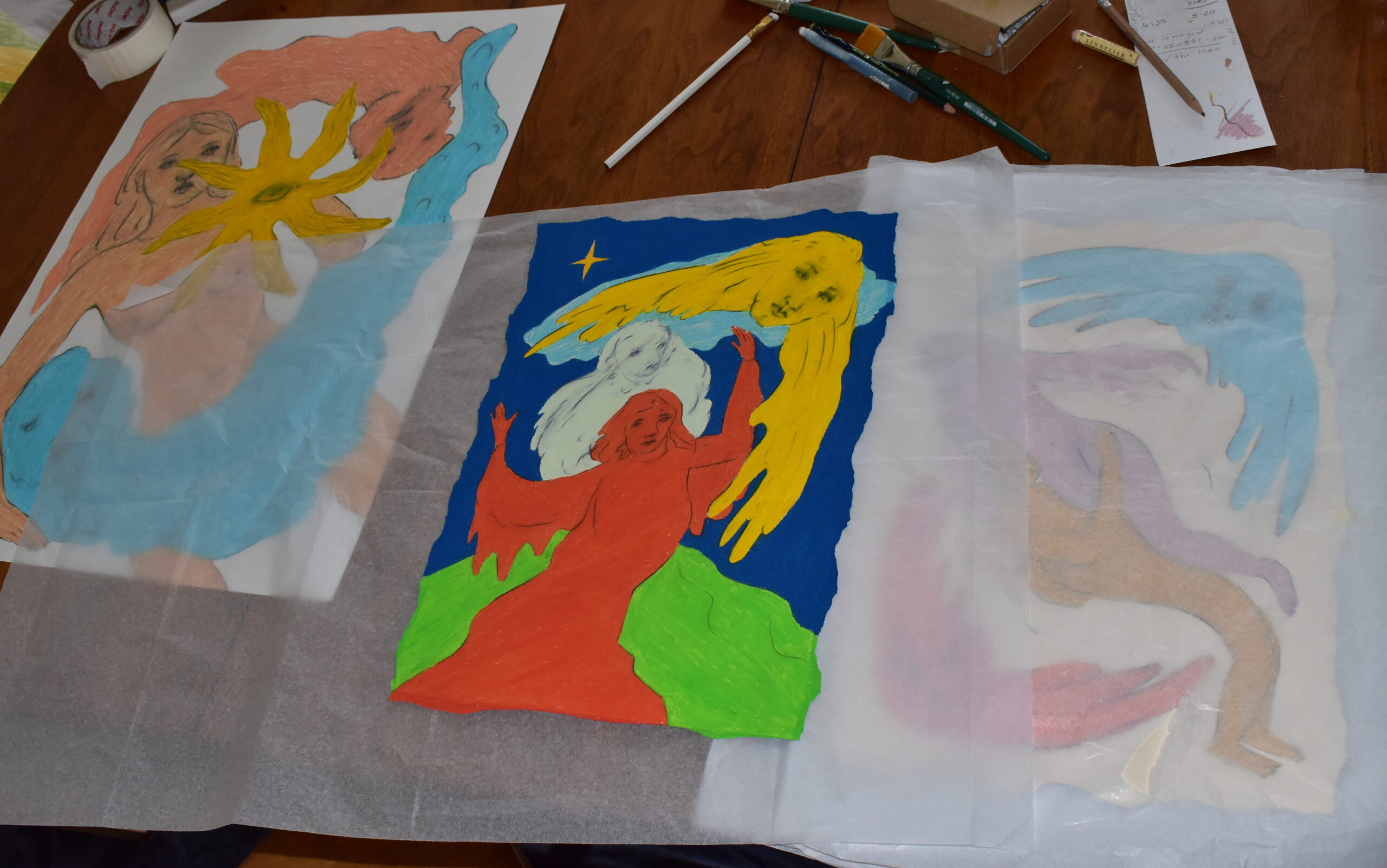
I have a fascination with antique astronomy maps and have been working on a series of drawings influenced by these. I use these maps as references to sketch from and then later create pieces where ideas from the observational drawings seep in. ‘Deep Blue Sky’ was a piece I drew from imagination triggered by the idea of creating a new kind of constellation scene with figures floating in the skies.

Something in the future you hope to explore?

I am starting to work on some larger oil paintings with multiple figures. This is new for me but it’s great to be experimenting with something new and I am enjoying the feeling of working on a larger scale.

Posted on

5 Minutes with Natasha Arselan

This month, we sat with AucArt's founder and CEO Natasha Arselan to talk about discovering new artists, her mission and motivations, and latest sale with AucArt, 'Ones to Watch'.

The most useful piece of life advice you’ve been given?

Faith over Fear

Are there any art patrons, collectors or mentors who have inspired you?

I think I’ve learnt a lot from the many I have had the privileged opportunity to cross paths with. In terms of collectors, I find the Vogel’s story the ultimate love story, very inspiring.

Can creativity be taught?

Everyone’s born with creativity. I think it’s more the opposite, that as we grow we are conditioned to think rationally from the head rather than the heart. I believe creativity can be preserved & nurtured; it’s a state of mind.
 
An artist on the other hand cultivates a vision through a language of their own and they dedicate their life sharing this with us though their practice.
 

How do you typically discover new artists?

Visiting art schools, studios, exhibitions, editorial, fairs, research.

Describe your “taste” in 1 words?

Eclectic 

Which piece of art holds the most meaning for you?

Gosh, each piece holds its own individual meaning for me.

Buy what you love. You’ll know if you see a work and cannot forget it.

What’s most important to you – texture, colour or shape?

Depends on my mood, I’m allured by all three.

An underrated form of art?

Ceramics & Tapestry 

Your mission in a sentence?

To share my joy of discovery & the wonder art brings to everyday life.

Have you ever commissioned a piece?

Yes the last was a work on paper by Gianna Dispenza.

What’s the story behind this selection of artists? Is there a theme or narrative that ties the works together?

This is a selection of artists I am inspired by on a daily basis and have had my eye on for some time now. I am intrigued by their practices, each so different. I find the works wholesome, consistent and striking in their own right. 

How has the pandemic affected your outlook? The way you look/buy art?

My outlook has just been very two dimensional this past year, a digital studio visit is not the same as IRL. To be honest when museums & galleries closed here in London, I enjoyed the colours that surrounded me in parks, I’ve never quite appreciated the seasons and all they offer as I have this past year. I think this calamity has affected the works I have acquired in the last few months – minimal & neutral palettes.

What about AucArt makes you most proud?

That it brings joy to so many people all around the world, whilst supporting careers and collections.

What inspired you to create AucArt?

My own desire to collect and support artists on the verge of greatness. 

A hurdle you’ve had to overcome?

Depression

What advice would you give to a first-time collector?

Buy what you love. You’ll know if you see a work and cannot forget it.


Posted on

In the Studio with Cypher

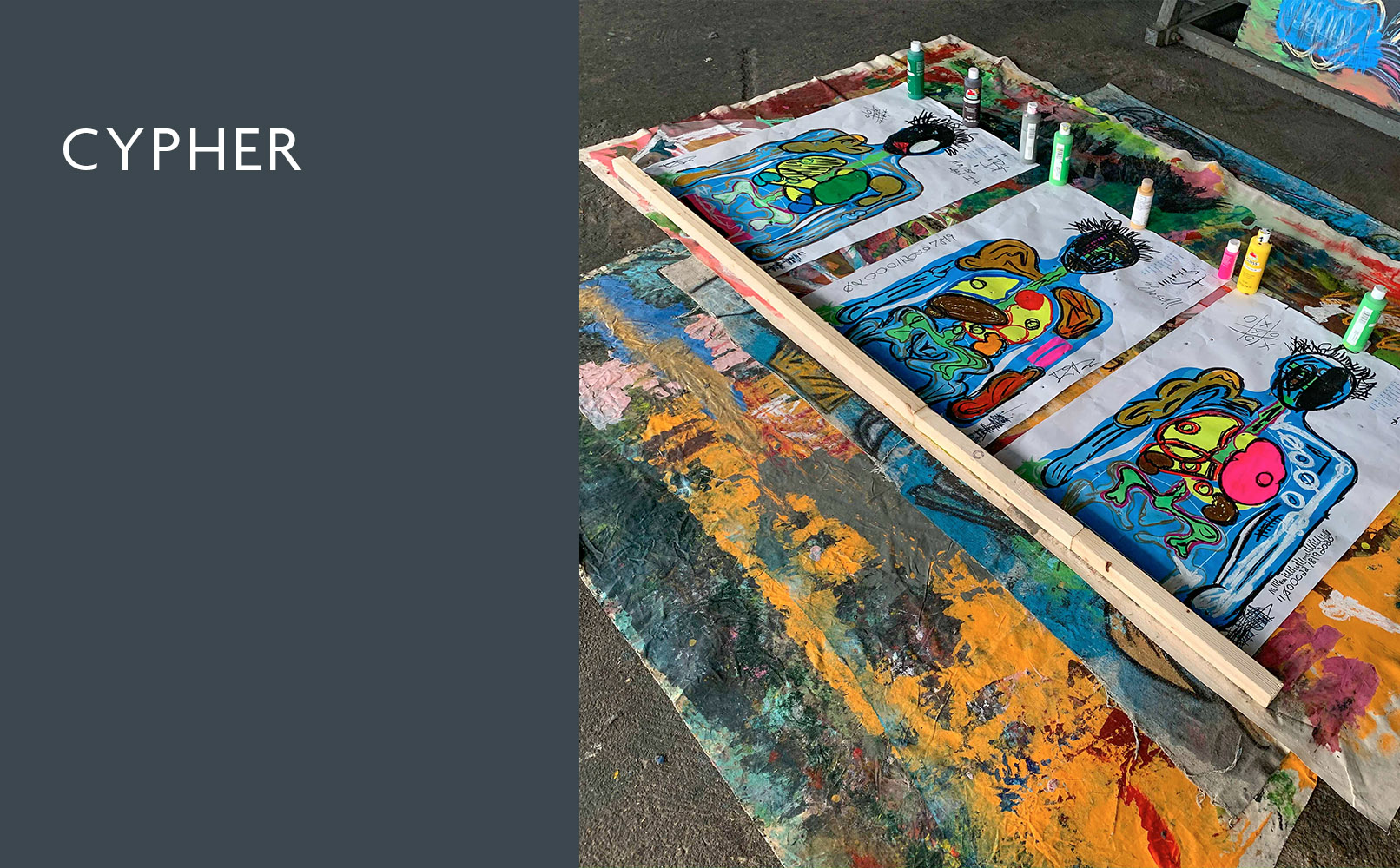
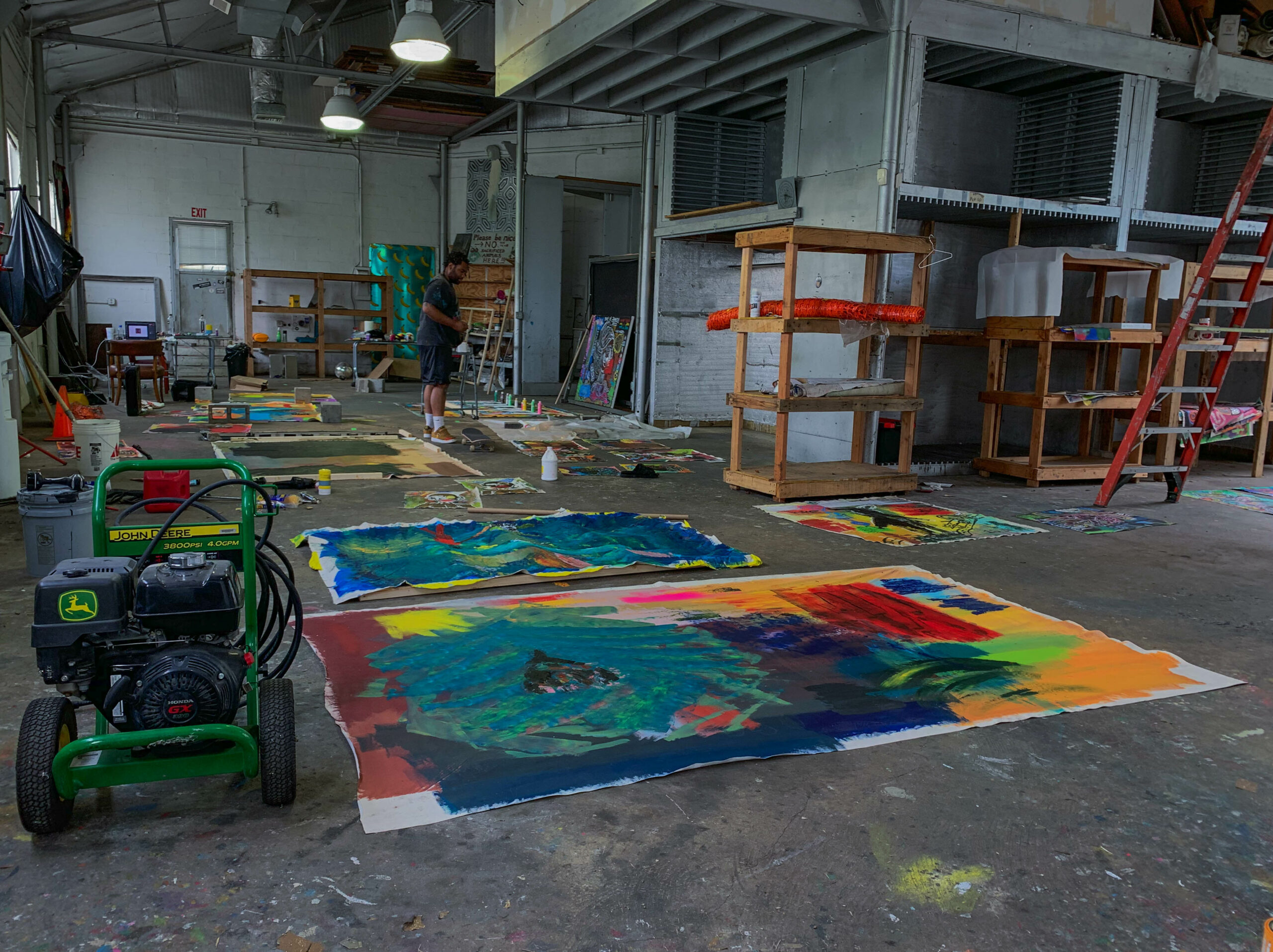
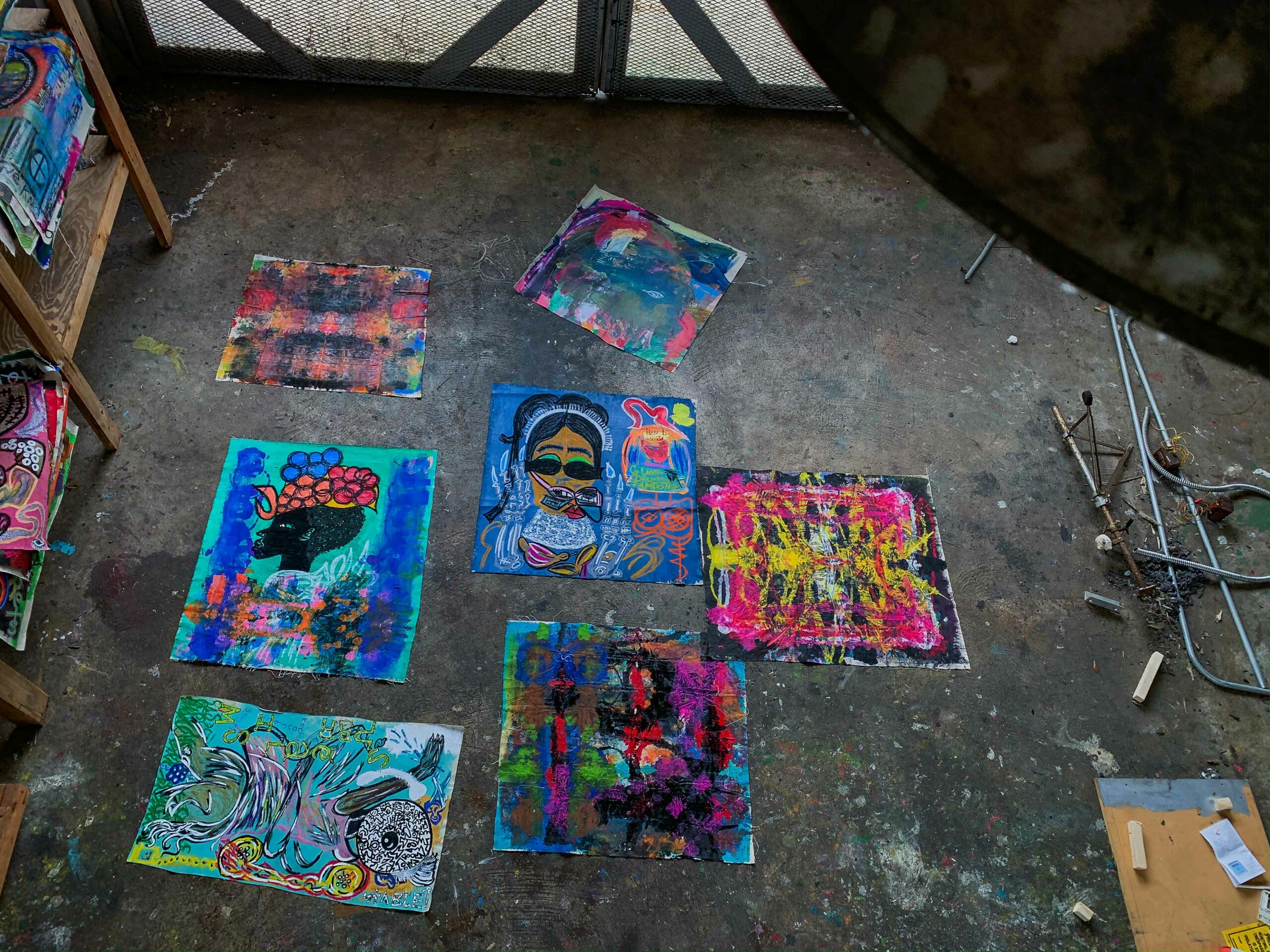
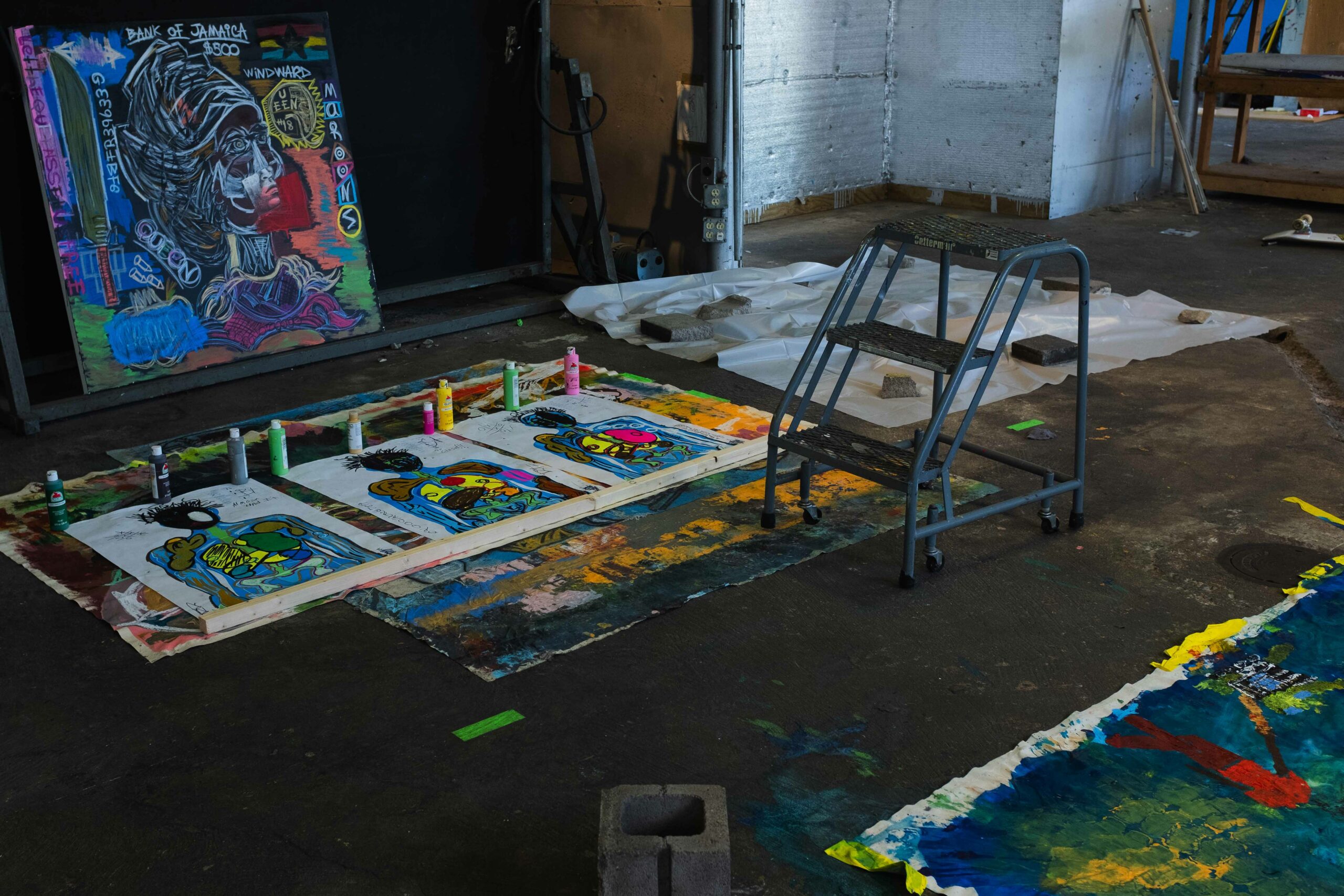
Cypher is a self-taught visual artist from New Orleans whose practice oscillates between the figurative and abstract, a reflection of the schizophrenic nature of the modern mind. We met with Cypher to tell us more about his inspirations, travels, and how he has been staying creative during the pandemic.

When did you first begin to see yourself as an artist? 
 

I’ve always felt like an artist/creative. I don’t think until maybe I was in my early 20’s that I started to feel as though my work was a craft and was at a point where I could vocally an confidently say, hey I’m a artist. 

Where are you from and what was your upbringing like? How has this impacted your work?
 

I’m from New Orleans, LA born an raised uptown, 3rd ward to be exact. My upbringing was fun, but like a lot of other kids where I’m from, I was raised by a single mother cousins aunts & uncles. 

I avoid trouble as much as possible, pit falls & typical things of the sort, art was big in my house along with education. 

I did a lot of reading, drawing & I remember a lot of national geographic magazines all of those would just distract me, allowing me to dream & use my imagination, different type of summer camps, road trips experience etc…

Everything about my upbringing an all those things impact my work still to this day an being able to tap into my childhood memories & allow it to flow with the current things I’m creating shows that.

Paint us a picture of your artistic journey. What inspired you to first pursue, and then continue to practice, artistic work? Was there a pivotal moment when you felt you were on the right track? 

Short answer NO! 

My art journey started really young maybe 6 or 7. My grandmother was a artist, teacher & curator in the 90’s. My uncle was a artist as well, so I’m self taught. As soon as she saw me really taking interest in art,  my grandmother immediately made sure she taught me everything she could, while still allowing me to be free.

She would bring me books from places she’d traveled abroad, art books, design & architecture books. As a kid we went to the museum a lot & different art shows. She worked for YA YA arts center after school enrichment program founded in 1988 by artist Jana Napoli.

She would pick me up from school an take me to YA YA after everyday so I got to do art everyday after school for like 8 years, watching them build things like chairs & fabric designs, even the swatch watch collab they did an I still have to this day. I watch an learn from all the older teenage kids as well as my uncle who was in the program. They sold art in the CBD (central business district) of new Orleans, then New York, other US cities, then internationally.

My experiences were very life changing an always some adventure & creativity.

What’s the message of your work? How would you describe your aesthetic?
 

There’s always a message, sometimes a theme. 

But the narrative always connects to me in one way or another, an my life experience telling some type of story or sparking some conversation or question. 

I think my ultimate message is to create things that represent me an people that look like me an tell their stories. My purpose is to learn help & teach through my work as much as possible. 

Are your works planned? What do you want people to take from your work when they view it? 

None of my works are ever planned. I never sketch I just go straight to canvas with the ideas feelings an my emotions. I zone out, then I snap out of it, either the ideas an everything come out or there’s something else that was in my subconscious that I didn’t even realize was there. 

And there’s no target audience I think about when I create art because I have to some days. I can’t do anything else…Art has to be free. 

Who and what are your greatest influences?

I like a lot of artists but I wanna say my greatest influences come from knowing that I can tell a story an connect with people, wether it’s through beauty or pain & it truly means something to them.


What events in your life have mobilized change in your practice/aesthetic?

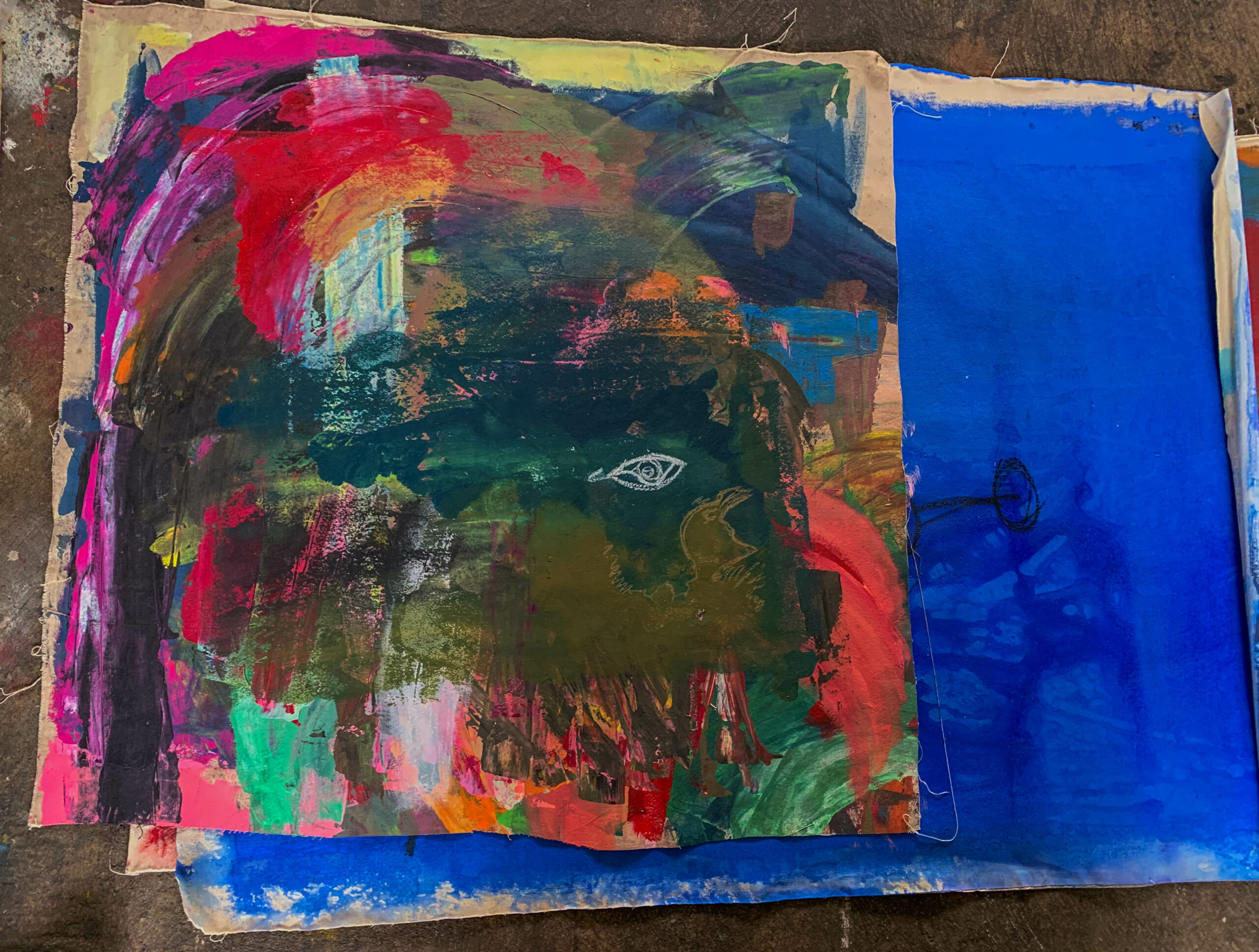
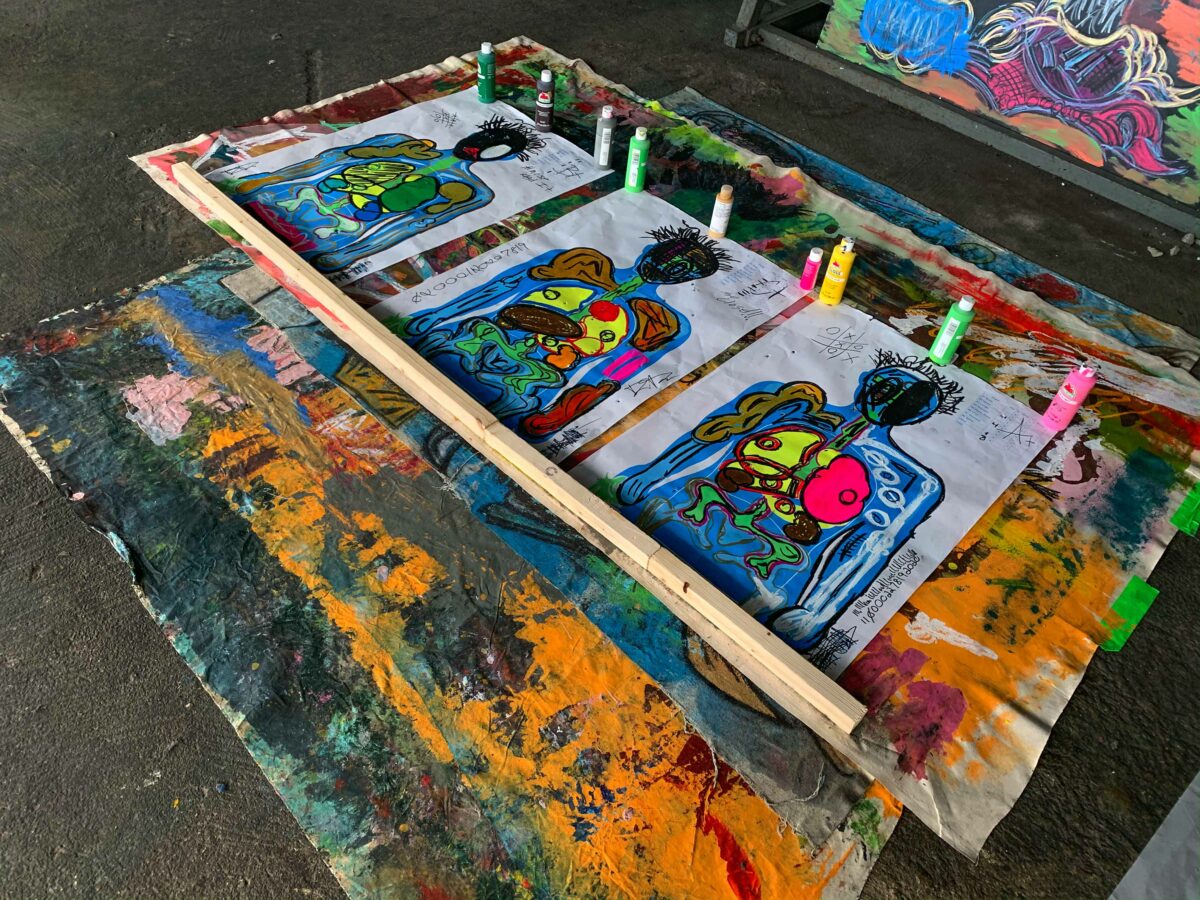
I think the opportunity to travel as much as I have done over the last 15 years & so on has helped my work evolve. I use to draw a lot when I was younger, way more than I painted. I remember how much I loved to draw & sketch in ink pen. With pencils I would try perfectly shading an how light or how heavy I applied pressure to the pencil was always something that just gave me such enjoyment. It would put me in a relaxed state. Now I never work on paper. I use a lot of oil paint, oil pastels, garden tools to scrape an add paint to whatever I’m painting, which has been a lot on canvas. Right now a single chop stick is what I use to apply wallpaper adhesive to the magazine & paper cut out. I apply it to my works, like peanut butter on bread. Then I stick it… once it’s on the canvas, I take that same chop stick an then smooth it out, not sure how I came up with that … I try to experiment like a scientist as much as possible. 

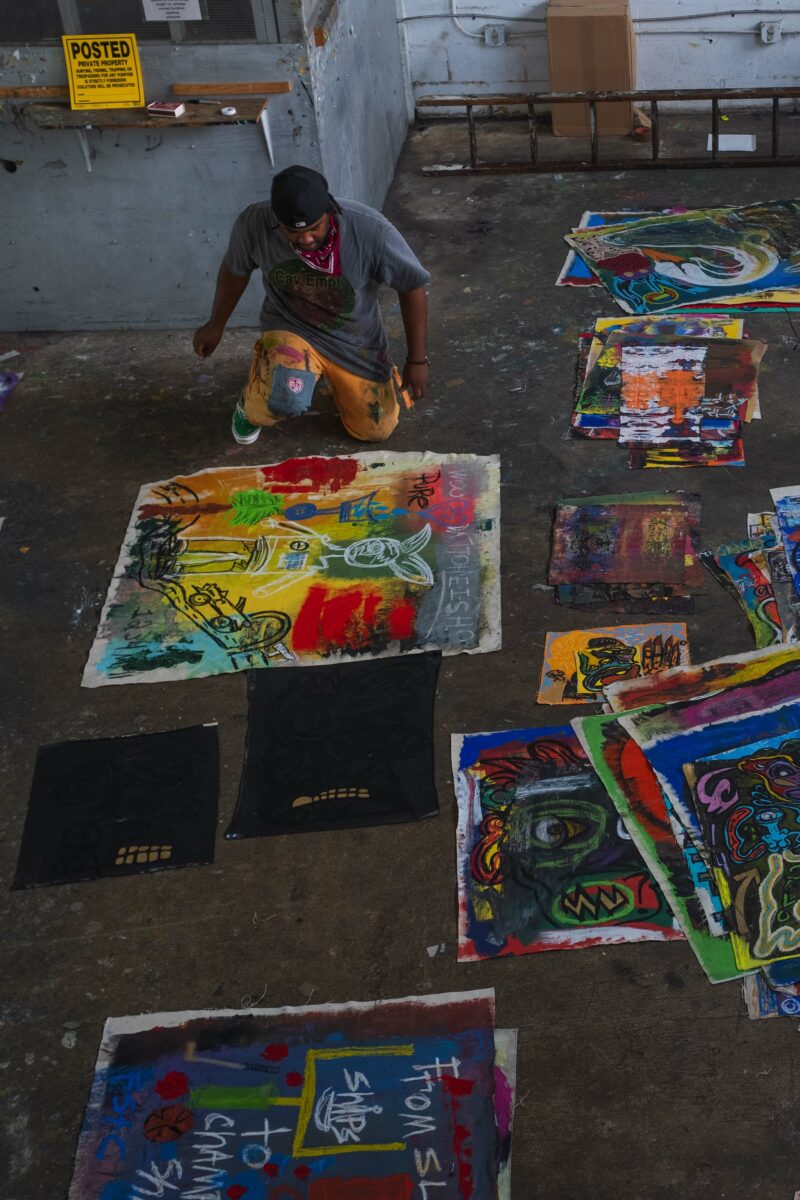
Because off the climate & weather, sometimes I’m using what I called weathered materials. My canvas gets soaking wet sometimes from the rain if I’m not able to move pieces I’m working on in time. I also like to work on the floor. Things get extra layers accidentally over time an then I have to wait for them to dry before I can work on it again which changes the complete feel of the canvas or magazine cut out or whatever I may be using at the time. I also have wooden piece from different random finds. If the piece is already started, the colors an materials I’m using becomes altered, the image sometimes smeared an then I go from there, build on.

What are your ideal conditions or catalyst for creating a “good” piece of work? 


Lol honestly idk? I’ve recently gotten my own studio space for the first time last year at the height of the pandemic. I love the work I’m making now because I have more space, but I’ve also painted in my moms garage an that was my studio, no air, no heat, my small apartment with my kids running around an spilling paint. I also loved those works in those times. I think it’s a mind state. As an artist I feel as though you should be able to create anywhere. 


What are your goals for the future? (Projects, collaborations)

My goals are to continue to push the work. To intimidate & shock with beauty, myself & the viewers. I would like to open a gallery that can facilitate as many opportunities as possible, grants, funding, events, fundraisers, schools an so on. 

I wanna continue to work with like-minded artist creatives & do group shows where we can build our own worlds. 


 Tell us about the inspiration behind one of your works?

They all mean a lot to me.

I was inspired a lot by the current events of last year all through the pandemic, the targeting of black people after hundreds of years of being oppressed, all the evictions that took place. 

My favorites of them all are  “A Stroll to Victory” & “Black Targets”. It about the opposite, there’s no stroll to victory for a Black man in America. I saw this man that was evicted. He had a basket with all his belongings an some things he picked up along the way. I saw him passing a grocery store from across the street, an instantly it grabbed me. He seemed at peace, he was just strolling with all his things, seem to not have a care in the world. I wanted to recreate that in its purest form, the way I saw fit. I saw abstraction.

An unexpected source of inspiration? 

I visited Georgetown, Maine about two years ago in the short summer they have. I think it was June. I stayed up there for about 3 weeks. I went with no clue or expectations. All I could think about was the opportunity to get to paint outside of my city for 3 weeks. I packed a bunch of supplies, flew out an I had 2 rolls of canvas shipped out before I left.When I got there it was an amazing house on the water, deer grazing every morning. No wifi, no cell phone, just me my photographer friend Casey Shaw & a big house.

After the first week of exploring & eating all the lobster & haddock possible, daily visiting the museum in town an the other small galleries in Bath,  I painted the next 2 weeks straight. Everyday the inspiration was crazy, never felt anything like that before. It is now easily one of my favorite places now.

How have you been staying creative during the last year? 

By educating myself as much as possible, lots of reading, trying new things within myself & art.

Pushing myself to become more free, writing a lot of notes of ideas down, thinking of mini things I wanna build & paint, sculptures, home decor an all types of other things. Just really exploring.

Posted on

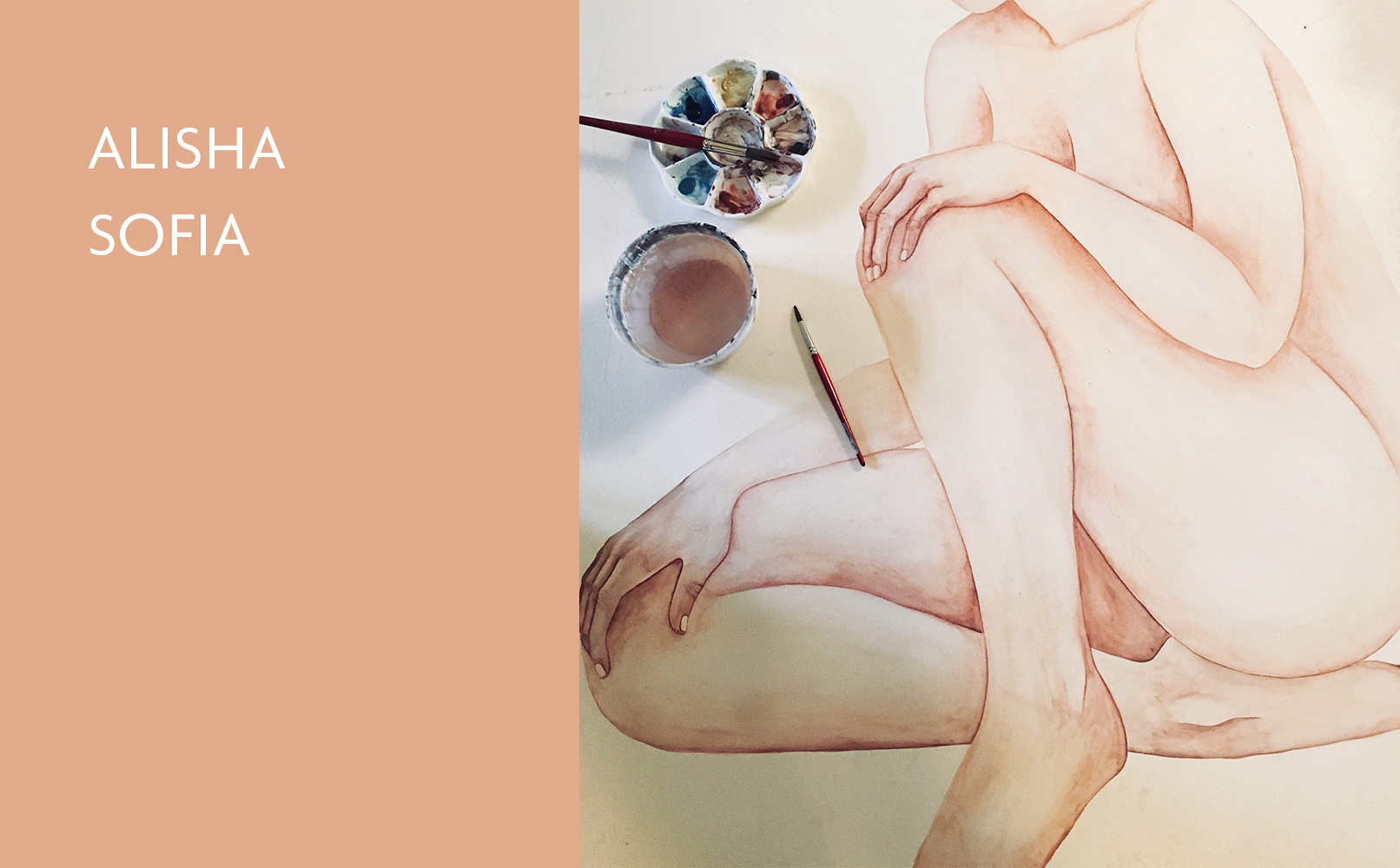
In the Studio with Alisha Sofia

Alisha Sofia focuses on the female form as both creator and artifact of visual identity depicted throughout her practice. We met with Alisha to tell us more about growing up as a a first generation Russian Armenian and some unexpected sources of inspirations.

When did you first begin to see yourself as an artist? 
 

When I had my first solo show last year. 

Where are you from and what was your upbringing like? How has this impacted your work?
 

I’m a first generation Russian Armenian born in Los Angeles. I grew up with parents working in fields that were not creative at all. But having grandparents who were musically inclined, specifically my grandmother being a painter, it initiated my desire to continue drawing and painting.   

Paint us a picture of your artistic journey. What inspired you to first pursue, and then continue to practice, artistic work? Was there a pivotal moment when you felt you were on the right track? 

My inspiration to pursue art comes from anything I see or absorb around me. The pivotal moment I felt I was on the right track was when I saw the responses I received from folks. It helped me recognize that I’m able to communicate my ideas and thoughts through my work.

What’s the message of your work? How would you describe your aesthetic?
 

Coming from an Armenian and Russian background has been the inspiration for the majority of my paintings. I am always digging for more within the traditions, culture, folklore etc. In its entirety, my work covers topics of identity, consciousness within society, solitude and self discovery. 

Are your works planned? What do you want people to take from your work when they view it? 

Sometimes they are, sometimes they aren’t, it depends on the inspiration behind each piece. When creating the piece, I want the viewer to take away or learn something they never knew beforehand. I create these works for everyone, not just for myself.

An unexpected source of inspiration?

Food and nature are the two main inspirations for a lot of my paintings. 

Who and what are your greatest influences?

Hagop Hagopian, Martiros Saryan, Minas Avetisyan, Niko Pirosmani, Renaissance and Medieval paintings, ancient Roman mosaics, Etruscan art, Greek and Byzantine funerary sculptures, Persian cosmography illustrations. 

What are your ideal conditions or catalyst for creating a “good” piece of work?

Being in a peaceful environment, chaos does not inspire me.

What events in your life have mobilised change in your practise? How has your art evolved? 

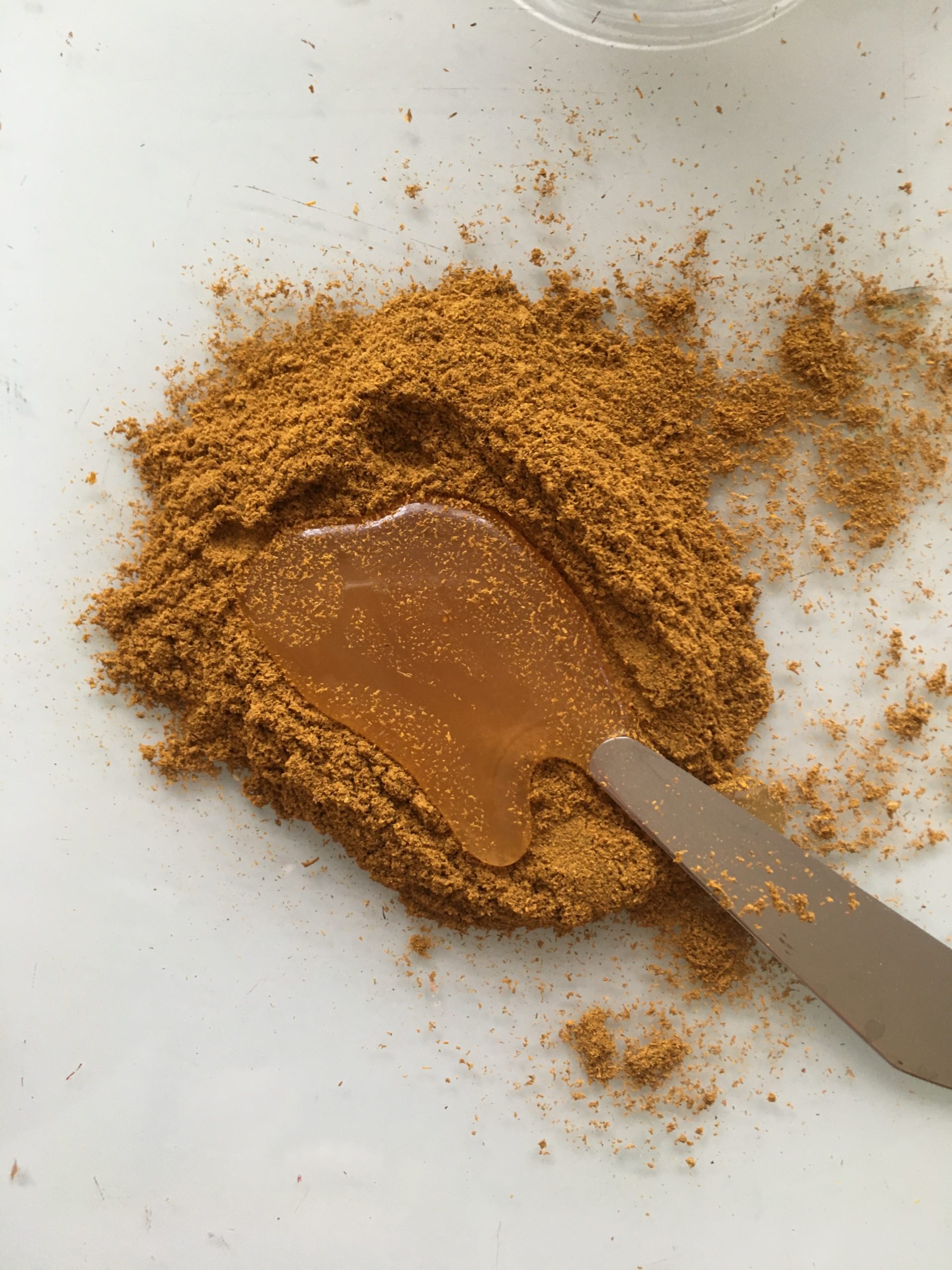
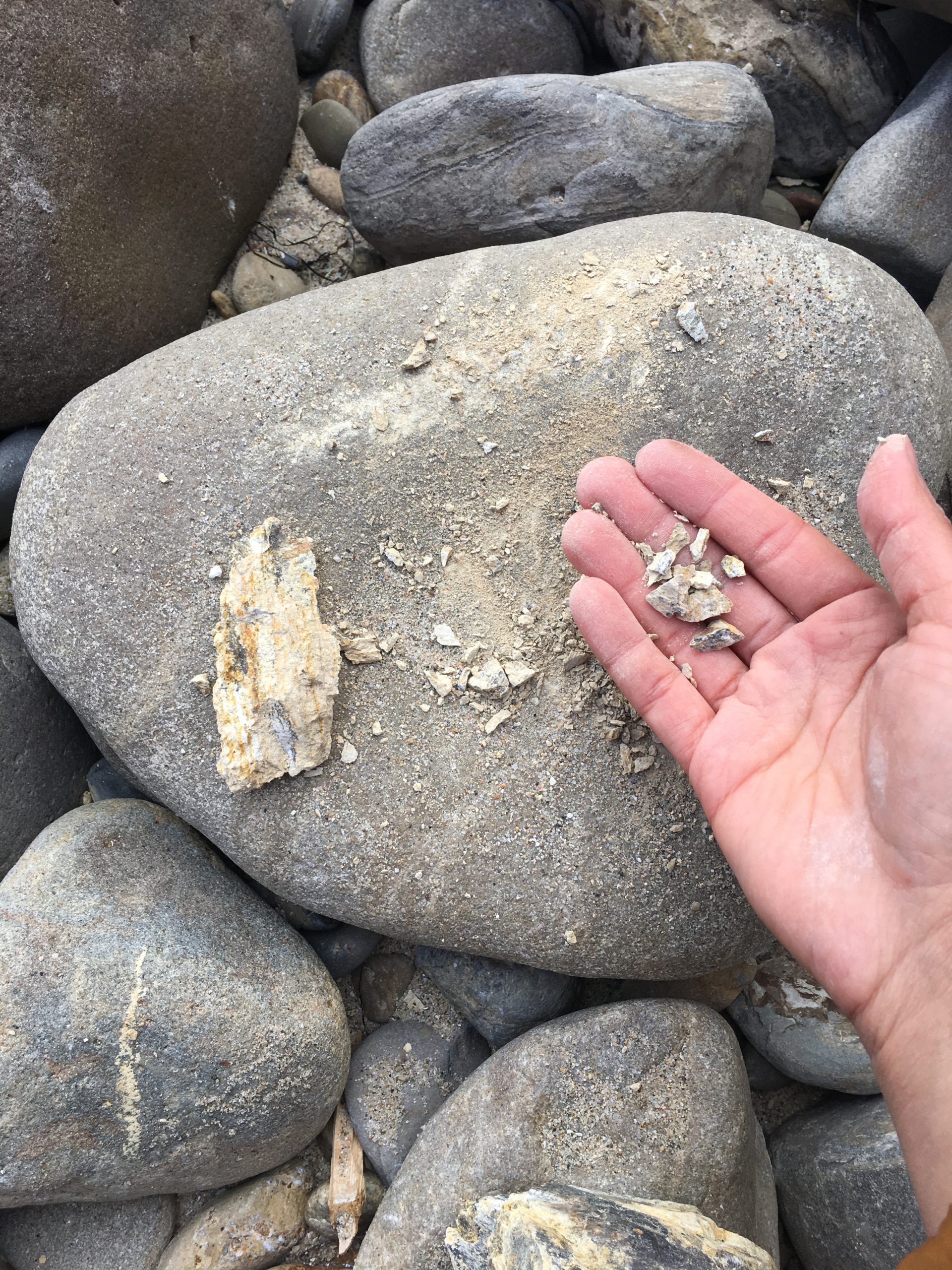
Not having my materials at my disposal has definitely changed my style of painting and what I paint. I remember a specific memory of not having brought my watercolors with me on a trip and discovering I can use the pigments I found on the beach to create a paste to paint with. I always make do with what I have around me. This evolved into the pigment paintings you see now in my recent works.

Tell us about the inspiration behind one of your works?

Reflection I & II were inspired by my personal (and I’m sure everyones) struggle with identity and commitment to self work. They are two paintings shown side by side as compliments of each other. It is a depiction of the everlasting odyssey and evolution of oneself. We are always discovering new traits that will continue to encompass who we are. There will always be introspection and contemplation of the self, but staying authentic keeps us resilient through it all.

Posted on

5 Minutes with Lizzy Vartanian Collier

Nestled at the crossroads of East and West, Armenia is a small mountainous country, rich in culture, history, tradition and legend. Despite more Armenians living outside of their homeland than within its borders, the Armenian identity and connection to the land endures. For many Armenians, Armenia is a mythical, magical place, one that we experience through photographs, music, nursery rhymes and food. 

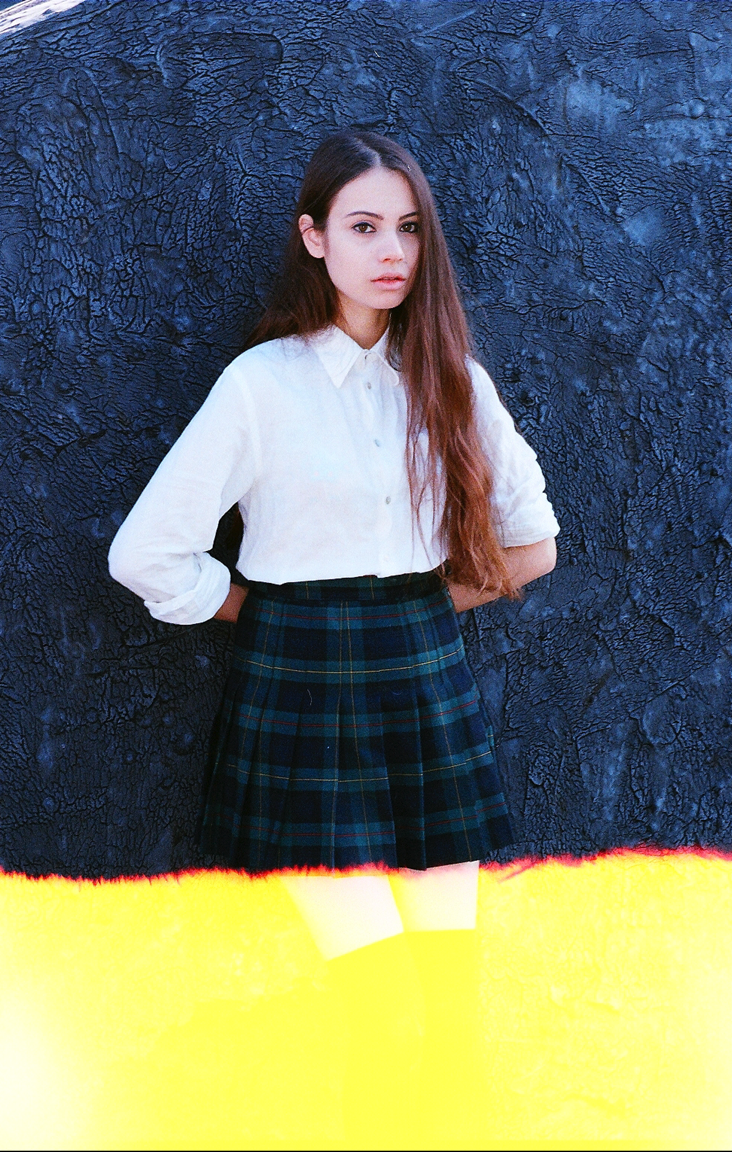
This month, we sat down with guest curator, art writer and founder of Gallery Girl, Lizzy Vartanian Collier, who welcomes 6 Armenian artists to the AucArt roster. 

Where are you from and where do you consider home?

I grew up on the fringes of South West London and I definitely consider London home, although my heart is always at rest in Lebanon and Armenia too, as my family is Lebanese-Armenian. 

 How has your upbringing (if at all) impacted your work?

My parents actually met at an art gallery, and my dad is a journalist. I grew up going to museums and galleries, while also spending many weekends and school holidays at newspaper offices, so it’s probably not such a surprise that I am an art writer. A lot of my work has focused on the Middle East and the Caucasus too, so I suppose having roots in Lebanon and Armenia has also influenced the projects that I have been involved with. 

What inspired Gallery Girl?

I started Gallery Girl as a way to document the exhibitions I was seeing just before I embarked on my Art History degree in September 2011, little did I know that I would still be Gallery Girl a decade later!

What does art mean to you?

This is a really difficult question to answer, and I think it changes every day. But, to put it simply, art means being to express visually what words can’t.

What did you want to be when you were little?

When I was little I wanted to be a ballerina, a hairdresser and an astronaut all at once. I have been dancing since I was three, I have super long hair, and always have my head in the stars, so I think I am almost there!

Most inspiring exhibition you’ve visited?

I was first inspired to write about art after seeing Twombly and Poussin: The Arcadian Painters at the Dulwich Picture Gallery in 2011. Seeing such seemingly different artists exhibited together in such a historic space was truly overwhelming. Cy Twombly is one of my favourite artists, and I guess I have to thank the exhibition for almost a decade of Gallery Girl.

If you could spend the day in a painting which would it be?

I’m completely obsessed with Alymamah Rashed’s work at the moment. I’d love to spend some time within her world. Her paintings merge textual references with research into spiritual and emotional intelligence, producing gorgeous works on canvas. 

Favourite art genre?

I wouldn’t say I have a favourite genre, but medium wise, it would be painting. 

Which countries’ art scene should we be paying more attention to?

My mother is from Beirut, and I think we should really be paying more attention to the Lebanese art scene for many reasons. Firstly, because of the breadth of talent coming out of Beirut, from all generations, from young artists like Nadim Choufi, to established names like Ayman Baalbaki all the way to Mona Saudi. And secondly, I would ask that people pay more attention to the Lebanese art scene because it is under threat. Following the devastating explosion last year, coupled with the crippling effect of a political system and economy in decline, Lebanon’s local artists need our support more than ever.

Most inspiring person you’ve met?

There are so many people who inspire me within the art world, but I would really like to say Sueraya Shaheen. An artist, Sueraya is also Photo Editor of Tribe Magazine. It is Sueraya’s energy that I find most inspiring, she always lifts others up and really champions new voices and talents within the art world in a genuine way, which I think is so important. 

Greatest goal you’ve accomplished?

I beat anorexia when I was 21 to get my degree and I think that’s pretty badass. 

Best piece of advice you’ve been given?

This isn’t really career or necessarily art world related, but a long time ago my dad told me “don’t give your heart to people, make them earn it.” I think you can apply this to lots of situations in life. When I was just starting out I was probably a little bit too eager to try things out and I let people take advantage of me. Now I try to only work with people who treat me with respect, but I can admit that it’s not always so easy, especially in the art world.

Most exciting story you’ve covered?

This is a really hard question to answer, since I’ve covered so many interesting stories. But, given that I’ve just curated an Armenian sale, I would say this piece I wrote for The Art Gorgeous about women ruling the Armenian art scene. There are so many inspiring women working to promote art and culture in and with roots in Armenia, and it is so important for me to champion them.

What are you reading at the moment?

I’m about to take law school exams so unfortunately most of what I am reading is quite far removed from the art world at the moment! However, I did read A Gentleman In Moscow by Amor Towles at the beginning of lockdown which I couldn’t recommend more. It is about a man on house arrest at the Metropol Hotel in Moscow, which seemed quite fitting. It was also extra special because I have stayed in the same hotel many times. 

Which art world trends are you following at the moment?

Just like everyone else, I am playing close attention to the ever-increasing digitisation of the art world, though I cannot honestly say that I am a fan. 

What style of art do you like to be surrounded by?

I wouldn’t say there is one particular style I like any more than any other. As I change and grow as a person, so do my likes and dislikes in all aspects of my life, including art. I will say though, I do tend to be drawn to work that has an interesting story behind it, whether that be a cultural influence or a reference to history, myth or legend.  

What are you enjoying about the art world currently?

To be honest I am struggling a little with the seemingly completely online nature of the art world at the moment, and I am enjoying the fact that London galleries will be able to open in a matter of days!

What advice might you give to someone looking to buy their first artwork?

Trust your gut. 

To put it simply, art means being to express visually what words can’t.

Posted on

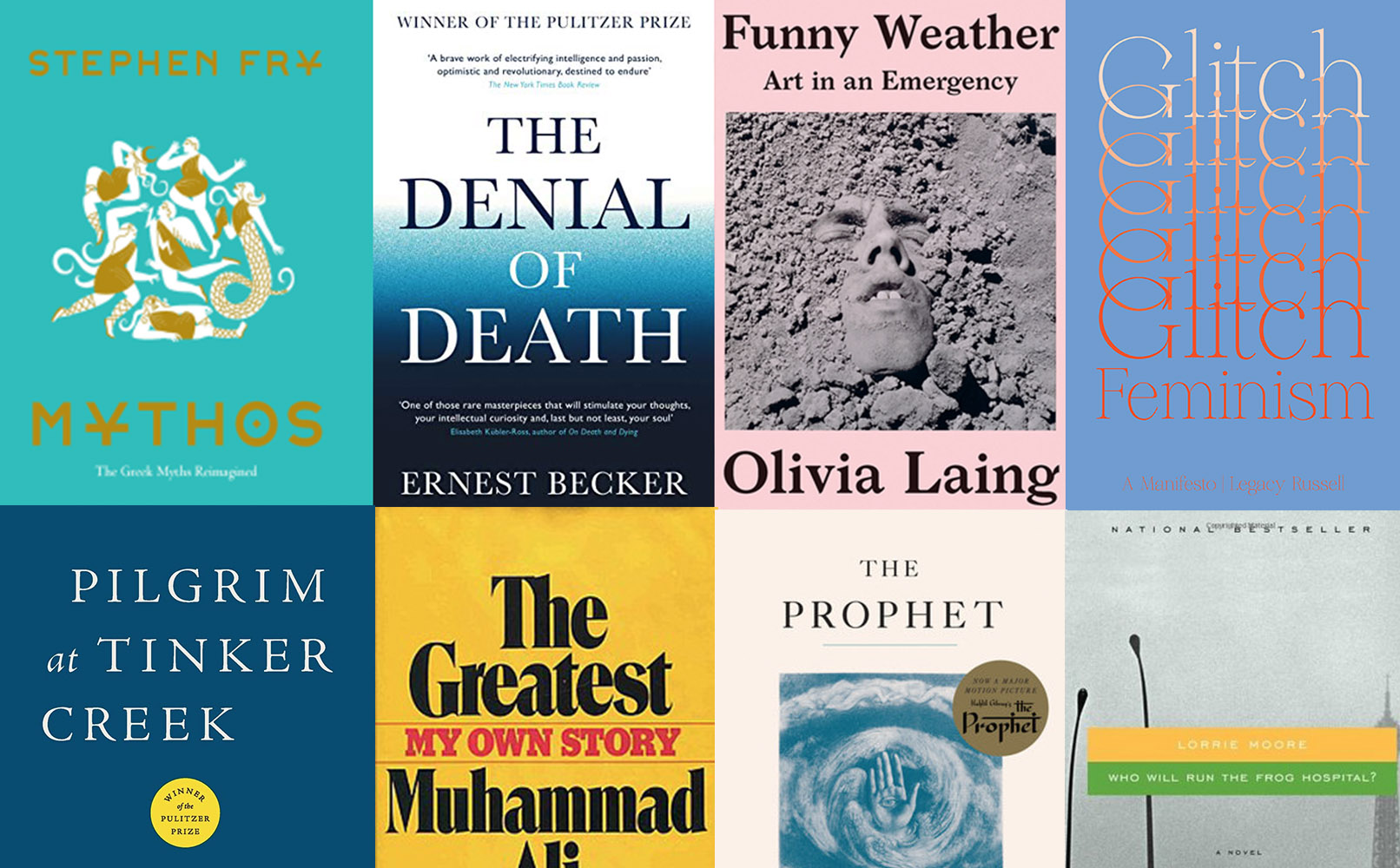
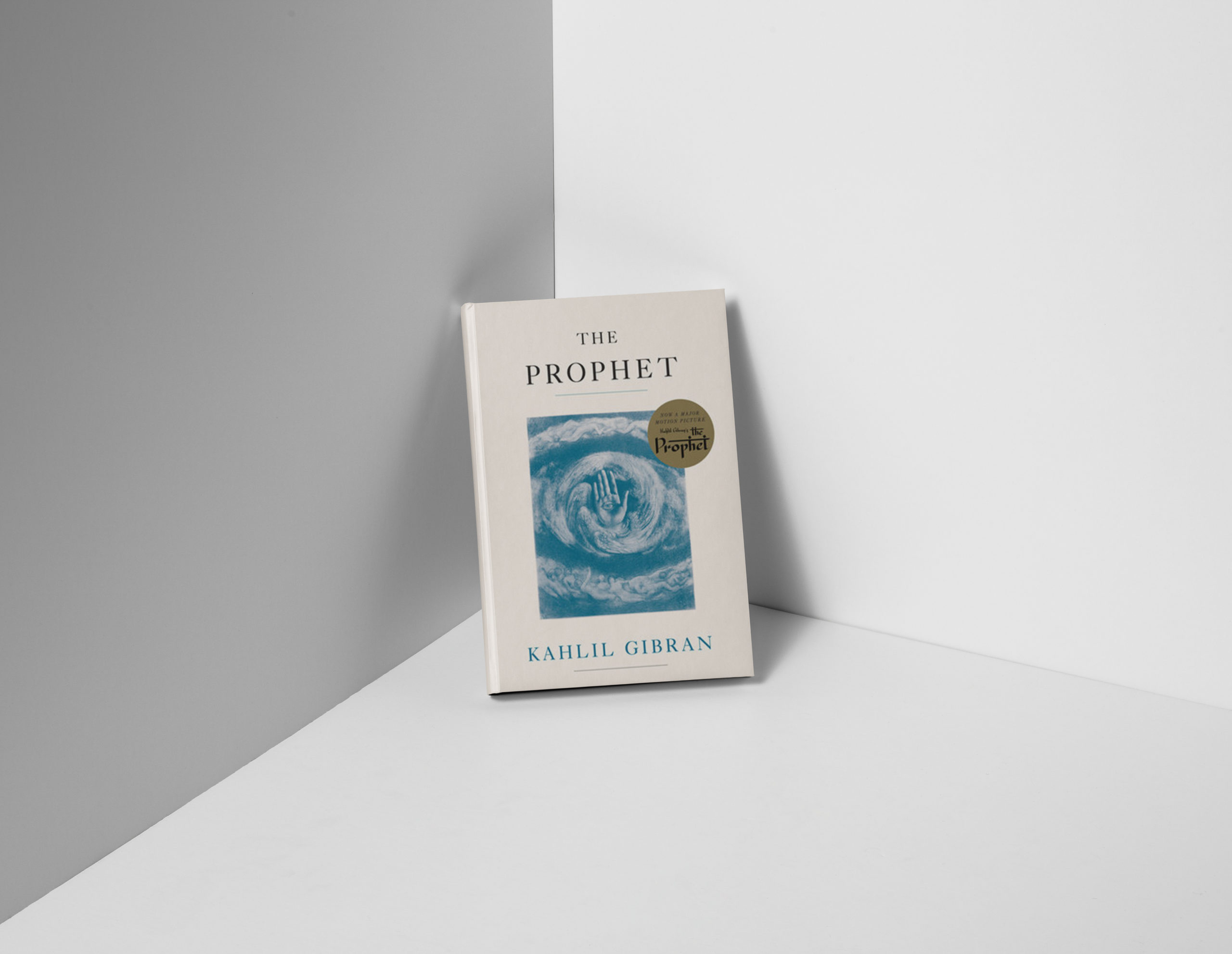
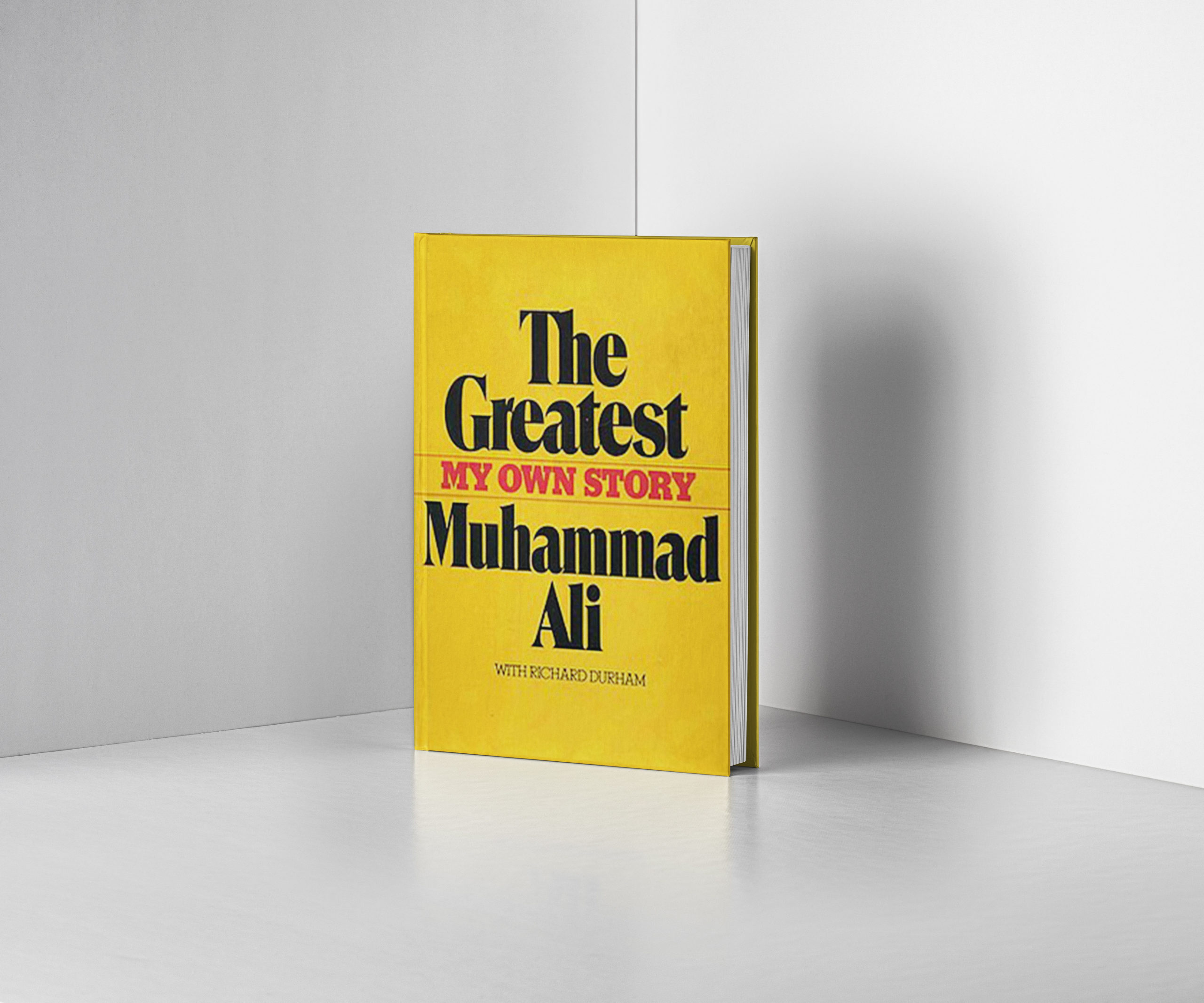
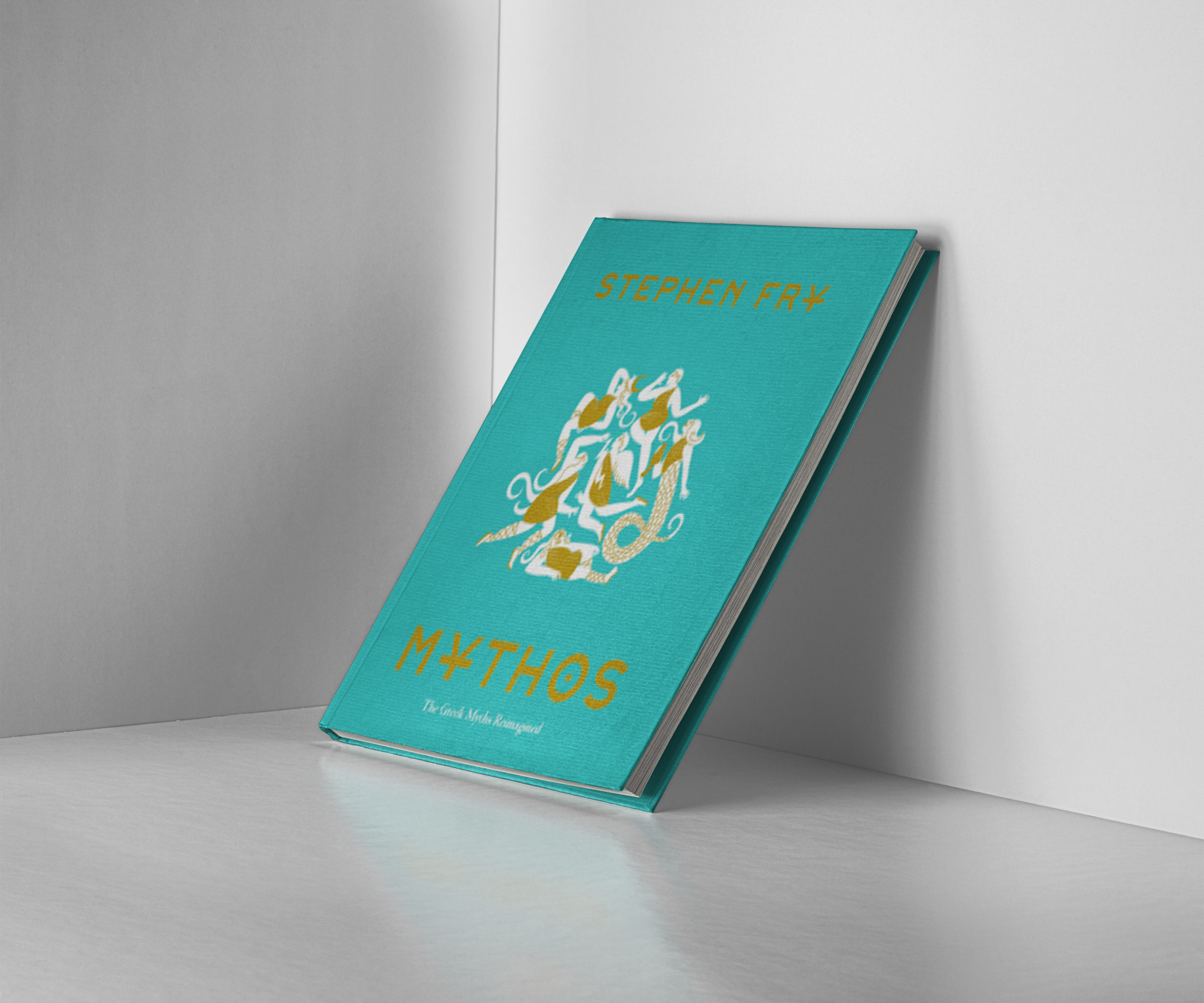
Book Club April

april edition:
The AucArt Book Club

With Spring around the corner and the UK’s road map well underway, things are starting to look a little brighter. Visions of picnics in the sun aren’t looking so distant after all and perhaps reading outside might even be within reach?

With that in mind, Book Club has decided to do things a little different this month, with the AucArt team sharing their recommendations for April's installment. We hope this selection of light-hearted reads will inspire your next book of choice, encourage you to pick up where you left off with the novel sitting by your bedside, or even spark a chat with a friend over a coffee. Certainly, there has never been a better time to connect, communicate and have a good old barney about the joys of getting stuck into a book.

Natasha arselan

1.

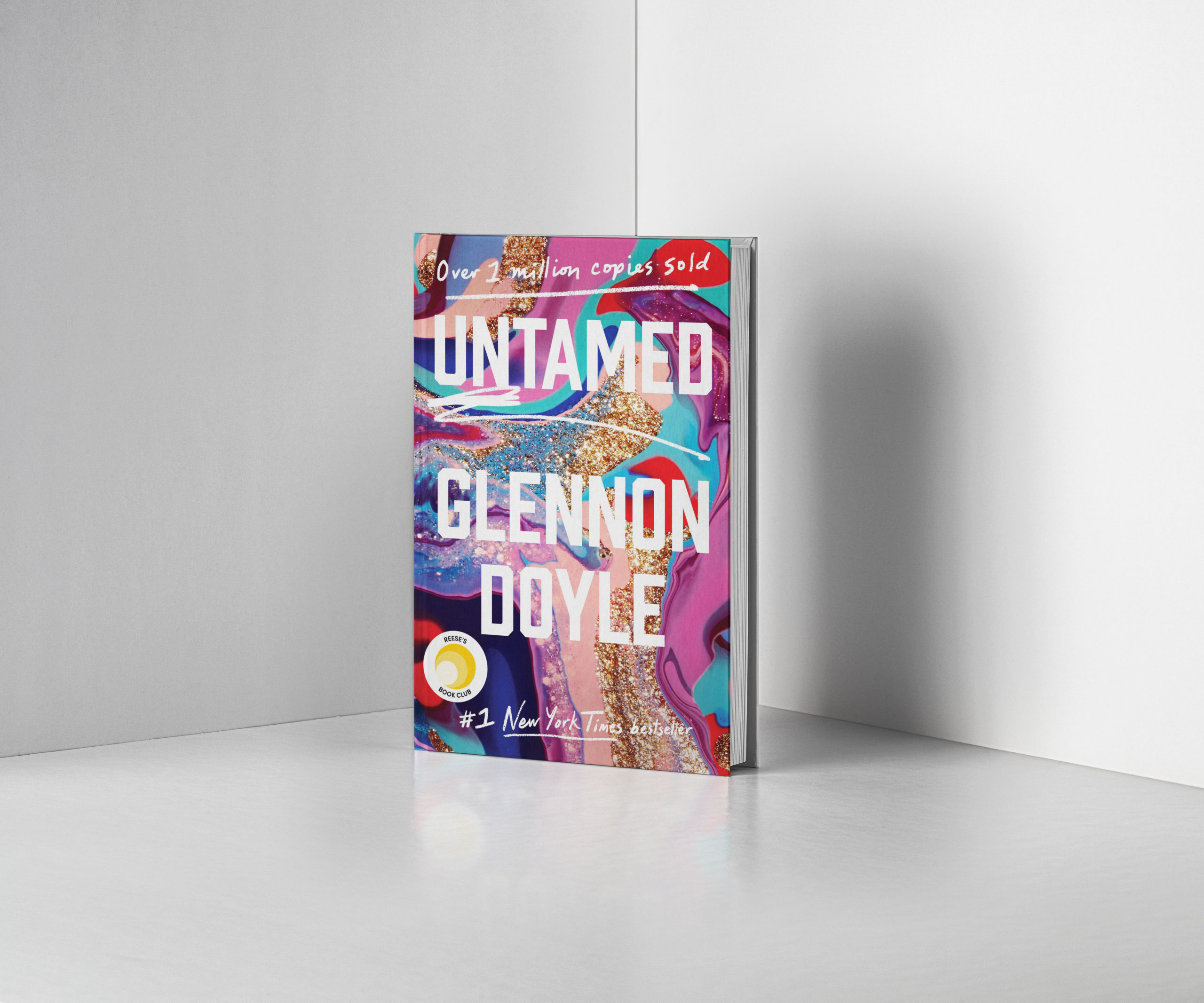
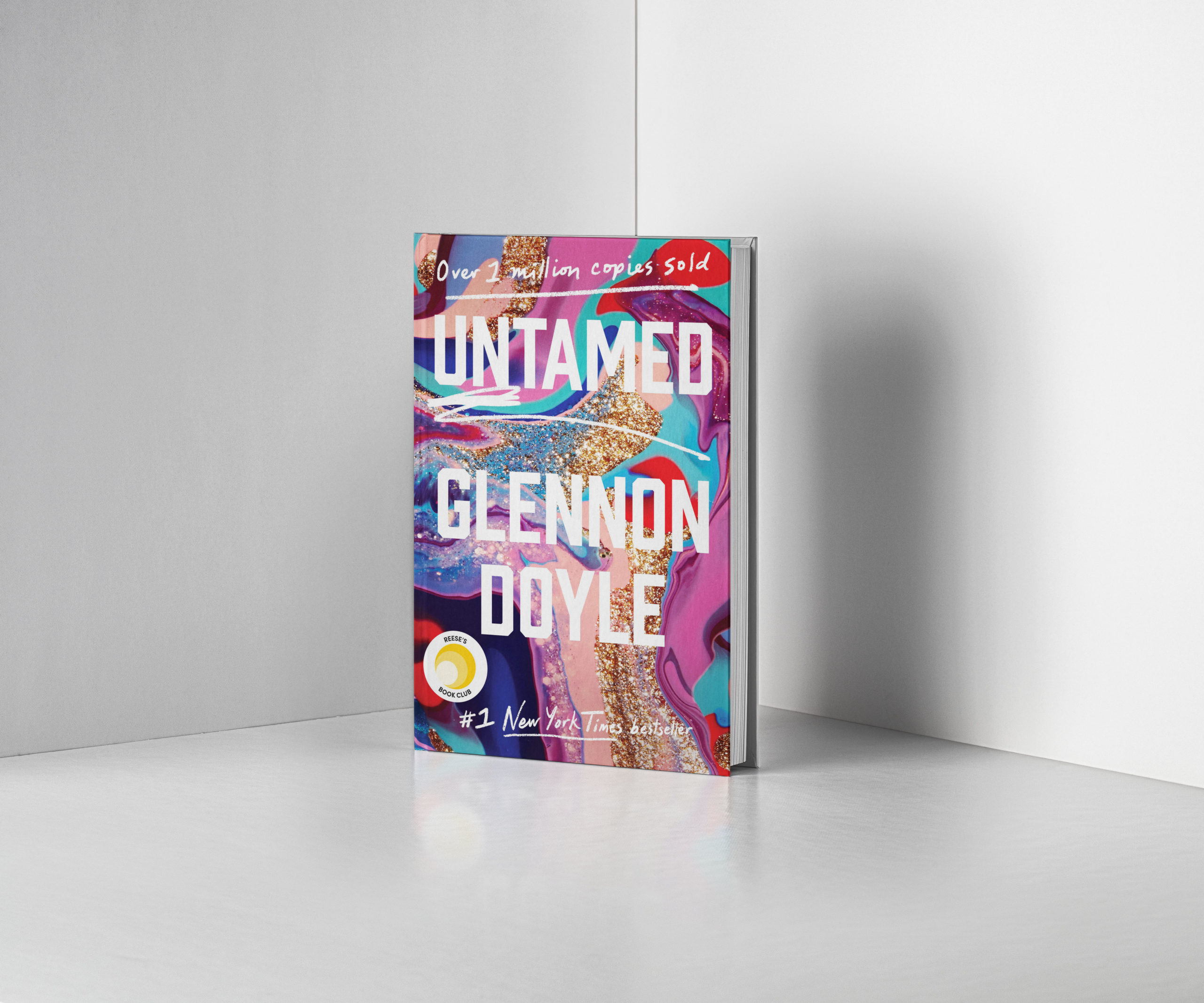
UNTAMED

by Glennon Doyle

Untamed is the third of Glennon Doyle’s memoirs and it does not disappoint. Sitting at the number 1 spot on The New York Times nonfiction best-seller list for seven weeks, this has become a cult favourite of many – notably including Adele, who aptly described it as making your “soul scream”. In the book Glennon talks about taking the steps to follow her inner voice and stop pleasing others. She investigates gender and society through experiences of her own and those of her family, sifting through all life lessons, from life changing decisions down to the everyday mundane. If you’re looking for something to stop you in your tracks and make you really think, this one’s for you. 

2.

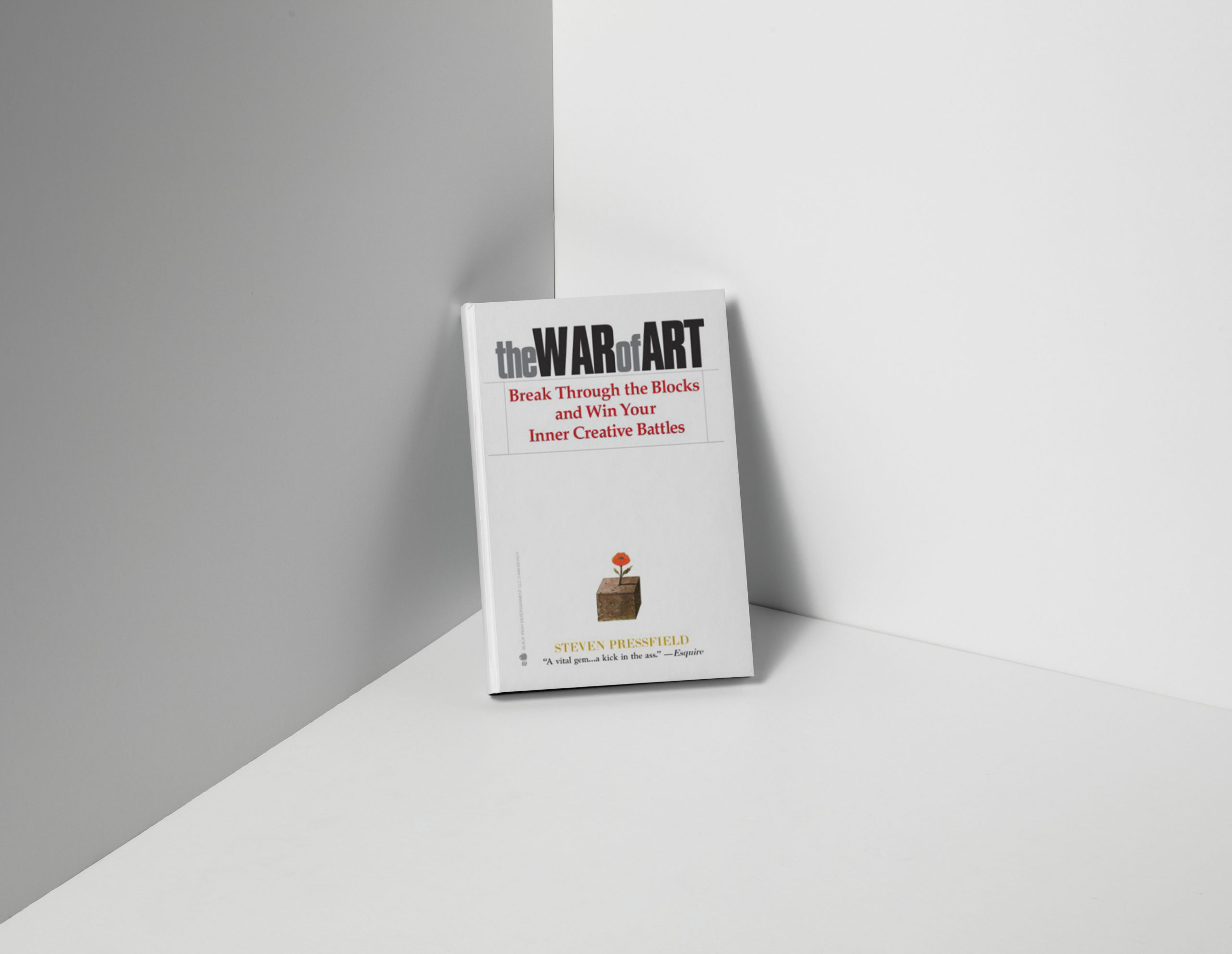
the war of art

by Steven Pressfield

The War of Art was born out of Pressfield’s desire to help others succeed in the creative industry – whether it be embarking on a  business venture or writing a novel. The succinctly engaging and practical guide, delivers a battle plan to inspire those who struggle to unlock their creative potential, investigating what keeps so many of us from doing what we long to do?

3.

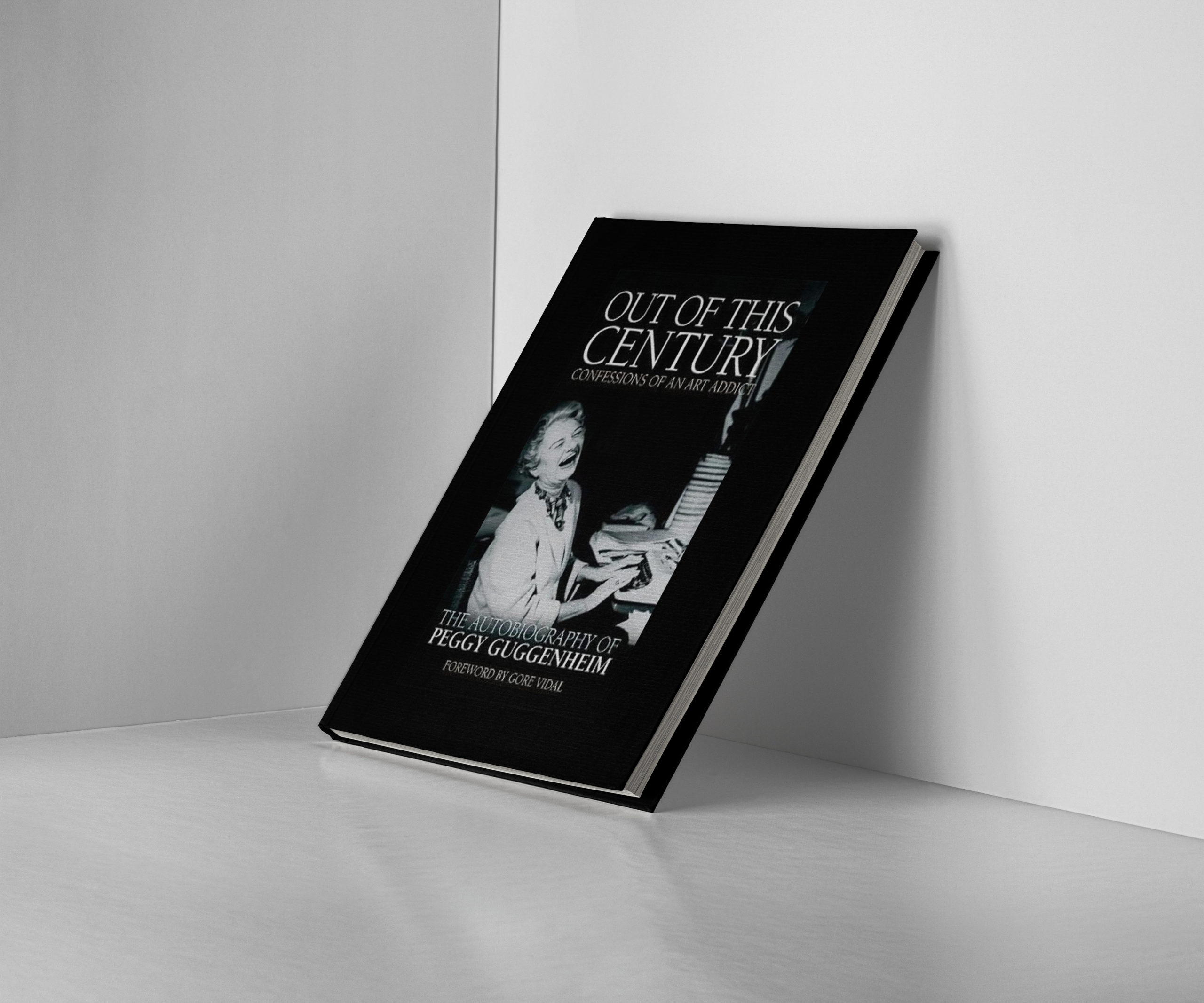
Out of This Century Confessions of an Art Addict:

The Autobiography of Peggy Guggenheim

by Peggy Guggenheim

Guggenheim, whose contribution to art is staggering, as a dealer and collector and a champion of artists, left behind an extraordinary legacy which saw her find, curate, popularize, dignify, define, and preserve the canon of modern art as we know it today. The fascinating autobiography of the mistress of modern art, captures an eccentric bohemian lifestyle travelling across Europe, weaving in and out of stormy relationships recounted in her somewhat amusingly laconic tone. Her formidable list of “friends”, acquaintances, husbands and lovers notoriously includes the likes of Samuel Beckett, James Joyce, Man Ray, Marcel Duchamp, Henry Moore, Salvador Dalí, Yves Tanguy, Jackson Pollock, John Cage, and Max Ernst (to mention just a few). A must-read for anyone looking to gain insight into the life of such a major patron of art  and delve deeper into the juicy drama of this seminal period of art history.

Each of these offer something completely different, Untamed - Social construct, gender identity, Peggy's love and passion for art. When feeling poetic, I have a collection of poems by Christina Rosetti & Rudyard Kipling at hand."

Joanna Hirsch

4.

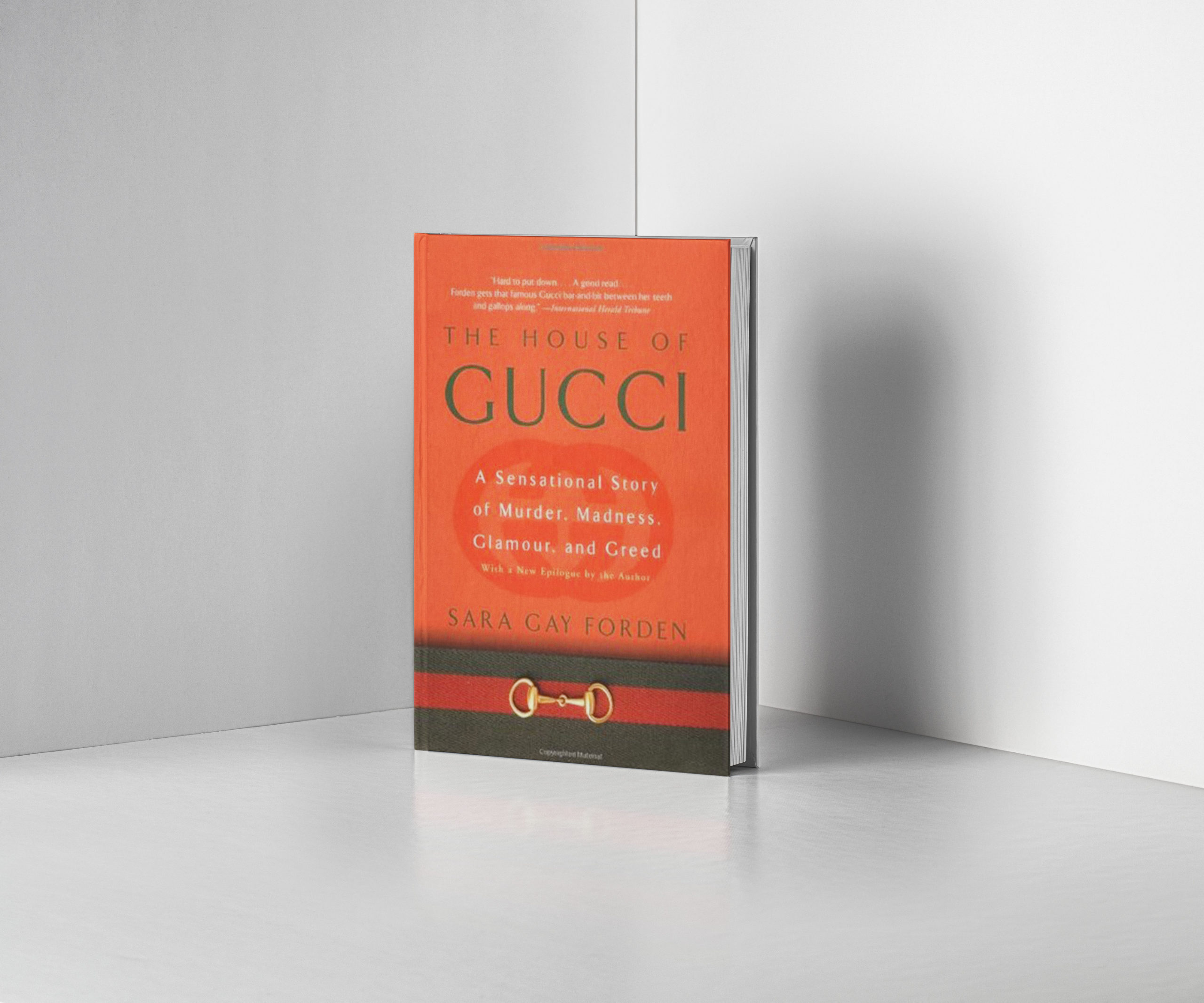
The House of Gucci

by Sara Gay Forden

Sink your teeth into this fascinating tale of murder, madness and intrigue surrounding the infamous homicide of Maurizio Gucci. Forden’s story tackles the rise, fall and resurgence of the Gucci brand, with impeccably researched details on the fashion dynasty’s twists, turns and vendetta’s galore. This gripping tale of the Gucci fashion empire covers not only the sensational murder, but importantly the boardroom fiascos, power struggles and legal battles – a page turning account of high fashion meets high finance with a large serving of tragedy. 

A read for anyone looking to take their mind off the everyday; I was truly engrossed. Plus may be a good read to look forward to with Lady Gaga and Adam Driver in the film.

MARCO GALVAN

5.

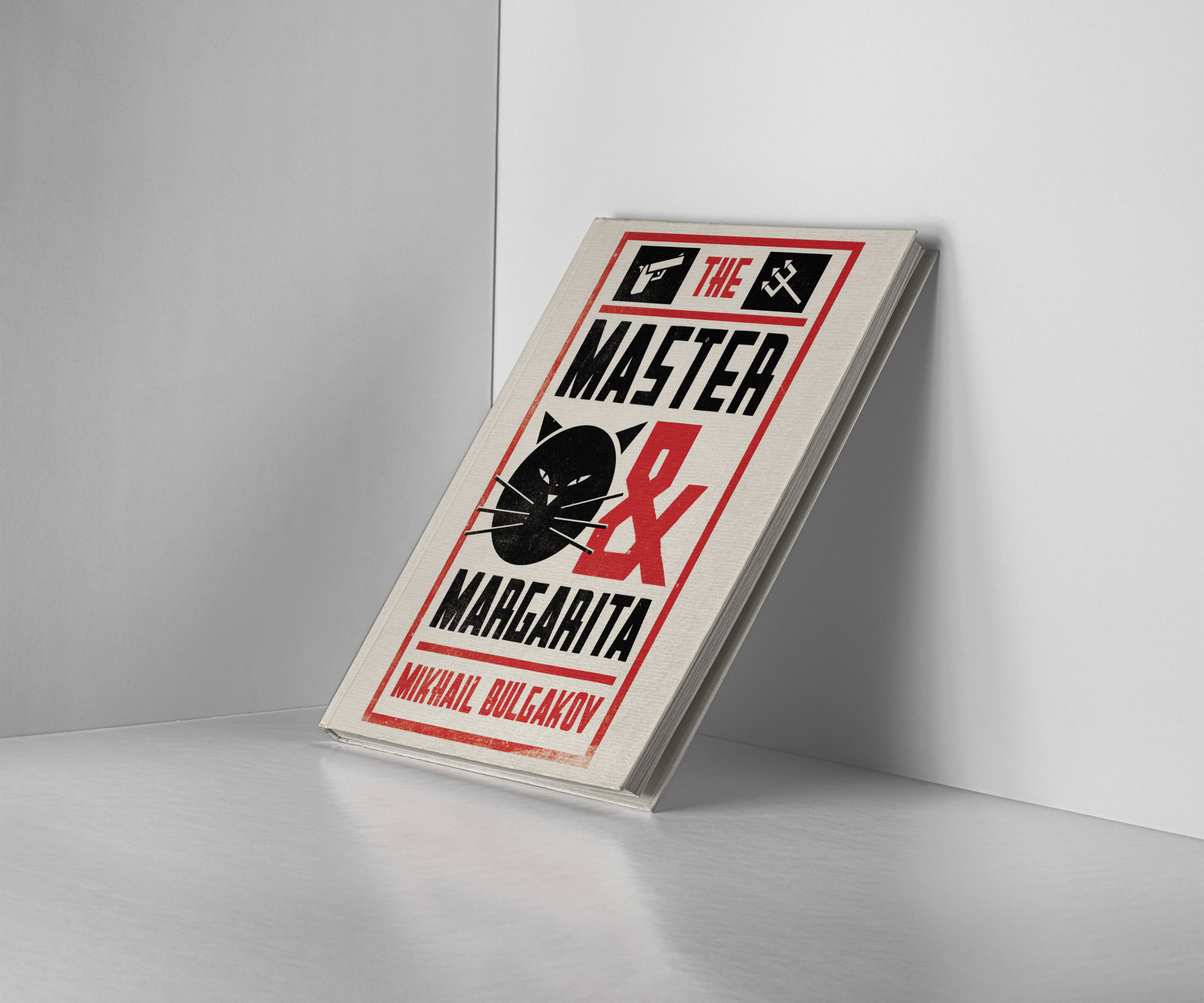
The Master and Margarita

by Mikhail Bulgakov

One hot spring, the devil arrives in Moscow, accompanied by a retinue that includes a beautiful naked witch and an immense talking black cat with a fondness for chess and vodka. The visitors quickly wreak havoc in a city that refuses to believe in either God or Satan. But they also bring peace to two unhappy Muscovites: one is the Master, a writer pilloried for daring to write a novel about Christ and Pontius Pilate; the other one is Margarita, who loves the Master so deeply that she is literally willing to go to hell for him.

“It’s one of those books that requires an extra amount of effort to get into but once you do, you get obsessed with it. It blurs the lines between madness and sanity, and between sin and virtue. Though set in the 1930s Russia, the novel explores politics and philosophy that are still relevant today. It’s a reminder to us to confront our inner darkness and be brave enough to embrace it as part of our humanity. It redefines how we perceive evil vs. good in reference to what is dictated by a society where individuals always value hypocrisy over honesty.”

6.

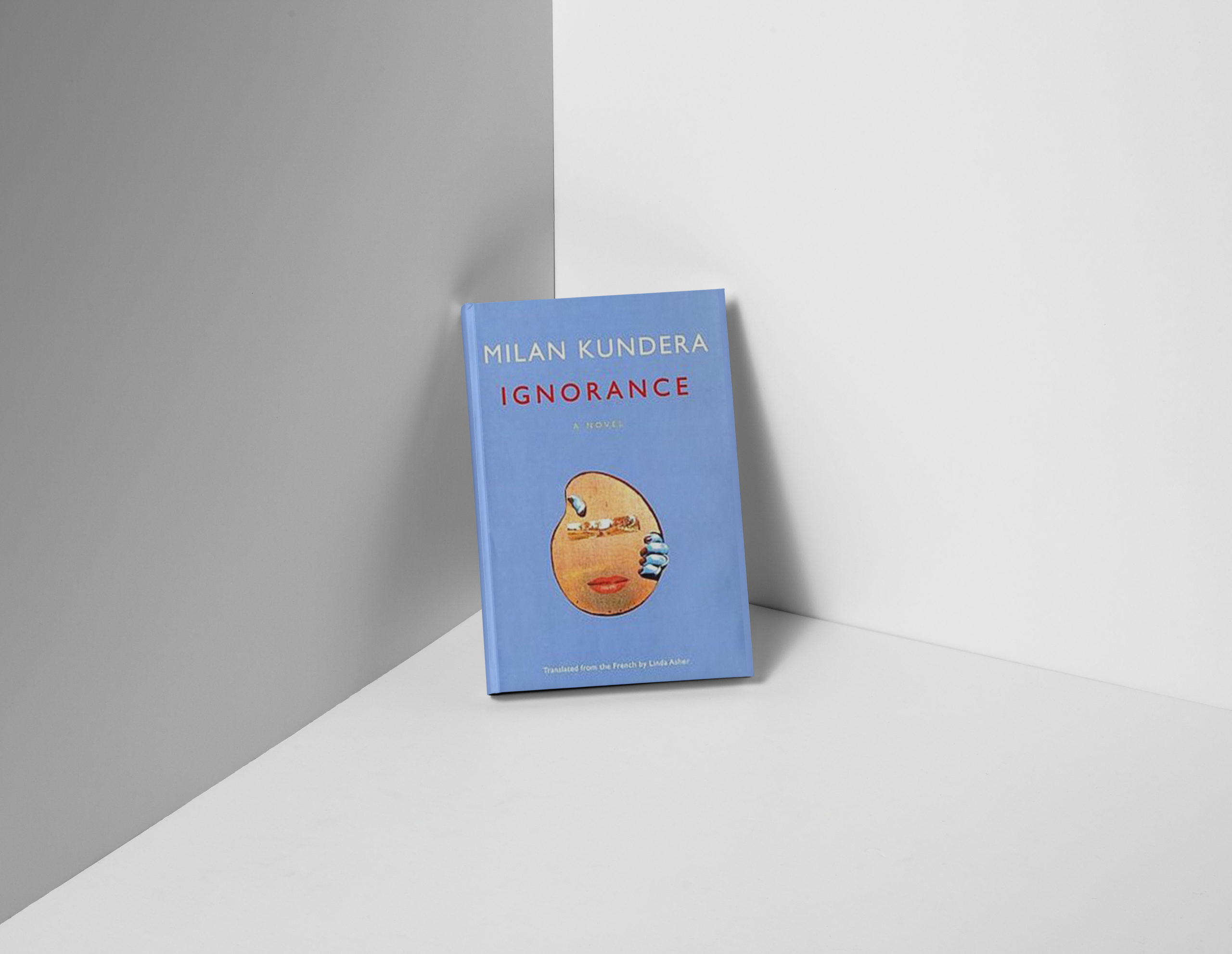
Ignorance

by Milan Kundera

This short novel is about an emigre, Irena who runs into her former lover (and fellow emigre, Josef) from Prague, on her return to Czech Republic, having spent much of her adult life in France. Kundera offers a crisp story embodying a modern vision of the Great Return: the literary trope of homecoming. This re-imagining of the Odyssean journey home, simultaneously questions if such a return is even possible in the modern world. He frames the novel like a case study on the behaviour and effects of memory: how it is altered by the passing of time, how it is irreparably lost and fragmented, how it determines our present lives as it is shared – or not shared – between two people. A book in which each one of us can find ourselves in different proportions, exploring the extensive impact of mismatched memories in the relationship between two people.

One is considered a classic, very intricate but entertaining; the other one (definitely not a masterpiece) is like one of those notes that you stick on the fridge, to remember the (sometimes very) different perspectives of a shared experience between two people.”

Kiltie De Cleyn

7.

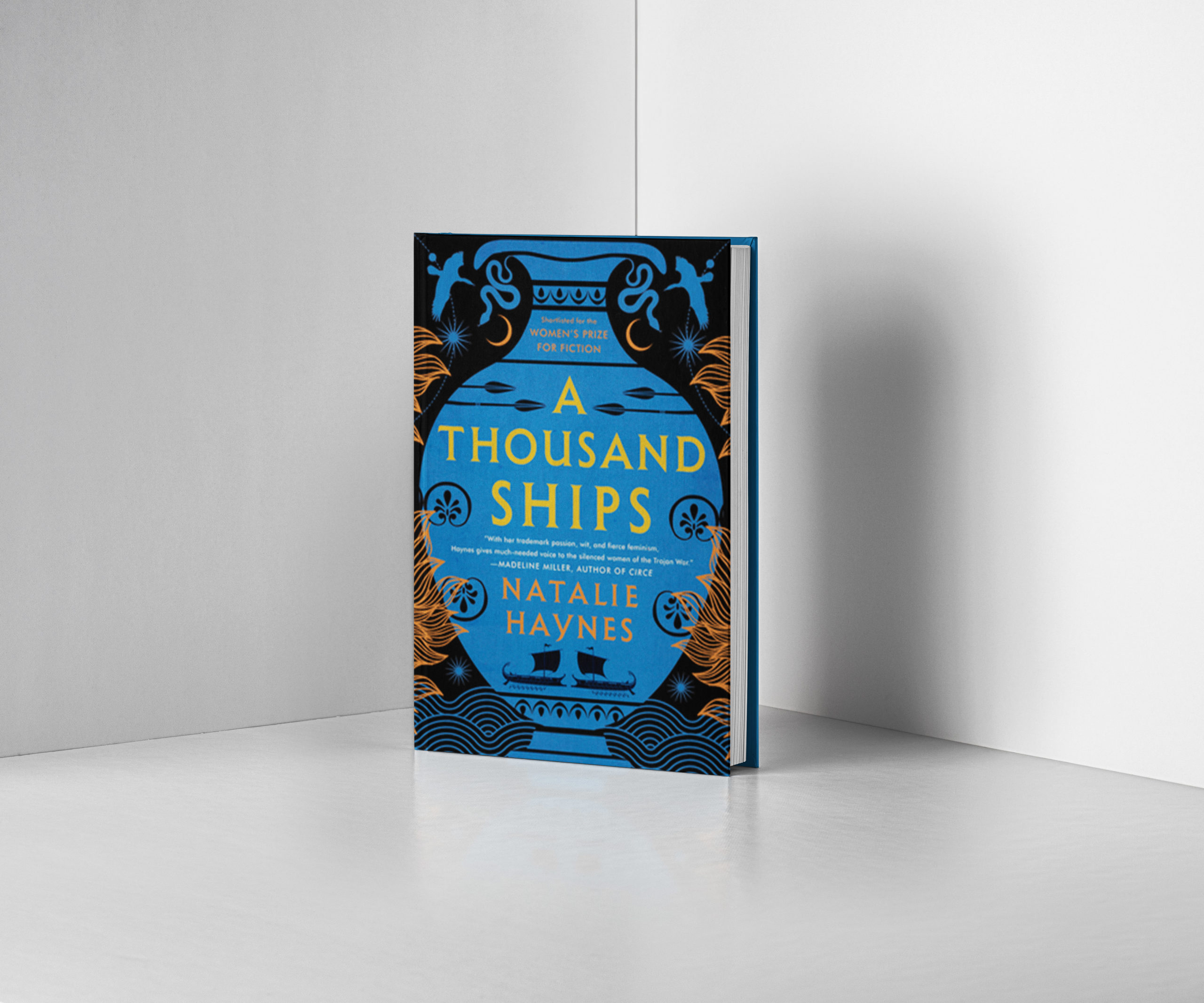
A Thousand Ships

by Natalie Haynes 

What Natalie Haynes’ re-telling of the Trojan war does is truly epic; breathing life, empathy and passion into the silenced women of one of the most important foundational texts of the Western tradition, The Iliad. Ironically, for a war infamously indebted to a woman – Helen of Troy – the women in Homer’s poem appear mute, passive objects and prizes for the opposition. Haynes’ fiercely feminist re-vision of the war, hands over the story to the women who practise a heroism greater than that of any warrior. 

I love how this text explores the struggles and the strengths of women, where war is traditionally seen as a man’s burden. Ancient texts usually teach us about the glory and conquests of men but Haynes instead focuses on the overlooked presence of women. A Thousand Ships explores not only the great suffering of women, but also the innate power wielded by mothers, sisters and wives; voices which are still frequently overlooked within many societies today."

Sofia Topchishvili

8.

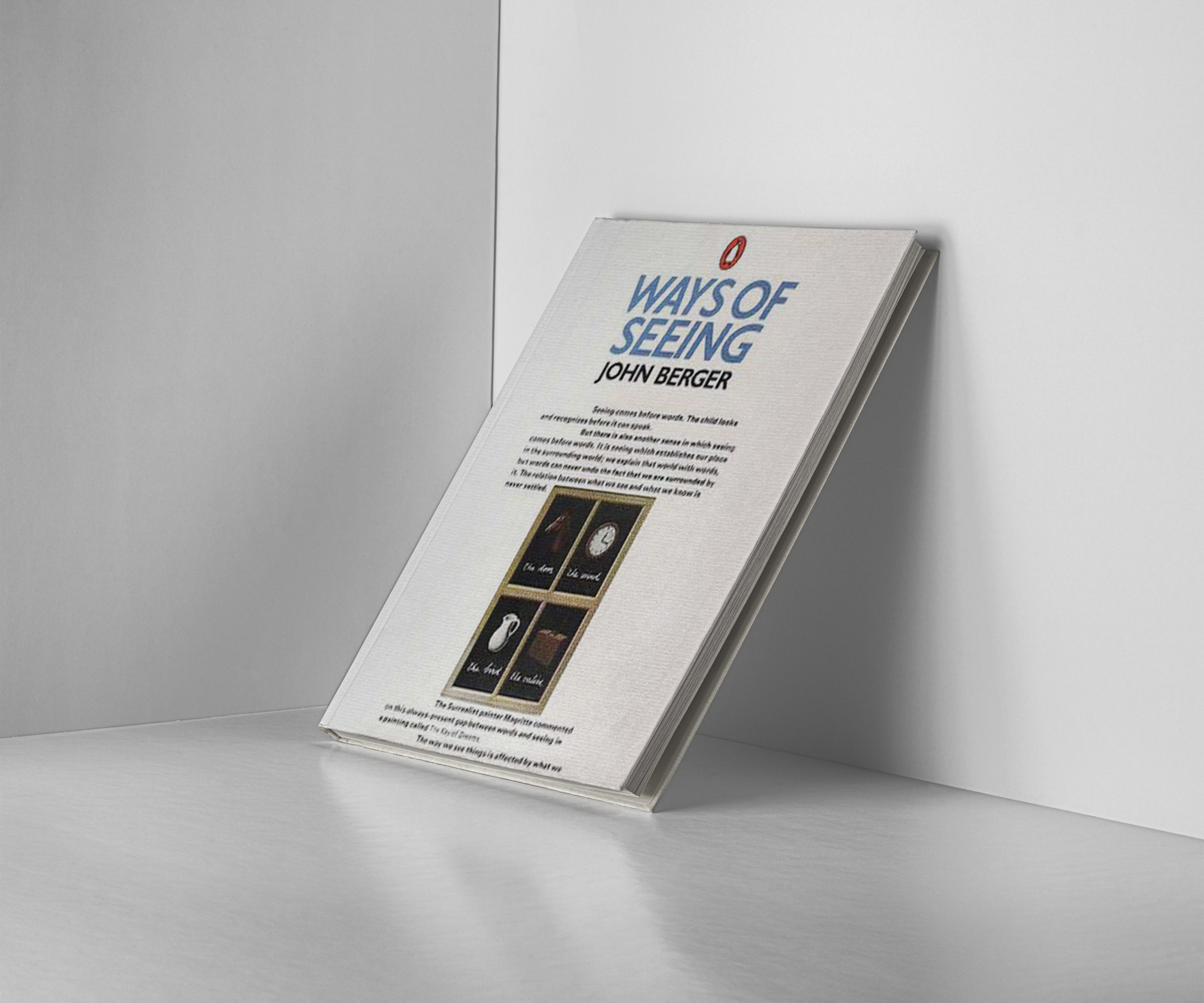
Ways of Seeing

by John Berger

Ways of Seeing is recognised as one of the most influential books on art in any language. Berger cuts through the mystification of art and strips it back to basics, showing the reader how to meaningfully engage and evaluate art, aptly coining him a “liberator of images”. 

John Berger The Ways of Seeing is THE book for everyone to read - I agree. In The Ways of Seeing - John Berger invites his readers to look into the common understanding of styles or themes such as "oil paintings" or " the nude - male gaze" and digs deeper, exploring the layers of meaning behind them. Criticising what seems obvious to us whilst we gaze at masterpieces that shape our modern day art perception

Pui Yee Wong

9.

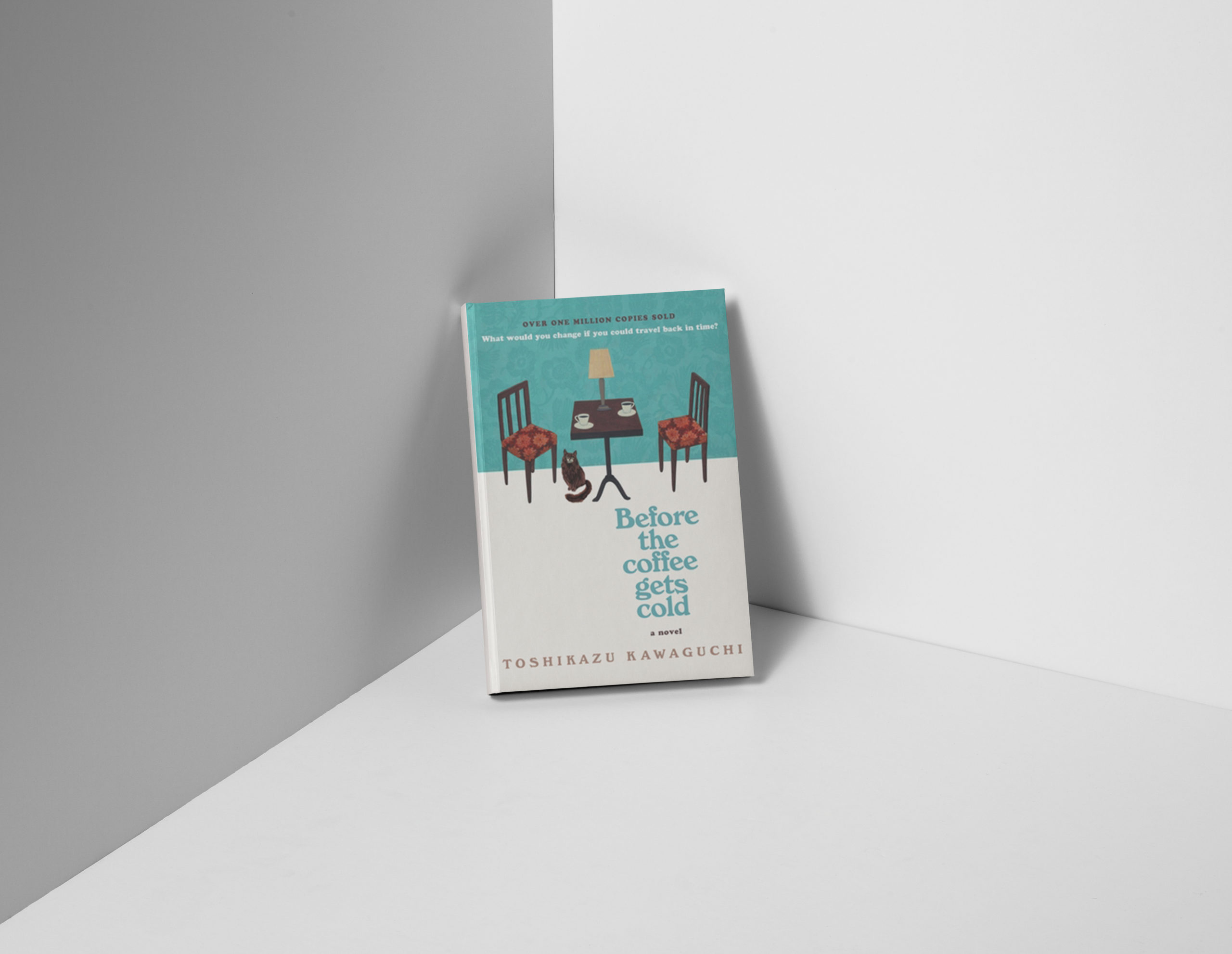
Before the Coffee Gets Cold

by Toshikazu Kawaguchi

If you have the opportunity to time travel to meet someone again, would you? Knowing your temporary visit to the past would not change anything in the present, would you still take the risk. All takes place in a seemingly quiet café in a small back alley in Tokyo. Kawaguchi asks us what our reason is for wishing to temporarily relive a past memory? And what do we expect from this experience?

Posted on

5 Minutes with Franklin Ayzenberg

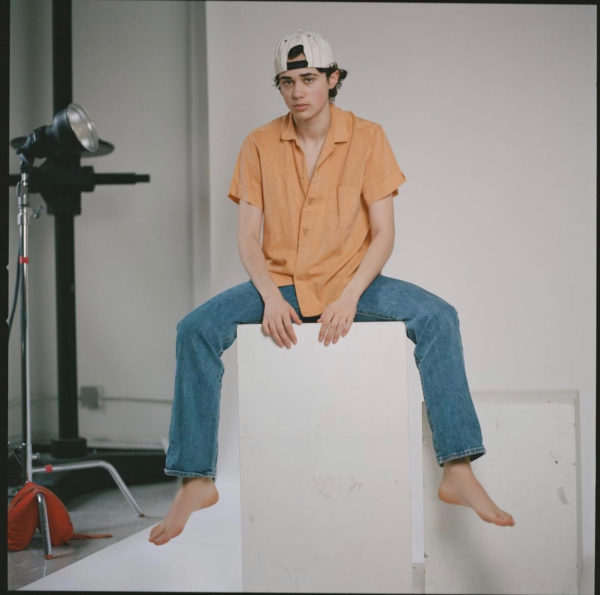
This month AucArt welcomes guest curator, designer and social activist Franklin Ayzenberg. Their show, FROM HEAVEN, welcomes 6 brand new artists to the AucArt roster who explore elements of fantasy through design, fashion and works on paper.

Where are you from originally? Has this had an impact on your work today?

I’m from Pasadena. I grew up about 5 minutes from the Gamble House — craftsman style architecture was a huge part of my childhood. Greene and Greene were the first designers I knew about so the Arts and Crafts movement has impacted my taste in a permanent way. 

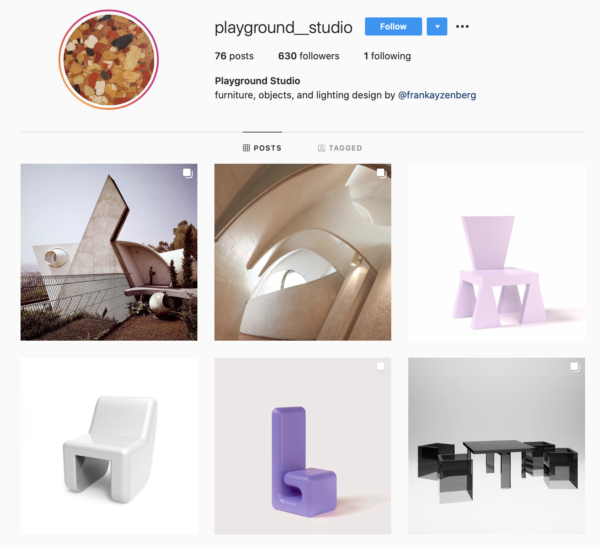
How did Playground Studio come about? (Can you tell us more about what it is)

Playground Studio is an archive of my design work. Right now I am focused on growing as a designer because I didn’t go to art school and only started designing furniture a year ago. I have a long way to go before I’d launch a website and start production. Everything I put up online is a 3D render, but I am actually working with a woodworker right now and should have my first collection of one of one pieces done by Summer 2021.

What did you want to be when you grew up?

I wanted to be a drummer until I was in high school. When I was 16 I got really into music production and wanted to score movies and commercials. It actually wasn’t until my sophomore year of college that I became interested in fine art. 

Favourite material to work with?

Resin.

Something you cannot live without?

My Apple Pencil. 

Where is “home” for you?

New York

Describe your aesthetic in 3 words

Postmodern gothic minimalism!

Most unexpected source of inspiration?

Tik-tok

Highlight of your career so far?

I’m not sure I have a career yet — but being able to help Precious Okoyomon with their show for the Luma Tower in Arles, France was the best two weeks of my life.

Tell us about one of your most challenging pieces of work to complete?

I dug a 300 year old dead root out of the ground near Yosemite last summer and it took me 4 whole days to grind the bark off. I’m still not done with the piece. At the time I thought it would end up being a chair, but I’m honestly not sure what to do with it. I know it’ll come to me at some point though. 

The most inspiring person you’ve ever met?

Bruno Hugounenq. Bruno is a furniture maker and sculptor who has lived in the south of France his whole life. He’s a true craftsman and I feel lucky to know him.

Best and worst piece of advice you’ve been given?

The best advice I ever got was to not be concerned with conventional methods of education. I’ve always resisted school. It just doesn’t work for me. I learn better as an apprentice or intern — and there’s no shame in that. The worst advice I ever got was that I should go to art school if I want to be an artist. 

Tell us one thing few people know about you?

I named myself after Frank Ghery, Frank Lloyd Wright, and Aretha Franklin.

What are you reading at the moment?

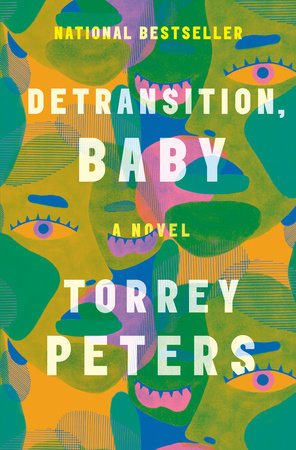
I’m reading a book called Detransition Baby by Torrey Peters. She is my favorite writer. Her short story CisWorld changed my life.


Prized possession?

My Star of David necklace.

If you were to leave a mark on the world what would it be?

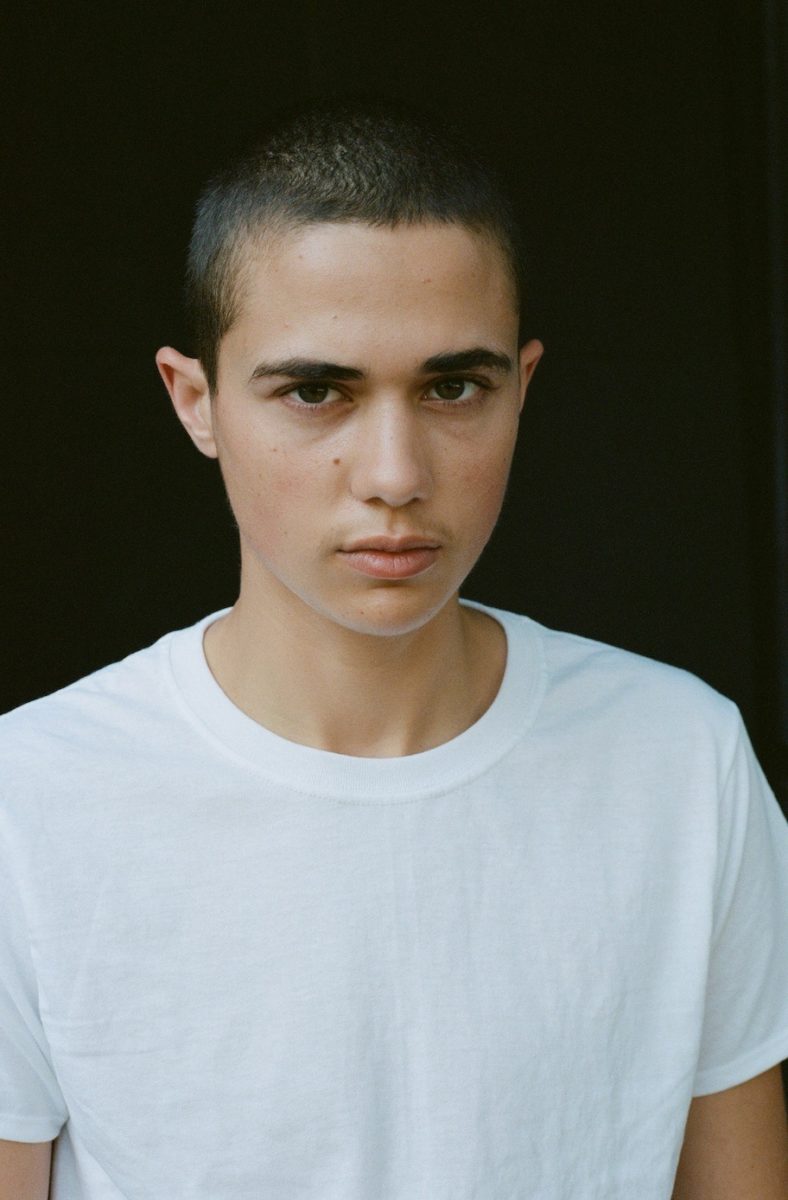
I just want to exist, and that alone feels like a mark to me. When I was growing up, I didn’t know trans people existed. If I can exist, and be trans, and have a few people know about those two things combined — that’s enough for me to feel like I did something that mattered. 

Which artists are you drawn to at the moment?

I’m drawn to each artist I put in this show! Alison Veit is someone I really admire. I love how Alison created this sand/plaster material. Artists that double as material researchers are my favorite kind. 

What kind of artwork do you like to surround yourself with/be in the company of?

Anything that feels childlike, with lots of color. I’m in between places right now but I usually have an Aya Takano print in my room, as well as an original color pencil drawing by Gitte Moller. My apartment is my playground. I have these 10 of these storage stools from a kindergarten website that are made to look like tree trunks. At my old place I had them stacked to look like a log was in my living room.

What advice would you give to someone purchasing their first artwork?

Don’t worry about who made it or what anyone else is going to think. If you love it, you need it. 

What are you enjoying about the art world currently?

I think it’s great how many artists are sharing their process through social media outlets like Tik Tok. Material researchers, like myself, have been using Tik tok to do genuine research and it’s been a game changer. 

I just want to exist, and that alone feels like a mark to me. When I was growing up, I didn’t know trans people existed. If I can exist, and be trans, and have a few people know about those two things combined — that’s enough for me to feel like I did something that mattered.

Posted on

5 Minutes with Bolanle Tajudeen

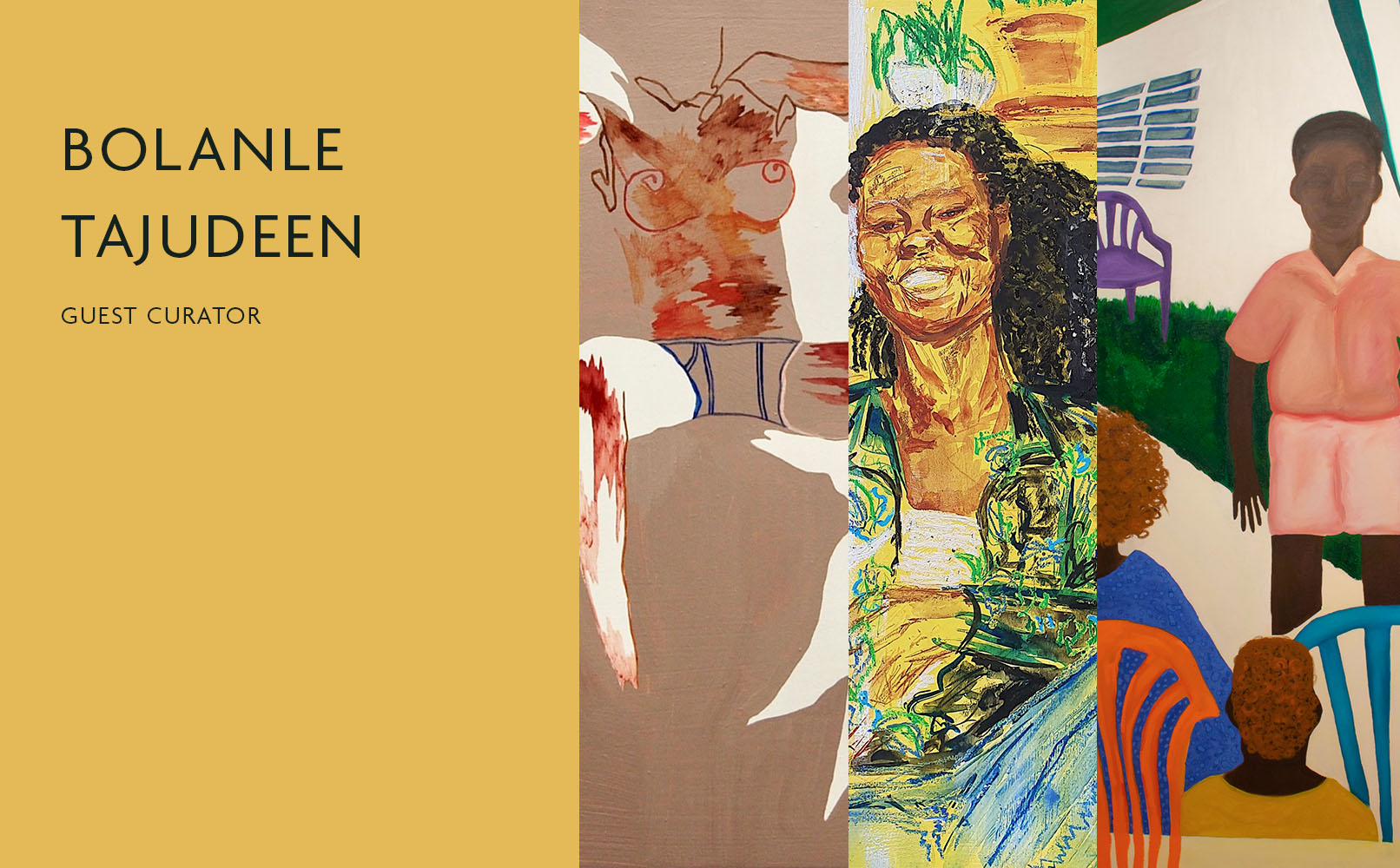
This month, we sat with curator and educator, Bolanle Tajudeen. Known for promoting artists from under-represented groups within the art world, Bolanle launched Black Blossoms in 2015, which seeks to highlight emerging Black Women and non-binary individuals within the art world.

What was your upbringing like and how has it affected your career?

I grew up in Ladbroke Grove. It is a very multicultural area surrounded by brutalist architecture and two thriving markets: the famous Portobello Road Market and Golborne Market.  I lived with my mum on a council estate that the council knocked down a few years ago, but this is the first place I was submerged with art and design. My neighbours had different decor that incorporated their cultural heritage. My Morrocan neighbours had the most beautiful rugs and tapestry and my Caribbean neighbours had items in their homes that celebrated their home island. I guess the effect this has had on my career is that I appreciate art and style regardless of where it is. 

What did you want to be when you grew up?

A lawyer.

My childhood friend and I used to go through the NEXT catalogue and cut out pictures of all women wearing suits, who looked like they commanded power with just their attire, so I grew up wanting a corporate job. I did Law at A-Level and went to The University of Leeds and did one year of a  Politics degree. I missed London so I came back and went to the University of the Arts London and got myself a degree in Public Relations.

What’s the inspiration behind Black Blossoms? Tell us a little more about it.

Although I was studying PR at university I was really inspired by the creative practices of peers on other courses. I loved seeing creative ideas come into fruition and going into my friends studios and exhibitions. However I found that there was a lack of spotlight on Black creatives in uni and the wider creative and art world. I wanted to create a space for Black women artists to discuss their work with each other whilst also showcasing the wider public their talents. You can read more here about how it started; The Black Blossoms That Were Never Forgotten

the black blossoms statement

Black Women are speaking up.

Black Women are no longer invisible.

Black Women are not afraid to shine.

Black Women are unapologetically loving themselves.

Black Women are championing their sisters.

Black Women are tearing down the oppressive racist and patriarchal system which enforced upon them.

Who’s your role model?

My mum, she is an angel. She works as a nurse, and I have so much love and respect for people who care for the sick and vulnerable even when their lives are at risk. It is a different kind of humility. 

Greatest source of inspiration?

Black people and their resilience. 

I wanted to create a space for Black women artists to discuss their work with each other whilst also showcasing the wider public their talents.

What has been the highlight of your career so far?

Launching the Black Blossoms School of Art and Culture.
What draws you to an artist?

If they are making artwork that resonates with my visual style and politics. 

What are three main things you look for in a piece of art?

Quality

Art statement 

Technical skills 

If there was one thing you could change about the art world for the better what would it be?

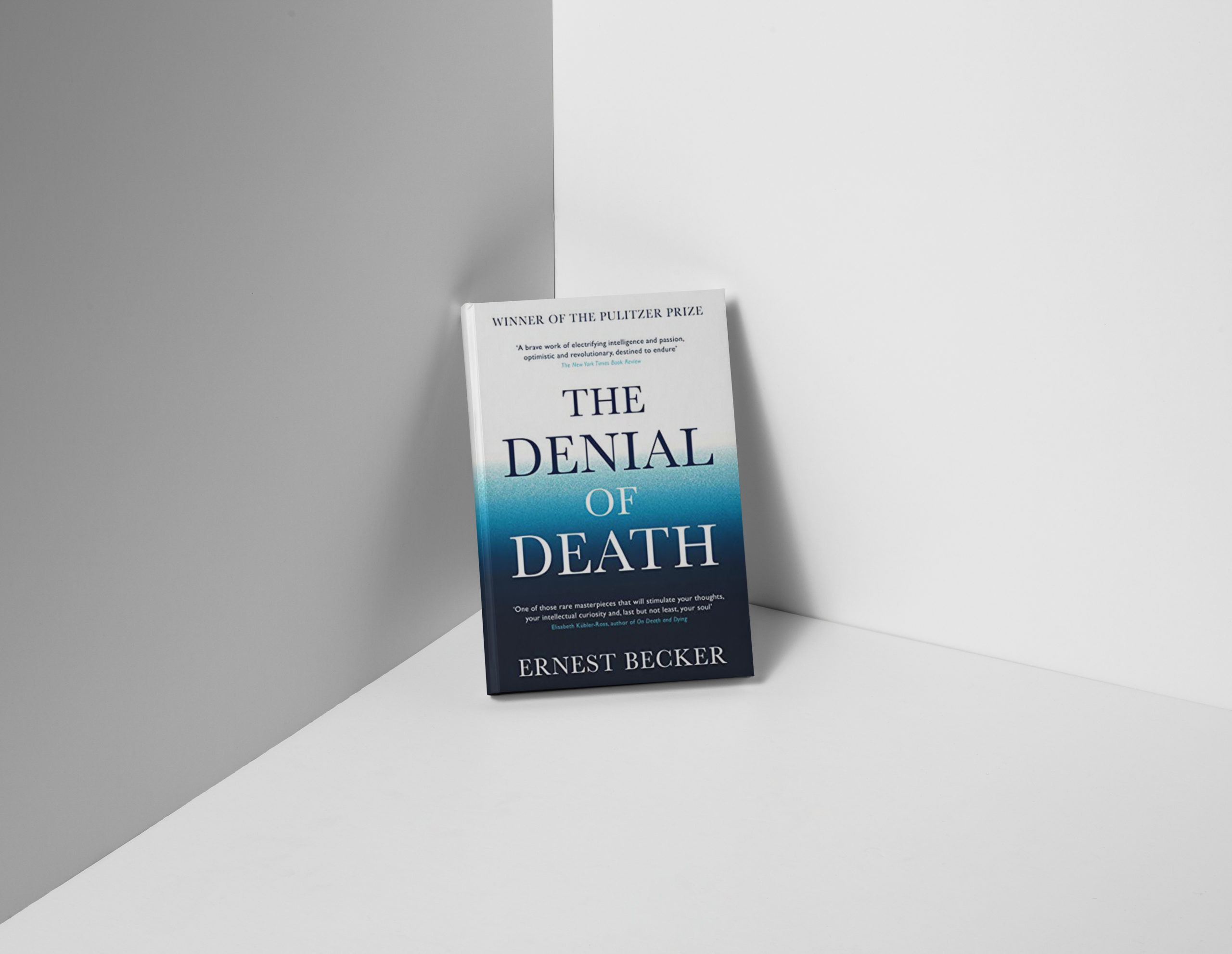
I recently read a brilliant critique of the artworld by Morgan Quantaince. In parts he sums my thoughts about the artworld and how we can all make better choices in how we partner with corporate and political institutions.